Brown Dipper

Brown Dipper

Cinclus pallasii

Silhouette: Beth Reinke · PhyloPic

LCLeast ConcernNTVUENCR
Daily sighting probability <5% · Rare
at Dehradun

In 3 days <5%

17 Verified sightings at Dehradun
854 In all 7 parks From 2019 to 2026
November Best month
☀️ Diurnal When it's spotted

About the Brown Dipper

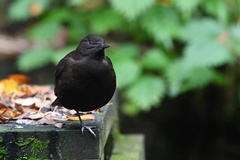
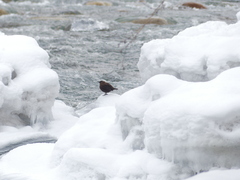
The brown dipper (Cinclus pallasii), also known as Pallas's dipper, Asian dipper or the Asiatic dipper, is an aquatic songbird found in the mountains of the east Palearctic. It is a thrush-like bird with a cocked tail. Its plumage is chocolate-brown with a slightly lighter coloured back and breast. At 22 cm (8.7 in) and 87 g (3.1 oz), it is the largest of the dippers. This species, which is not often seen, is found at medium to low elevations where mountain streams flow.

The brown dipper was described by the Dutch zoologist Coenraad Jacob Temminck in 1820 and given the binomial name Cinclus pallasii. The type locality is Eastern Siberia. The specific epithet pallasii was chosen in honour of the Prussian naturalist Peter Simon Pallas (1741–1811). Of the five species now placed in the genus, a molecular genetic study has shown that the brown dipper is most closely related to the other Eurasian species, the white-throated dipper (Cinclus cinclus).

There are three subspecies: Wikipedia →

Sounds

Call0:06

China · 2025

© Bo Shunqi 薄顺奇 · XC1048566 · CC BY-NC-SA 4.0

Flight call0:04

China · 2024

© Dave GUO · XC971211 · CC BY-NC-SA 4.0

Song0:13

Myanmar · 2010

© Thet Zaw Naing · XC684988 · CC BY-NC-SA 4.0

Global Distribution

Parks Where Found

# Park Country Daily sighting probability
1 Nikko National Park 🇯🇵 Japan
~30%
2 Royal Manas National Park 🇧🇹 Bhutan
~20%
3 Langtang National Park 🇳🇵 Nepal
~10%
4 Namdapha National Park 🇮🇳 India
~10%
5 Taroko National Park 🇹🇼 Taiwan
~10%
6 Hemis National Park 🇮🇳 India
~10%
7 Jim Corbett National Park 🇮🇳 India
<5%

Cities Where Found

# City Country Daily sighting probability
1 Almaty 🇰🇿 Kazakhstan
~10%
2 Guiyang 🇨🇳 China
~10%
3 Sapporo 🇯🇵 Japan
<5%
4 Dehradun 🇮🇳 India
<5%
5 Osaka 🇯🇵 Japan
<5%
6 Kathmandu 🇳🇵 Nepal
<5%
7 Tokyo 🇯🇵 Japan
<5%

Zoos & Centres Where Found

# Zoo / Centre Country
1 Aquamarine Inawashiro Kingfishers Aquarium 🇯🇵 Japan In captivity

Before you go

What are the chances of seeing a Brown Dipper in Dehradun?

Rare

Under 5% of wildlife watchers report a Brown Dipper sighting in Dehradun on a given day, based on 17 verified sightings from GBIF citizen-science data. It is the 224th most-seen of the 280 birds we can rate there. Over three days the chance rises to under 5%, if each day is a fresh chance.

When is the best time to see a Brown Dipper in Dehradun?

Any time of year

In every month with enough records, under 5% of wildlife watchers report a Brown Dipper in Dehradun on a given day, so our monthly data shows no clear season.

What time of day is best to see a Brown Dipper?

Between 10 am and 1 pm

Across all the parks we cover, that three-hour window holds the most Brown Dipper sightings with a recorded time, and about 9 in 10 of them come between 6 am and 6 pm: it is a daytime animal.

Is Dehradun the best place to see a Brown Dipper?

4th of 7

Of the 7 cities where we can rate Brown Dipper sightings, Dehradun ranks 4th at under 5%. The best odds are in Almaty (Kazakhstan, about 10%), Guiyang (China, about 10%) and Sapporo (Japan, under 5%).

Which relatives of the Brown Dipper live in Dehradun?

Same order: Passeriformes

The closest relatives of the Brown Dipper that you can see in Dehradun (order Passeriformes, Perching Birds) are White-cheeked Bulbul (about 70%), Indian White-eye (about 60%) and Common Tailorbird (about 60%), with each one's daily chance of a sighting.

Where does the Brown Dipper sighting chance come from?

GBIF citizen-science records

It is estimated from how often the Brown Dipper is recorded against all the birds logged in Dehradun (17 verified sightings), calibrated against known sighting rates. Figures are rounded to the nearest 10% because citizen-science data supports honest approximations, not decimals, and months with records from fewer than five people show "—". How it works.

← Back to Dehradun