American Idia Moth

American Idia Moth

Idia americalis

Daily sighting probability ~10% · With luck
at Detroit

In 3 days ~20% in a week ~40%

14 Verified sightings at Detroit
23 In all 3 parks From 2019 to 2026
September Best month
☀️🌙 Day & Night When it's spotted

About the American Idia Moth

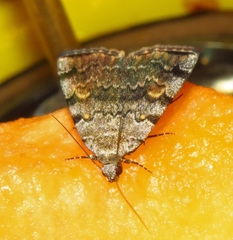
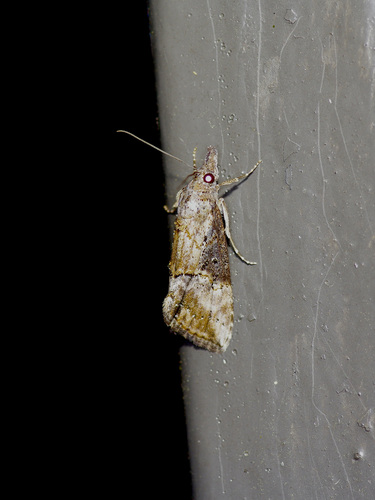
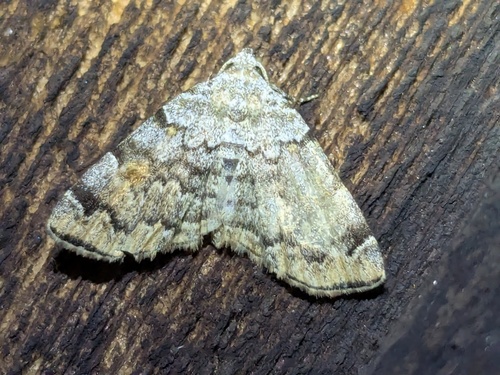
Idia americalis, the American idia or American snout, is a litter moth of the family Erebidae. The species was first described by Achille Guenée in 1854. It is commonly found in moist forests in North America, ranging from southern Canada to Florida and Texas. It is nocturnal and can be lured by sugar baits and light traps.

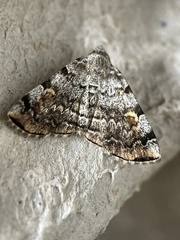
The American idia has forewings that range in color from grey to beige or light brown, darker toward the outer margin of the wing, with darker scalloped lines crossing the wings laterally. A dark terminal line is located at the base of the wing's fringe. All have a small bronze or brown spot located near the edge of the forewing. The hindwing is a lighter grey than the forewing and also has darker scalloped lines. Darker specimen can be dark grey or brown. The thorax and abdomen are smoothly scaled and the tibia is hairless. Female antenna are simple while male antenna are biciliate; otherwise, the sexes look similar. The caterpillar is brown with dark brown spots, a black head, and has small white hairs along its sides.

The wingspan ranges from 20 to 30 mm. Adults are on wing from May to October. They can produce two or more broods per year. It can be differentiated from similar species, such as the common idia, by a row of dark marks located on the anterior forewing.

The larvae feed on lichen and detritus, including dead leaves. They may also function as detritivores in ant nests. Adults often feed on lichens attached to tree trunks. Wikipedia →
Global Distribution

Parks Where Found

# Park Country Daily sighting probability
1 Acadia National Park 🇺🇸 United States
~10%
2 Shenandoah National Park 🇺🇸 United States
~10%
3 Great Smoky Mountains National Park 🇺🇸 United States
<5%

Cities Where Found

# City Country Daily sighting probability
1 Baltimore 🇺🇸 United States
~10%
2 Detroit 🇺🇸 United States
~10%
3 Montreal 🇨🇦 Canada
~10%
4 Dallas 🇺🇸 United States
~10%
5 Toronto 🇨🇦 Canada
~10%
6 Boston 🇺🇸 United States
<5%
7 Philadelphia 🇺🇸 United States
<5%
8 Portland 🇺🇸 United States
<5%
9 Washington 🇺🇸 United States
<5%
10 Edmonton 🇨🇦 Canada
<5%

Before you go

What are the chances of seeing an American Idia Moth in Detroit?

With luck

About 10% of wildlife watchers report an American Idia Moth sighting in Detroit on a given day, based on 14 verified sightings from GBIF citizen-science data. It is the 120th most-seen of the 268 insects we can rate there. Over three days the chance rises to about 20%, and over a week to about 40%, if each day is a fresh chance.

When is the best time to see an American Idia Moth in Detroit?

July to September

In those months about 10% of wildlife watchers report an American Idia Moth in Detroit on a given day, against under 5% in October to June, the lowest months.

What time of day is best to see an American Idia Moth?

Between 9 pm and midnight

Across all the parks we cover, that three-hour window holds the most American Idia Moth sightings with a recorded time, and about 6 in 10 of them come between 6 pm and 6 am: it is seen both by day and at night.

Is Detroit the best place to see an American Idia Moth?

Among the best

Of the 17 cities where we can rate American Idia Moth sightings, Detroit ranks 2nd at about 10%, level with the leaders once rounded. The best odds are in Baltimore (United States, about 10%).

Which relatives of the American Idia Moth live in Detroit?

Same family: Erebidae

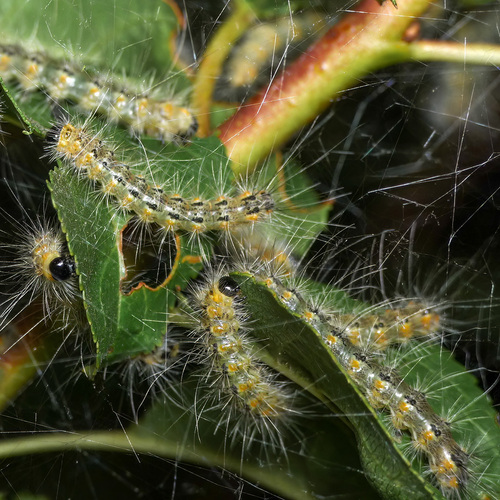
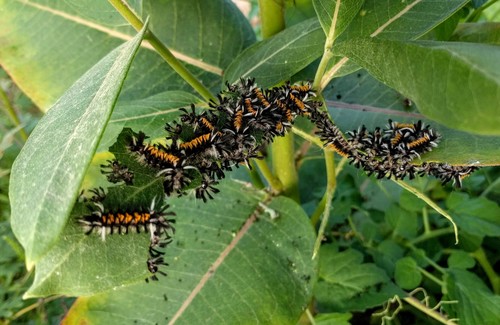
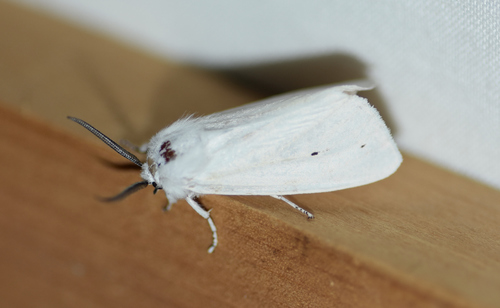
The closest relatives of the American Idia Moth that you can see in Detroit (family Erebidae, Underwing, Tiger, Tussock, and Allied Moths) are Fall Webworm Moth (about 10%), Isabella Tiger Moth (about 10%) and Milkweed Tussock Moth (about 10%), with each one's daily chance of a sighting.

Where does the American Idia Moth sighting chance come from?

GBIF citizen-science records

It is estimated from how often the American Idia Moth is recorded against all the insects logged in Detroit (14 verified sightings), calibrated against known sighting rates. Figures are rounded to the nearest 10% because citizen-science data supports honest approximations, not decimals, and months with records from fewer than five people show "—". How it works.

← Back to Detroit