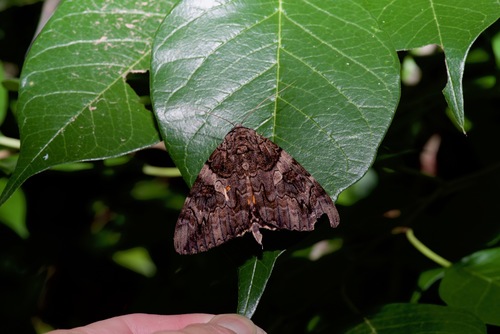
Fall Webworm Moth

Fall Webworm Moth

Hyphantria cunea

Daily sighting probability ~10% · With luck
at Detroit

In 3 days ~30% in a week ~60%

47 Verified sightings at Detroit
302 In all 8 parks From 2019 to 2026
July Best month
☀️ Diurnal When it's spotted

About the Fall Webworm Moth

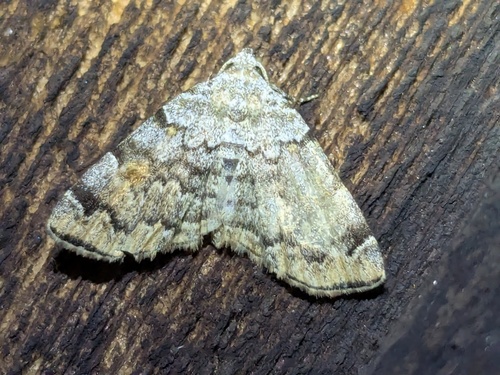
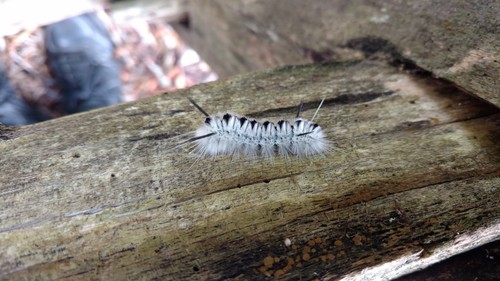
The fall webworm (Hyphantria cunea) is a moth in the family Erebidae known principally for its larval stage, which creates the characteristic webbed nests on the tree limbs of a wide variety of hardwoods in the late summer and fall. It is considered a pest but does not harm otherwise healthy trees. It is well known to commercial tree services and arboriculturists. Fall webworms are an invasive species in East Asia.

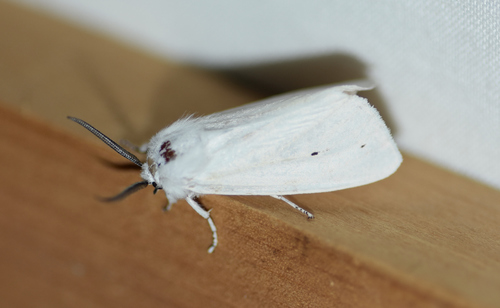
The adult fall webworm has a wingspan of approximately 30 mm and is generally white-colored, although some individuals may have dark-colored marks. The moth is native to North America, ranging from Canada to Mexico and has been introduced into other continents. Introduced to what was formerly Yugoslavia in the 1940s (firstly recorded in 1949), it now has occupied probably its entire range in Europe from France to the Caspian Sea in the east as well as penetrated into Central Asia: Turkmenistan (from 1990 to 1993), Uzbekistan (Fergana valley from 1996 to 1997), Kyrgyzstan, and southeastern Kazakhstan. It was also introduced into Japan in 1945 and has adjusted its number of generations per year since its arrival. It spread into China, southern... Wikipedia →

Global Distribution

Parks Where Found

# Park Country Daily sighting probability
1 Congaree National Park 🇺🇸 United States
~30%
2 Shenandoah National Park 🇺🇸 United States
~20%
3 Acadia National Park 🇺🇸 United States
~10%
4 Point Pelee National Park 🇨🇦 Canada
~10%
5 Big Cypress National Preserve 🇺🇸 United States
~10%
6 Great Smoky Mountains National Park 🇺🇸 United States
~10%
7 Cape Breton Highlands National Park 🇨🇦 Canada
~10%
8 Grand Teton National Park 🇺🇸 United States
~10%

Cities Where Found

# City Country Daily sighting probability
1 Gwangju 🇰🇷 South Korea
~40%
2 Seoul 🇰🇷 South Korea
~20%
3 Milan 🇮🇹 Italy
~20%
4 Houston 🇺🇸 United States
~20%
5 Daejeon 🇰🇷 South Korea
~20%
6 Austin 🇺🇸 United States
~10%
7 Beijing 🇨🇳 China
~10%
8 Detroit 🇺🇸 United States
~10%
9 Turin 🇮🇹 Italy
~10%
10 Istanbul 🇹🇷 Turkey
~10%

Before you go

What are the chances of seeing a Fall Webworm Moth in Detroit?

With luck

About 10% of wildlife watchers report a Fall Webworm Moth sighting in Detroit on a given day, based on 47 verified sightings from GBIF citizen-science data. It is the 33rd most-seen of the 268 insects we can rate there. Over three days the chance rises to about 30%, and over a week to about 60%, if each day is a fresh chance.

When is the best time to see a Fall Webworm Moth in Detroit?

July

In that month about 30% of wildlife watchers report a Fall Webworm Moth in Detroit on a given day, against under 5% in June and October–April, the lowest months.

What time of day is best to see a Fall Webworm Moth?

Between 11 am and 2 pm

Across all the parks we cover, that three-hour window holds the most Fall Webworm Moth sightings with a recorded time, and about 8 in 10 of them come between 6 am and 6 pm: it is a daytime animal.

Is Detroit the best place to see a Fall Webworm Moth?

8th of 31

Of the 31 cities where we can rate Fall Webworm Moth sightings, Detroit ranks 8th at about 10%. The best odds are in Gwangju (South Korea, about 40%), Seoul (South Korea, about 20%) and Milan (Italy, about 20%).

Which relatives of the Fall Webworm Moth live in Detroit?

Same family: Erebidae

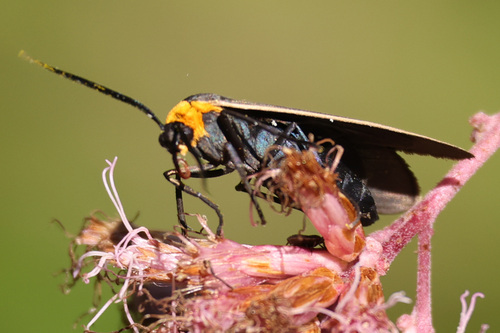
The closest relatives of the Fall Webworm Moth that you can see in Detroit (family Erebidae, Underwing, Tiger, Tussock, and Allied Moths) are Isabella Tiger Moth (about 10%), Milkweed Tussock Moth (about 10%) and Virginian Tiger Moth (about 10%), with each one's daily chance of a sighting.

Where does the Fall Webworm Moth sighting chance come from?

GBIF citizen-science records

It is estimated from how often the Fall Webworm Moth is recorded against all the insects logged in Detroit (47 verified sightings), calibrated against known sighting rates. Figures are rounded to the nearest 10% because citizen-science data supports honest approximations, not decimals, and months with records from fewer than five people show "—". How it works.
← Back to Detroit