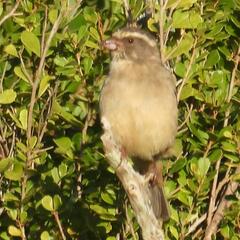
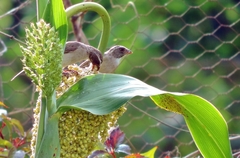
Streaky-headed Seedeater

Streaky-headed Seedeater

Crithagra gularis

Silhouette: Sheatherius · PhyloPic

LCLeast ConcernNTVUENCR
Daily sighting probability ~20% · Possible
at Durban

In 3 days ~50% in a week ~80%

227 Verified sightings at Durban
731 In all 6 parks From 2019 to 2026
June Best month
☀️ Diurnal When it's spotted

About the Streaky-headed Seedeater

The streaky-headed seedeater or streaky-headed canary (Crithagra gularis) is a small passerine bird in the finch family. It is an unobtrusive but widespread species in suitable habitats of southern Africa. Its presence in an area is revealed foremost by its callnotes.

The streaky-headed seedeater was formerly placed in the genus Serinus but phylogenetic analysis using mitochondrial and nuclear DNA sequences found that the genus was polyphyletic. The genus was therefore split and a number of species including the streaky-headed seedeater were moved to the resurrected genus Crithagra.

There are five recognized subspecies, differing mainly in the colour shade of the upperparts and underparts. C. g. humilis of the southwestern Cape has dusky plumage and indistinctly streaked upperparts. Crithagra gularis benguellensis (Reichenow, 1904) — n Namibia, s Angola

Crithagra gularis endemion (Clancey, 1952) — Lesotho, Eswatini, e South Africa, s Mozambique Crithagra gularis gularis (Smith, A, 1836) — n South Africa, sw Botswana, s Zimbabwe Crithagra gularis humilis (Bonaparte, 1850) — s South Africa

Crithagra gularis mendosa (Clancey, 1966) — nw Botswana, Zimbabwe, c Mozambique... Wikipedia →
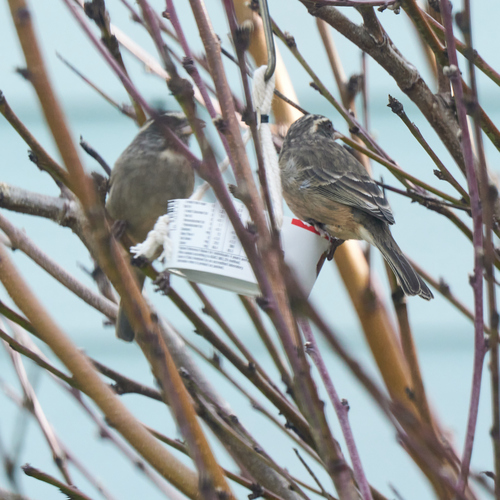
Sounds

Song0:47

South Africa · 2021

© Lynette Rudman · XC683134 · CC BY-NC-SA 4.0

Call0:35

South Africa · 2017

© Peter Boesman · XC392453 · CC BY-NC-ND 4.0

Song0:30

South Africa · 2019

© Frank Lambert · XC523725 · CC BY-NC-ND 4.0

Global Distribution

Parks Where Found

# Park Country Daily sighting probability
1 Addo Elephant National Park 🇿🇦 South Africa
~30%
2 Garden Route National Park 🇿🇦 South Africa
~20%
3 Golden Gate Highlands National Park 🇿🇦 South Africa
~20%
4 Pilanesberg National Park 🇿🇦 South Africa
~10%
5 De Hoop Nature Reserve 🇿🇦 South Africa
~10%
6 Kruger National Park 🇿🇦 South Africa
<5%

Cities Where Found

# City Country Daily sighting probability
1 Durban 🇿🇦 South Africa
~20%
2 Harare 🇿🇼 Zimbabwe
~20%
3 Pretoria 🇿🇦 South Africa
~20%
4 Johannesburg 🇿🇦 South Africa
~10%

Before you go

What are the chances of seeing a Streaky-headed Seedeater in Durban?

Possible

About 20% of wildlife watchers report a Streaky-headed Seedeater sighting in Durban on a given day, based on 227 verified sightings from GBIF citizen-science data. It is the 31st most-seen of the 219 birds we can rate there. Over three days the chance rises to about 50%, and over a week to about 80%, if each day is a fresh chance.

When is the best time to see a Streaky-headed Seedeater in Durban?

May–June and September

In those months about 30% of wildlife watchers report a Streaky-headed Seedeater in Durban on a given day, against under 5% in December, the lowest month. Those are among Durban's driest months, with about 55 mm of rain a month against 210 mm in January.

What time of day is best to see a Streaky-headed Seedeater?

Between 7 and 10 am

Across all the parks we cover, that three-hour window holds the most Streaky-headed Seedeater sightings with a recorded time, and about 9 in 10 of them come between 6 am and 6 pm: it is a daytime animal.

Is Durban the best place to see a Streaky-headed Seedeater?

Yes

Of the 4 cities where we can rate Streaky-headed Seedeater sightings, Durban has the highest daily chance: about 20%. Next come Harare (Zimbabwe, about 20%) and Pretoria (South Africa, about 20%).

Where does the Streaky-headed Seedeater sighting chance come from?

GBIF citizen-science records

It is estimated from how often the Streaky-headed Seedeater is recorded against all the birds logged in Durban (227 verified sightings), calibrated against known sighting rates. Figures are rounded to the nearest 10% because citizen-science data supports honest approximations, not decimals, and months with records from fewer than five people show "—". How it works.

← Back to Durban