Common Crow
Daily sighting probability <5% · Rare
at Guangzhou

In 3 days ~10% in a week ~30%

14 Verified sightings at Guangzhou
134 In all 11 parks From 2019 to 2026
September Best month
☀️ Diurnal When it's spotted

About the Common Crow

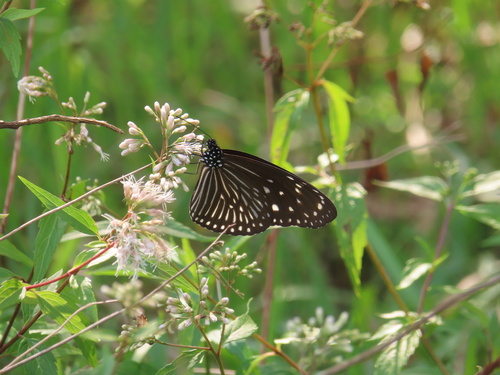
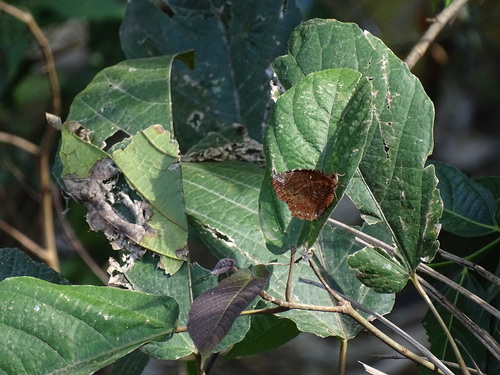
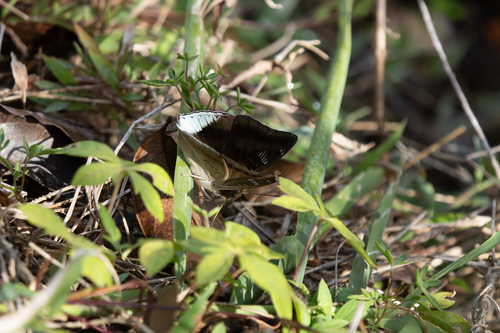
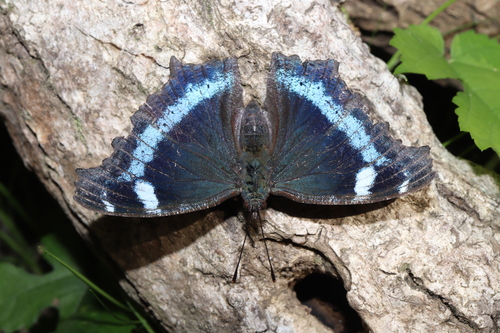
Euploea core, also known as the common crow, is a common butterfly found in South Asia to Australia. In India it is also sometimes referred to as the common Indian crow, and in Australia as the Australian crow. It belongs to the crows and tigers subfamily Danainae (tribe Danaini).

E. core is a glossy-black, medium-sized 85–95 mm (3.3–3.7 in) butterfly with rows of white spots on the margins of its wings. E. core is a slow, steady flier. Due to its unpalatability it is usually observed gliding through the air with a minimum of effort. As caterpillars, this species sequesters toxins from its food plant which are passed on from larva to pupa to the adult. While feeding, it is a very bold butterfly, taking a long time at each bunch of flowers. It can also be found mud-puddling with others of its species and often in mixed groups. The males of this species visit plants like Crotalaria and Heliotropium to replenish pheromone stocks which are used to attract a female during courtship.

The common crow is the most common representative of its genus, Euploea. Like the tigers (genus Danaus), the crows are inedible and thus mimicked by other Indian butterflies (see Batesian mimicry). In addition, the Indian species of the genus Euploea show another kind of mimicry, Müllerian mimicry. Accordingly, this species has been studied in greater detail than other members of its genus in India. Wikipedia →


Global Distribution

Parks Where Found

# Park Country Daily sighting probability
1 Udawalawe National Park 🇱🇰 Sri Lanka
~40%
2 Minneriya National Park 🇱🇰 Sri Lanka
~30%
3 Kanha National Park 🇮🇳 India
~30%
4 Bandhavgarh National Park 🇮🇳 India
~30%
5 Nagarhole National Park 🇮🇳 India
~30%
6 Wilpattu National Park 🇱🇰 Sri Lanka
~30%
7 Yala National Park 🇱🇰 Sri Lanka
~30%
8 Bandipur National Park 🇮🇳 India
~20%
9 Satpura National Park 🇮🇳 India
~20%
10 Jim Corbett National Park 🇮🇳 India
~20%
11 Kaeng Krachan National Park 🇹🇭 Thailand
~10%

Cities Where Found

# City Country Daily sighting probability
1 Jamshedpur 🇮🇳 India
~40%
2 Raipur 🇮🇳 India
~40%
3 Jabalpur 🇮🇳 India
~40%
4 Vijayawada 🇮🇳 India
~40%
5 Indore 🇮🇳 India
~40%
6 Salem 🇮🇳 India
~40%
7 Tamluk 🇮🇳 India
~40%
8 Kalyan-Dombivli 🇮🇳 India
~40%
9 Surat 🇮🇳 India
~40%
10 Chennai 🇮🇳 India
~30%

Before you go

What are the chances of seeing a Common Crow in Guangzhou?

Rare

Under 5% of wildlife watchers report a Common Crow sighting in Guangzhou on a given day, based on 14 verified sightings from GBIF citizen-science data. It is the 211th most-seen of the 482 insects we can rate there. Over three days the chance rises to about 10%, and over a week to about 30%, if each day is a fresh chance.

When is the best time to see a Common Crow in Guangzhou?

February, July and September–November

In those months about 10% of wildlife watchers report a Common Crow in Guangzhou on a given day, against under 5% in March–June, August and December–January, the lowest months.

What time of day is best to see a Common Crow?

Between 8 and 11 am

Across all the parks we cover, that three-hour window holds the most Common Crow sightings with a recorded time, and about 9 in 10 of them come between 6 am and 6 pm: it is a daytime animal.

Is Guangzhou the best place to see a Common Crow?

36th of 36

Of the 36 cities where we can rate Common Crow sightings, Guangzhou ranks 36th at under 5%. The best odds are in Jamshedpur (India, about 40%), Raipur (India, about 40%) and Jabalpur (India, about 40%).

Where does the Common Crow sighting chance come from?

GBIF citizen-science records

It is estimated from how often the Common Crow is recorded against all the insects logged in Guangzhou (14 verified sightings), calibrated against known sighting rates. Figures are rounded to the nearest 10% because citizen-science data supports honest approximations, not decimals, and months with records from fewer than five people show "—". How it works.

← Back to Guangzhou