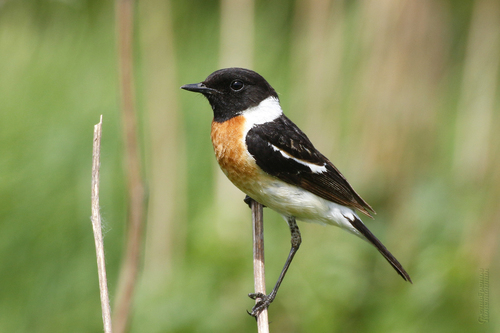
Pale-chinned Blue-Flycatcher

Pale-chinned Blue-Flycatcher

Cyornis poliogenys

Silhouette: L. Shyamal · PhyloPic

LCLeast ConcernNTVUENCR
Daily sighting probability <5% · Rare
at Guwahati

In 3 days <5%

8 Verified sightings at Guwahati
729 In all 6 parks From 2019 to 2026
May Best month
☀️ Diurnal When it's spotted

About the Pale-chinned Blue-Flycatcher

The pale-chinned flycatcher (Cyornis poliogenys) is a species of bird in the family Muscicapidae. It has also been known in the past as pale-chinned blue flycatcher (on the IOC World Bird List up to 2023), and Brook's flycatcher.

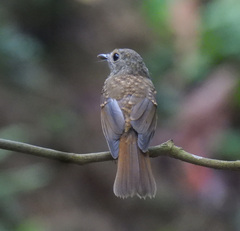
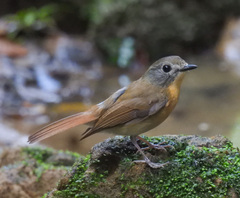
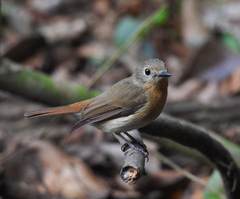
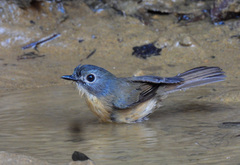
It is a medium-sized flycatcher, 15.5–18 cm (6.1–7.1 in) long. Both sexes are similar, dull bluish-grey on upper parts, and with a rufous chest, a whitish throat, and white below; the males lack the intense blue colours shown by many of the other mainland Asian species in the genus Cyornis.

Its nesting season is April–June. It is insectivorous. It is found in Bangladesh, Bhutan, China, India, Myanmar, and Nepal. Its natural habitat is subtropical or tropical moist lowland forests. It occurs at altitudes from sea level up to 1,600 metres.

There are four subspecies: C. p. poliogenys – central Himalaya to eastern Bangladesh and southwestern Myanmar. C. p. cachariensis – eastern Himalaya to south-central China and northern Myanmar. Differs from the nominate in being more strongly bluish above and orangey below. Wikipedia →

Sounds

Call0:06

India · 2024

© Lars Lachmann · XC882081 · CC BY-NC-SA 4.0

Song1:07

India · 2020

© Leons Mathew Abraham · XC585055 · CC BY-NC-SA 4.0

Call0:27

India · 2019

© Dibyendu Ash · XC473870 · CC BY-NC-SA 4.0

Global Distribution

Parks Where Found

# Park Country Daily sighting probability
1 Manas National Park 🇮🇳 India
~20%
2 Chitwan National Park 🇳🇵 Nepal
~10%
3 Kaziranga National Park 🇮🇳 India
~10%
4 Namdapha National Park 🇮🇳 India
<5%
5 Royal Bardia National Park 🇳🇵 Nepal
<5%
6 Royal Manas National Park 🇧🇹 Bhutan
<5%

Cities Where Found

# City Country Daily sighting probability
1 Guwahati 🇮🇳 India
<5%

Before you go

What are the chances of seeing a Pale-chinned Blue-Flycatcher in Guwahati?

Rare

Under 5% of wildlife watchers report a Pale-chinned Blue-Flycatcher sighting in Guwahati on a given day, based on 8 verified sightings from GBIF citizen-science data. It is the 155th most-seen of the 185 birds we can rate there. Over three days the chance rises to under 5%, if each day is a fresh chance.

When is the best time to see a Pale-chinned Blue-Flycatcher in Guwahati?

Any time of year

In every month with enough records, under 5% of wildlife watchers report a Pale-chinned Blue-Flycatcher in Guwahati on a given day, so our monthly data shows no clear season.

What time of day is best to see a Pale-chinned Blue-Flycatcher?

Between 2 and 5 pm

Across all the parks we cover, that three-hour window holds the most Pale-chinned Blue-Flycatcher sightings with a recorded time, and nearly all of them come between 6 am and 6 pm: it is a daytime animal.

Where else can you see a Pale-chinned Blue-Flycatcher?

Only Guwahati, in our data

Guwahati is the only city on Wallace's Line with enough records to rate Pale-chinned Blue-Flycatcher sightings: under 5% of wildlife watchers there report one on a given day.

Which relatives of the Pale-chinned Blue-Flycatcher live in Guwahati?

Same family: Muscicapidae

The closest relatives of the Pale-chinned Blue-Flycatcher that you can see in Guwahati (family Muscicapidae, Old World Flycatchers, Robins, and Chats) are Oriental Magpie-Robin (about 70%), Taiga Flycatcher (about 20%) and White-rumped Shama (about 20%), with each one's daily chance of a sighting.

Where does the Pale-chinned Blue-Flycatcher sighting chance come from?

GBIF citizen-science records

It is estimated from how often the Pale-chinned Blue-Flycatcher is recorded against all the birds logged in Guwahati (8 verified sightings), calibrated against known sighting rates. Figures are rounded to the nearest 10% because citizen-science data supports honest approximations, not decimals, and months with records from fewer than five people show "—". How it works.

← Back to Guwahati