

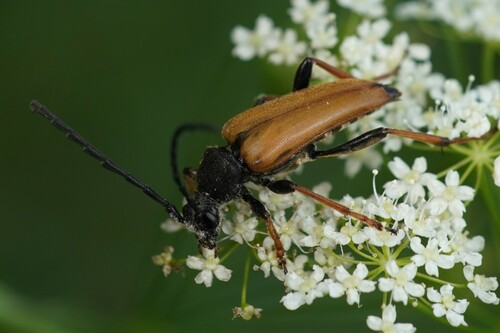
Lesser Vespillo Burying Beetle

Lesser Vespillo Burying Beetle

Nicrophorus vespilloides

Daily sighting probability <5% · Rare
at Hamburg

In 3 days ~10% in a week ~20%

6 Verified sightings at Hamburg
139 In all 7 parks From 2019 to 2026
September Best month
☀️ Diurnal When it's spotted

About the Lesser Vespillo Burying Beetle

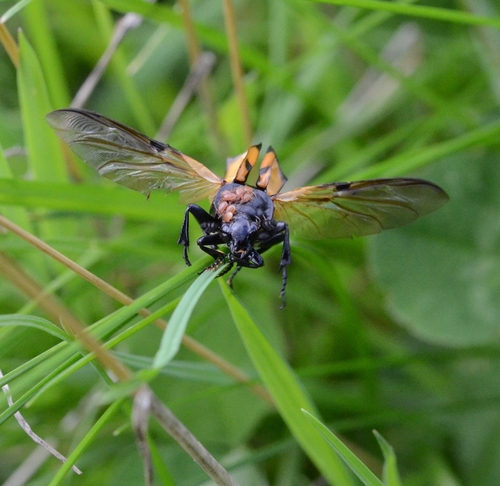
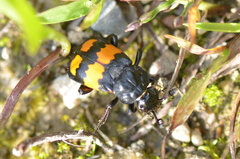
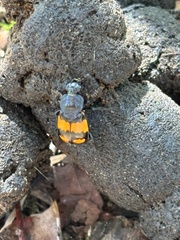
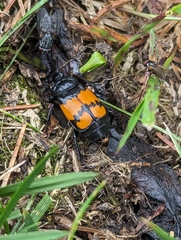
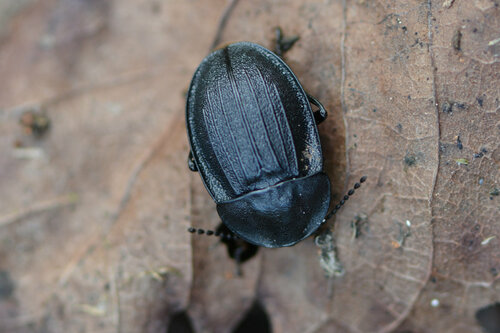
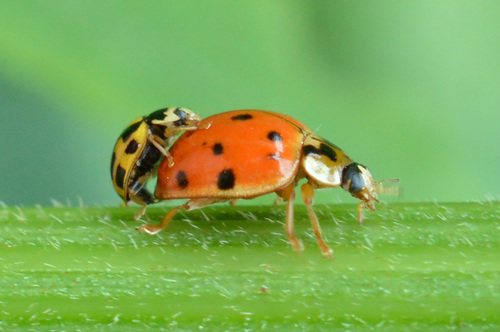
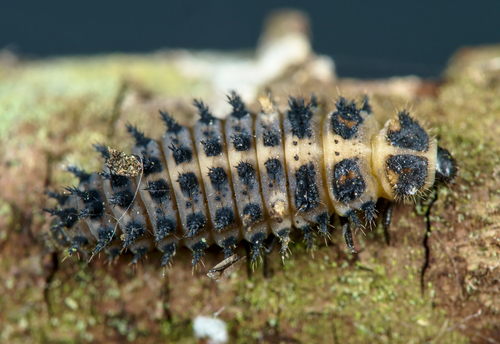
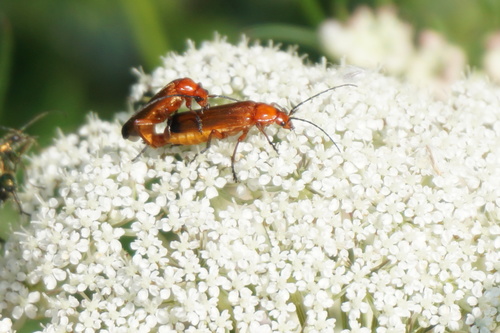
Nicrophorus vespilloides is a burying beetle described by Johann Friedrich Wilhelm Herbst in 1783. The beetles vary widely in size and can present with a range of anywhere from 12 mm to 20 mm in size. They have two conspicuous orange-yellow bands on the elytra. The color of the antennae are an important distinguishing feature, being totally black. The color of their orange and black markings is multifunctional, as they are conspicuous to avian predators. In general, they present a unique ecological niche, which is their evolution of aposematism, or the strategy they use to warn predators through their conspicuous signals. The wing cases of these beetles possess a squarish shape and are notably shorter in length than their abdomens, indicating a distinct physical characteristic of the species.

Overall, there are reported differences in coloration and chemical defenses among the sexes. This is hypothesized to stem from conflicting selection pressures for the different sexes. They also produce anal fluid or exudate from their abdomen when they feel threatened. These anal fluids further contribute to the antimicrobial defense of these beetles.

These insect species boast... Wikipedia →

Global Distribution

Parks Where Found

# Park Country Daily sighting probability
1 Białowieża National Park 🇵🇱 Poland
~20%
2 Cairngorms National Park 🇬🇧 United Kingdom
~20%
3 Snowdonia National Park 🇬🇧 United Kingdom
~10%
4 Bavarian Forest National Park 🇩🇪 Germany
~10%
5 Triglav National Park 🇸🇮 Slovenia
~10%
6 Pyrénées National Park 🇫🇷 France
~10%
7 Wadden Sea National Park 🇩🇪 Germany
<5%

Cities Where Found

# City Country Daily sighting probability
1 Manchester 🇬🇧 United Kingdom
<5%
2 Munich 🇩🇪 Germany
<5%
3 Helsinki 🇫🇮 Finland
<5%
4 Copenhagen 🇩🇰 Denmark
<5%
5 Hamburg 🇩🇪 Germany
<5%
6 Kyiv 🇺🇦 Ukraine
<5%
7 Moscow 🇷🇺 Russia
<5%
8 Saint Petersburg 🇷🇺 Russia
<5%

Before you go

What are the chances of seeing a Lesser Vespillo Burying Beetle in Hamburg?

Rare

Under 5% of wildlife watchers report a Lesser Vespillo Burying Beetle sighting in Hamburg on a given day, based on 6 verified sightings from GBIF citizen-science data. It is the 326th most-seen of the 423 insects we can rate there. Over three days the chance rises to about 10%, and over a week to about 20%, if each day is a fresh chance.

When is the best time to see a Lesser Vespillo Burying Beetle in Hamburg?

July and September

In those months about 10% of wildlife watchers report a Lesser Vespillo Burying Beetle in Hamburg on a given day, against under 5% in August and October–June, the lowest months.

What time of day is best to see a Lesser Vespillo Burying Beetle?

Between noon and 3 pm

Across all the parks we cover, that three-hour window holds the most Lesser Vespillo Burying Beetle sightings with a recorded time, and about 8 in 10 of them come between 6 am and 6 pm: it is a daytime animal.

Is Hamburg the best place to see a Lesser Vespillo Burying Beetle?

Among the best

Of the 8 cities where we can rate Lesser Vespillo Burying Beetle sightings, Hamburg ranks 5th at under 5%, level with the leaders once rounded. The best odds are in Manchester (United Kingdom, under 5%), Munich (Germany, under 5%) and Helsinki (Finland, under 5%).

Which relatives of the Lesser Vespillo Burying Beetle live in Hamburg?

Same family: Staphylinidae

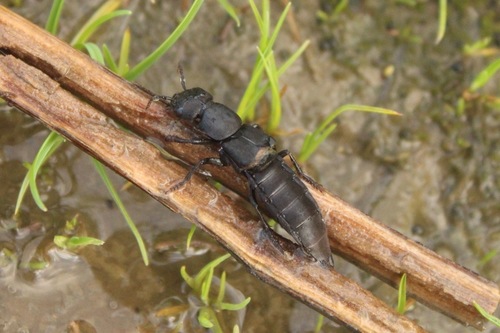
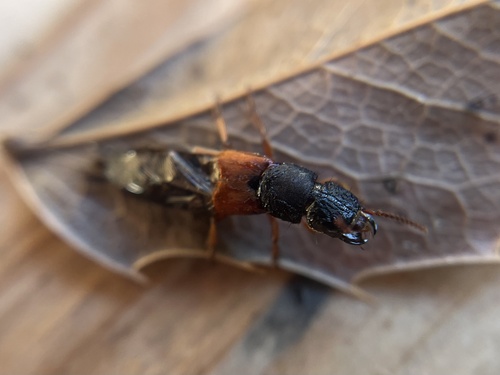
The closest relatives of the Lesser Vespillo Burying Beetle that you can see in Hamburg (family Staphylinidae, Rove Beetles) are Black Snail Beetle (about 10%) and Devil's Coach Horse Beetle (about 10%), with each one's daily chance of a sighting.

Where does the Lesser Vespillo Burying Beetle sighting chance come from?

GBIF citizen-science records

It is estimated from how often the Lesser Vespillo Burying Beetle is recorded against all the insects logged in Hamburg (6 verified sightings), calibrated against known sighting rates. Figures are rounded to the nearest 10% because citizen-science data supports honest approximations, not decimals, and months with records from fewer than five people show "—". How it works.

← Back to Hamburg