Hawthorn Shield Bug

Hawthorn Shield Bug

Acanthosoma haemorrhoidale

Daily sighting probability ~10% · With luck
at Helsinki

In 3 days ~20% in a week ~50%

50 Verified sightings at Helsinki
104 In all 5 parks From 2019 to 2026
September Best month
☀️ Diurnal When it's spotted

About the Hawthorn Shield Bug

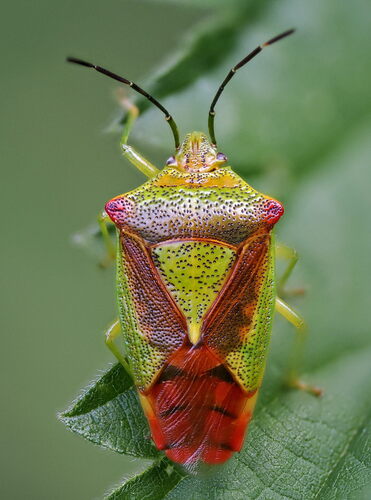
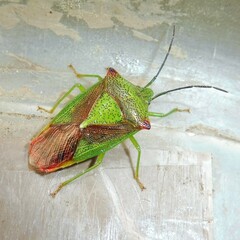
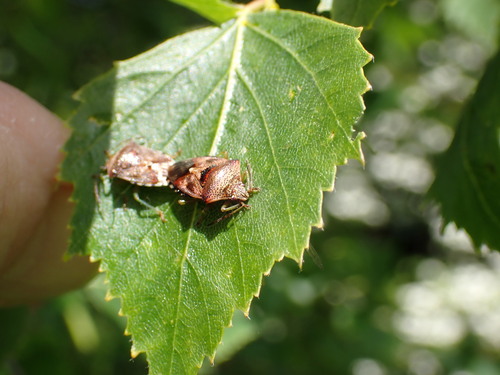
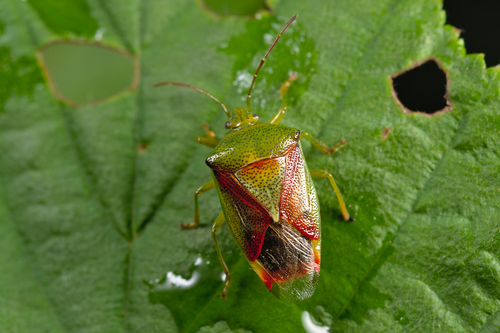
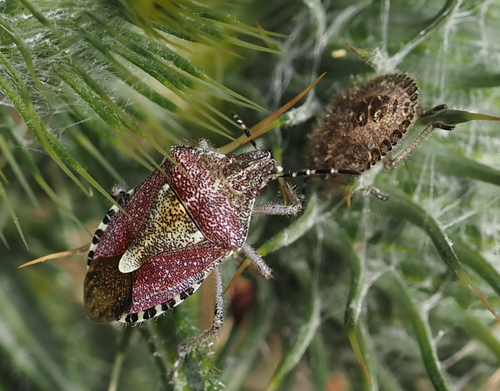
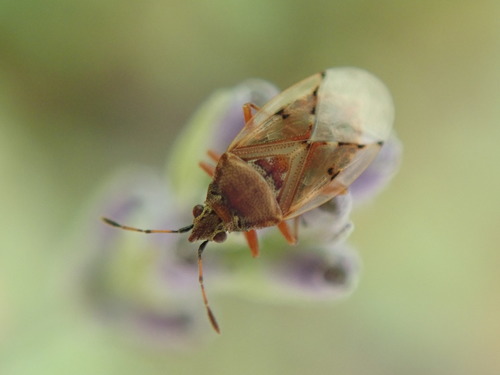
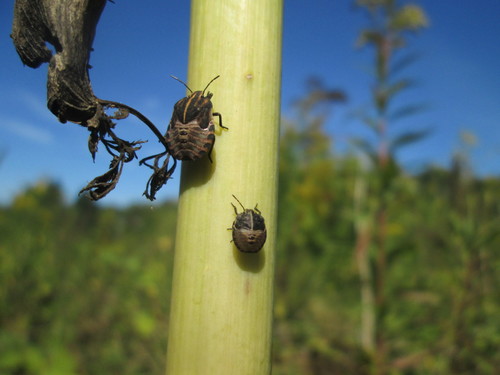
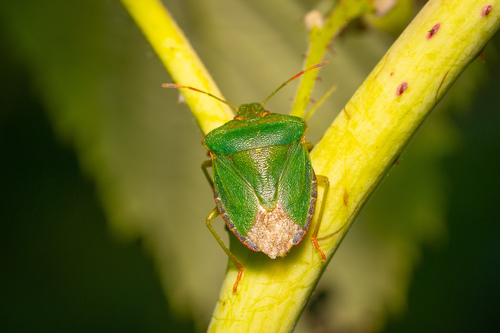
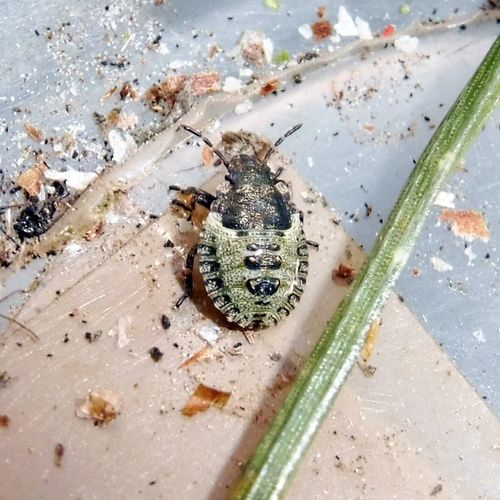
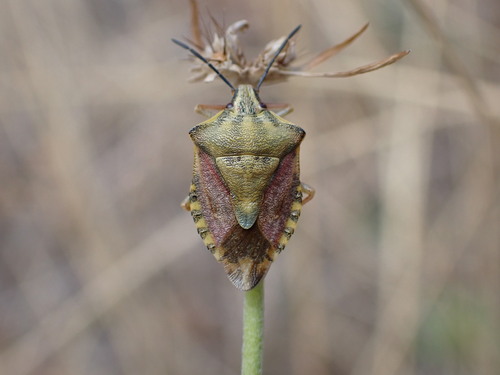
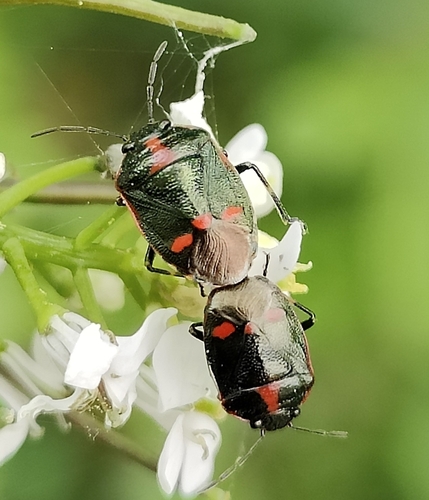
The hawthorn shield bug (Acanthosoma haemorrhoidale) is a common European shield bug. Its chief food is haws, the fruit of the hawthorn tree, but adults can overwinter on a diet of leaves, and individuals can be found on many potential food plants, including pedunculate oak, sessile oak and whitebeam. They may grow up to 17 mm (0.67 in) long, and are camouflaged in shades of green and brown. Like many so-called "stink bugs", they may release unpleasant odours when disturbed.

The dark green scutellum band is trapezoidal in shape, and extends from the dorsal pronotum to the forewing hemelytral membrane which accounts for the final third of the main body length. The front wings lie flat when the insect is not flying, with the sclerotized pronotum and corium regions coloured dark red. The compound eyes are also red. There is a speckled pigmentation extending from the upper dorsal thorax to the abdominal region. The tarsi are 2-segmented and antennae 5-segmented. As a heteropteran herbivore of mainly green leafed trees and red berries, the species feeds by injecting saliva enzymes from the posterior section of the rostrum into plant tissue, partially digesting it, then sucks... Wikipedia →

Global Distribution

Parks Where Found

# Park Country Daily sighting probability
1 Snowdonia National Park 🇬🇧 United Kingdom
~10%
2 Bavarian Forest National Park 🇩🇪 Germany
~10%
3 Cairngorms National Park 🇬🇧 United Kingdom
~10%
4 Wadden Sea National Park 🇩🇪 Germany
~10%
5 Pyrénées National Park 🇫🇷 France
~10%

Cities Where Found

# City Country Daily sighting probability
1 Manchester 🇬🇧 United Kingdom
~20%
2 Liverpool 🇬🇧 United Kingdom
~20%
3 Birmingham 🇬🇧 United Kingdom
~20%
4 Dublin 🇮🇪 Ireland
~20%
5 Leeds 🇬🇧 United Kingdom
~10%
6 London 🇬🇧 United Kingdom
~10%
7 Copenhagen 🇩🇰 Denmark
~10%
8 Stockholm 🇸🇪 Sweden
~10%
9 Hamburg 🇩🇪 Germany
~10%
10 Helsinki 🇫🇮 Finland
~10%

Before you go

What are the chances of seeing a Hawthorn Shield Bug in Helsinki?

With luck

About 10% of wildlife watchers report a Hawthorn Shield Bug sighting in Helsinki on a given day, based on 50 verified sightings from GBIF citizen-science data. It is the 96th most-seen of the 838 insects we can rate there. Over three days the chance rises to about 20%, and over a week to about 50%, if each day is a fresh chance.

When is the best time to see a Hawthorn Shield Bug in Helsinki?

March and June–November

In those months about 10% of wildlife watchers report a Hawthorn Shield Bug in Helsinki on a given day, against under 5% in April–May and December–February, the lowest months.

What time of day is best to see a Hawthorn Shield Bug?

Between 2 and 5 pm

Across all the parks we cover, that three-hour window holds the most Hawthorn Shield Bug sightings with a recorded time, and about 9 in 10 of them come between 6 am and 6 pm: it is a daytime animal.

Is Helsinki the best place to see a Hawthorn Shield Bug?

10th of 27

Of the 27 cities where we can rate Hawthorn Shield Bug sightings, Helsinki ranks 10th at about 10%. The best odds are in Manchester (United Kingdom, about 20%), Liverpool (United Kingdom, about 20%) and Birmingham (United Kingdom, about 20%).

Which relatives of the Hawthorn Shield Bug live in Helsinki?

Same family: Acanthosomatidae

The closest relatives of the Hawthorn Shield Bug that you can see in Helsinki (family Acanthosomatidae, Shield Bugs) are Parent Bug (about 10%) and Birch Shield Bug (about 10%), with each one's daily chance of a sighting.

Where does the Hawthorn Shield Bug sighting chance come from?

GBIF citizen-science records

It is estimated from how often the Hawthorn Shield Bug is recorded against all the insects logged in Helsinki (50 verified sightings), calibrated against known sighting rates. Figures are rounded to the nearest 10% because citizen-science data supports honest approximations, not decimals, and months with records from fewer than five people show "—". How it works.

← Back to Helsinki