Red-Tailed Bumble Bee

Red-Tailed Bumble Bee

Bombus lapidarius

Daily sighting probability ~20% · Possible
at Helsinki

In 3 days ~40% in a week ~70%

140 Verified sightings at Helsinki
109 In all 5 parks From 2019 to 2026
August Best month
☀️ Diurnal When it's spotted

About the Red-Tailed Bumble Bee

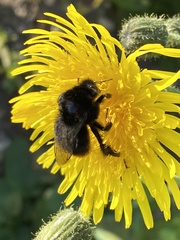
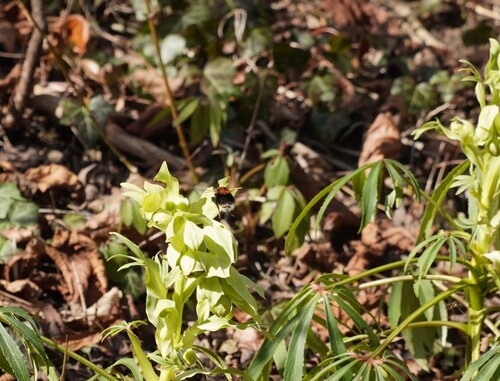
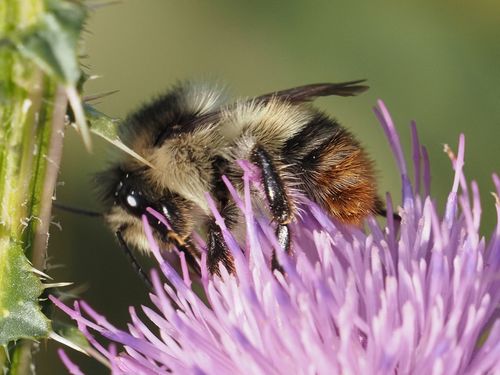
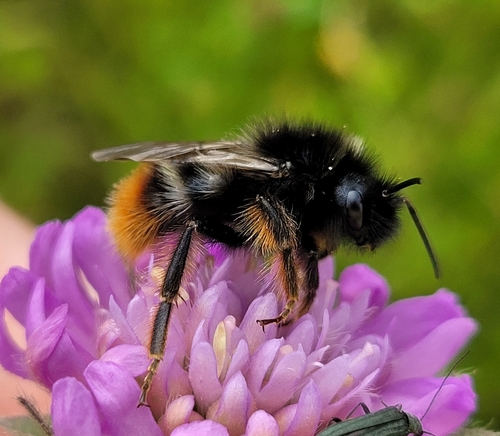
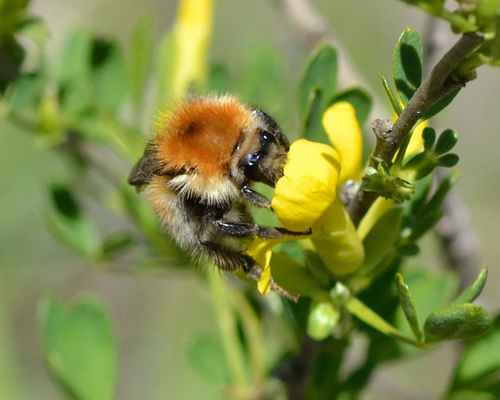
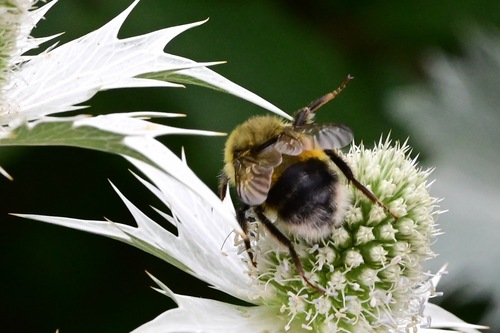
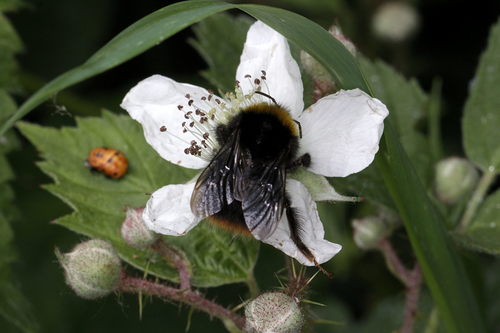
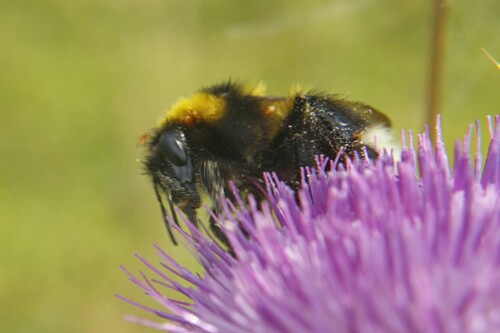
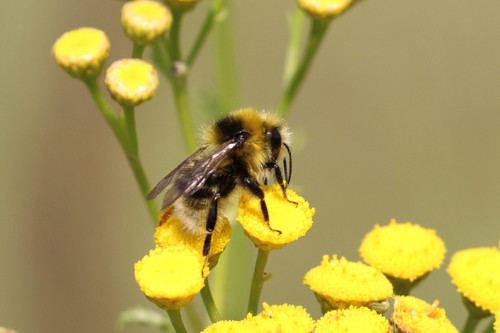
Bombus lapidarius is a species of bumblebee in the subgenus Melanobombus. Commonly known as the red-tailed bumblebee, B. lapidarius can be found throughout much of Central Europe. Known for its distinctive black and red body, this social bee is important in pollination.

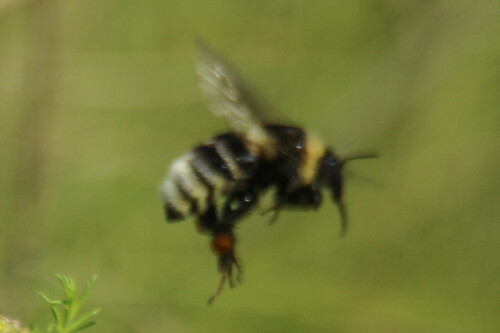
The red-tailed bumblebee is a part of the order Hymenoptera, family Apidae, and the genus Bombus, which includes many species including Bombus terrestris, Bombus lucorum, and Bombus hypnorum. The red-tailed bumblebee is typically distinguished by its black body with red markings around the abdomen. Worker females and the queen look similar, though the queen is much larger than the worker females. Males typically have the red and black coloration with a yellow band around the abdomen and yellow markings on the face. Further, B. lapidarius tend to have a medium-sized proboscis, which is significant in that it allows the species to be a good pollinator. These bees do not typically form extensive or complex colonies. Nests usually only contain a few hundred bees at most, with an average colony consisting of about 100 to 200 worker bees. Wikipedia →

Global Distribution

Parks Where Found

# Park Country Daily sighting probability
1 Snowdonia National Park 🇬🇧 United Kingdom
~20%
2 Bavarian Forest National Park 🇩🇪 Germany
~10%
3 Triglav National Park 🇸🇮 Slovenia
~10%
4 Wadden Sea National Park 🇩🇪 Germany
~10%
5 Pyrénées National Park 🇫🇷 France
~10%

Cities Where Found

# City Country Daily sighting probability
1 Liverpool 🇬🇧 United Kingdom
~40%
2 Manchester 🇬🇧 United Kingdom
~30%
3 Birmingham 🇬🇧 United Kingdom
~30%
4 Warsaw 🇵🇱 Poland
~20%
5 Leeds 🇬🇧 United Kingdom
~20%
6 Berlin 🇩🇪 Germany
~20%
7 Helsinki 🇫🇮 Finland
~20%
8 Kharkiv 🇺🇦 Ukraine
~10%
9 London 🇬🇧 United Kingdom
~10%
10 Copenhagen 🇩🇰 Denmark
~10%

Before you go

What are the chances of seeing a Red-Tailed Bumble Bee in Helsinki?

Possible

About 20% of wildlife watchers report a Red-Tailed Bumble Bee sighting in Helsinki on a given day, based on 140 verified sightings from GBIF citizen-science data. It is the 28th most-seen of the 838 insects we can rate there. Over three days the chance rises to about 40%, and over a week to about 70%, if each day is a fresh chance.

When is the best time to see a Red-Tailed Bumble Bee in Helsinki?

May to August

In those months about 20% of wildlife watchers report a Red-Tailed Bumble Bee in Helsinki on a given day, against under 5% in October to March, the lowest months.

What time of day is best to see a Red-Tailed Bumble Bee?

Between 11 am and 2 pm

Across all the parks we cover, that three-hour window holds the most Red-Tailed Bumble Bee sightings with a recorded time, and about 9 in 10 of them come between 6 am and 6 pm: it is a daytime animal.

Is Helsinki the best place to see a Red-Tailed Bumble Bee?

7th of 29

Of the 29 cities where we can rate Red-Tailed Bumble Bee sightings, Helsinki ranks 7th at about 20%. The best odds are in Liverpool (United Kingdom, about 40%), Manchester (United Kingdom, about 30%) and Birmingham (United Kingdom, about 30%).

Which relatives of the Red-Tailed Bumble Bee live in Helsinki?

Same genus: Bombus

The closest relatives of the Red-Tailed Bumble Bee that you can see in Helsinki (genus Bombus, Bumble Bees) are Tree Bumble Bee (about 20%), Common Carder Bumble Bee (about 20%) and Buff-Tailed Bumble Bee (about 10%), with each one's daily chance of a sighting.

Where does the Red-Tailed Bumble Bee sighting chance come from?

GBIF citizen-science records

It is estimated from how often the Red-Tailed Bumble Bee is recorded against all the insects logged in Helsinki (140 verified sightings), calibrated against known sighting rates. Figures are rounded to the nearest 10% because citizen-science data supports honest approximations, not decimals, and months with records from fewer than five people show "—". How it works.
← Back to Helsinki