Red-billed Leiothrix

Red-billed Leiothrix

Leiothrix lutea

Silhouette: Sheatherius · PhyloPic

LCLeast ConcernNTVUENCR
Daily sighting probability ~10% · With luck
at Hiroshima

In 3 days ~20% in a week ~30%

8 Verified sightings at Hiroshima
536 In all 5 parks From 2019 to 2026
May Best month
☀️ Diurnal When it's spotted

About the Red-billed Leiothrix

The red-billed leiothrix (Leiothrix lutea) is a member of the family Leiothrichidae, native to southern China and the Himalayas. Adults have bright red bills and a yellowish-white ring around their eyes. Their backs are dull olive green, and they have a bright yellow-orange throat with a yellow chin; females are somewhat duller than males, and juveniles have black bills. It has also been introduced in various parts of the world, with small populations of escapees having existed in Japan since the 1980s. It has become a common cagebird and amongst aviculturists it goes by various names, including Pekin robin, Pekin nightingale, Japanese nightingale, and Japanese (hill) robin, these all being misnomers as it is not native to Japan (although it has been introduced and naturalised there), nor is it a robin or a nightingale.

The red-billed leiothrix was formally described in 1786 by the Austrian naturalist Giovanni Antonio Scopoli under the binomial name Sylvia lutea. Scopoli based his account on "La mésange de Nanguin" that had been described and illustrated in 1782 by the French naturalist Pierre Sonnerat in the second volume of his book Voyage aux Indes orientales et à... Wikipedia →

Sounds

Recording0:09

United States · 2023

© Spencer Len Pote · iNaturalist · CC BY-NC 4.0

Recording0:14

Italy · 2026

© Jessica Peruzzo · iNaturalist · CC BY-NC-ND 4.0

Recording0:18

United States · 2025

© Julien Carley-Windeler · iNaturalist · CC BY-NC 4.0

Global Distribution

Parks Where Found

# Park Country Daily sighting probability
1 Jim Corbett National Park 🇮🇳 India
~10%
2 Langtang National Park 🇳🇵 Nepal
~10%
3 Ordesa y Monte Perdido National Park 🇪🇸 Spain
<5%
4 Royal Manas National Park 🇧🇹 Bhutan
<5%
5 Pyrénées National Park 🇫🇷 France
<5%

Cities Where Found

# City Country Daily sighting probability
1 Guiyang 🇨🇳 China
~50%
2 Chongqing 🇨🇳 China
~10%
3 Fukuoka 🇯🇵 Japan
~10%
4 Hiroshima 🇯🇵 Japan
~10%
5 Barcelona 🇪🇸 Spain
<5%
6 Nanjing 🇨🇳 China
<5%
7 Dehradun 🇮🇳 India
<5%
8 Suzhou 🇨🇳 China
<5%
9 Chengdu 🇨🇳 China
<5%
10 Osaka 🇯🇵 Japan
<5%

Zoos & Centres Where Found

# Zoo / Centre Country
1 Disney's Animal Kingdom 🇺🇸 United States In captivity
2 San Diego Zoo 🇺🇸 United States In captivity
3 Prague Zoo 🇨🇿 Czechia In captivity
4 Basel Zoo 🇨🇭 Switzerland In captivity
5 Tierpark Berlin 🇩🇪 Germany In captivity
6 North Carolina Zoo 🇺🇸 United States In captivity
7 San Diego Zoo Safari Park 🇺🇸 United States In captivity
8 Chengdu Research Base of Giant Panda Breeding 🇨🇳 China In captivity
9 Columbus Zoo and Aquarium 🇺🇸 United States In captivity
10 Poznań Nowe Zoo 🇵🇱 Poland In captivity
11 Bronx Zoo 🇺🇸 United States In captivity
12 Beijing Zoo 🇨🇳 China In captivity
13 Detroit Zoo 🇺🇸 United States In captivity
14 Louisville Zoo 🇺🇸 United States In captivity
15 Berlin Zoological Garden 🇩🇪 Germany In captivity
16 Taronga Zoo 🇦🇺 Australia In captivity
17 Zoo Opole 🇵🇱 Poland In captivity
18 Chengdu Zoo 🇨🇳 China In captivity
19 Attica Zoological Park 🇬🇷 Greece In captivity
20 Jersey Zoo 🇯🇪 Jersey In captivity
21 London Zoo 🇬🇧 United Kingdom In captivity
22 Riverbanks Zoo 🇺🇸 United States In captivity
23 Lincoln Park Zoo 🇺🇸 United States In captivity
24 Vogelpark Avifauna 🇳🇱 Netherlands In captivity
25 Reid Park Zoo 🇺🇸 United States In captivity
26 Hong Kong Zoological and Botanical Gardens 🇨🇳 China In captivity
27 Beijing Aquarium 🇨🇳 China In captivity
28 Taman Indonesia 🇳🇱 Netherlands In captivity
29 Edward Youde Aviary 🇭🇰 Hong Kong SAR China In captivity
30 Aquarium Berlin 🇩🇪 Germany In captivity
31 Bloedel Conservatory 🇨🇦 Canada In captivity
32 Rákosův pavilon 🇨🇿 Czechia In captivity
33 Velemlokárium 🇨🇿 Czechia In captivity

Before you go

What are the chances of seeing a Red-billed Leiothrix in Hiroshima?

With luck

About 10% of wildlife watchers report a Red-billed Leiothrix sighting in Hiroshima on a given day, based on 8 verified sightings from GBIF citizen-science data. It is the 48th most-seen of the 59 birds we can rate there. Over three days the chance rises to about 20%, and over a week to about 30%, if each day is a fresh chance.

When is the best time to see a Red-billed Leiothrix in Hiroshima?

May and November–January

In those months about 10% of wildlife watchers report a Red-billed Leiothrix in Hiroshima on a given day, against under 5% in February–April and June–October, the lowest months.

What time of day is best to see a Red-billed Leiothrix?

Between 9 am and noon

Across all the parks we cover, that three-hour window holds the most Red-billed Leiothrix sightings with a recorded time, and about 9 in 10 of them come between 6 am and 6 pm: it is a daytime animal.

Is Hiroshima the best place to see a Red-billed Leiothrix?

4th of 15

Of the 15 cities where we can rate Red-billed Leiothrix sightings, Hiroshima ranks 4th at about 10%. The best odds are in Guiyang (China, about 50%), Chongqing (China, about 10%) and Fukuoka (Japan, about 10%).

Which relatives of the Red-billed Leiothrix live in Hiroshima?

Same order: Passeriformes

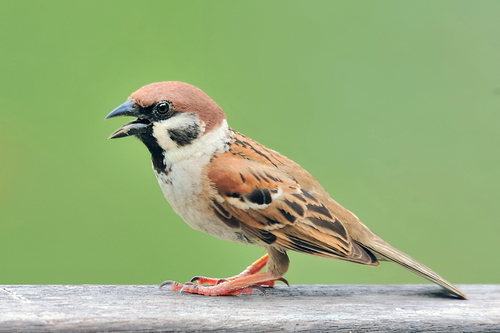
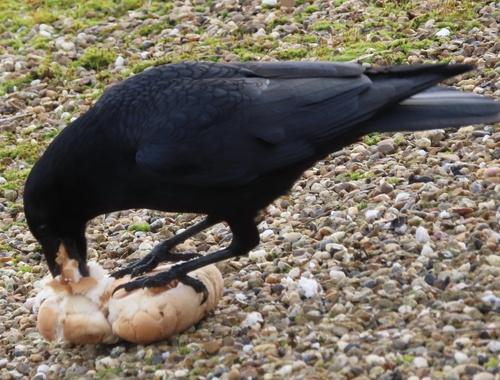
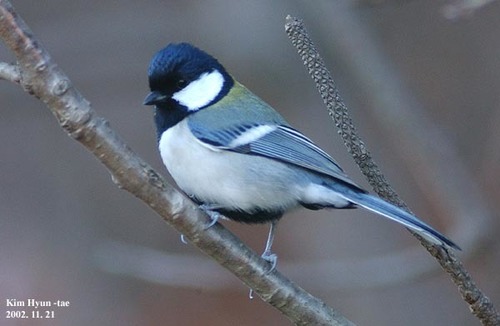
The closest relatives of the Red-billed Leiothrix that you can see in Hiroshima (order Passeriformes, Perching Birds) are Large-billed Crow (about 90%), Eurasian Tree Sparrow (about 80%) and Brown-eared Bulbul (about 80%), with each one's daily chance of a sighting.

Where does the Red-billed Leiothrix sighting chance come from?

GBIF citizen-science records

It is estimated from how often the Red-billed Leiothrix is recorded against all the birds logged in Hiroshima (8 verified sightings), calibrated against known sighting rates. Figures are rounded to the nearest 10% because citizen-science data supports honest approximations, not decimals, and months with records from fewer than five people show "—". How it works.

← Back to Hiroshima