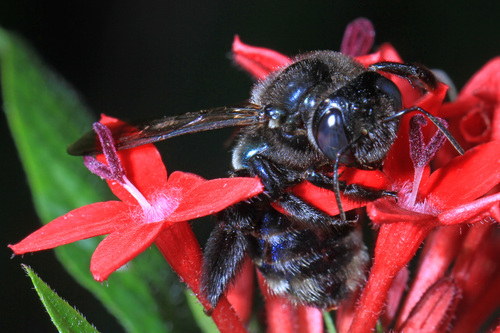
Organ-Pipe Mud-Dauber Wasp

Organ-Pipe Mud-Dauber Wasp

Trypoxylon politum

Daily sighting probability <5% · Rare
at Houston

In 3 days ~10% in a week ~20%

12 Verified sightings at Houston
30 In all 2 parks From 2019 to 2026
June Best month
☀️ Diurnal When it's spotted

About the Organ-Pipe Mud-Dauber Wasp

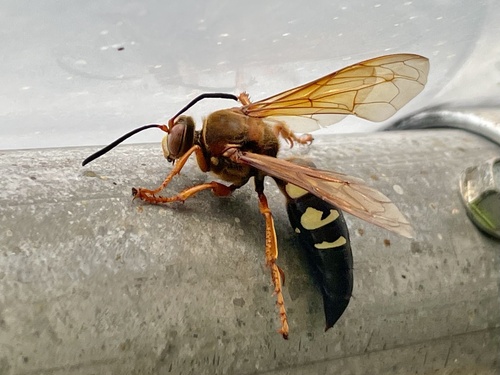
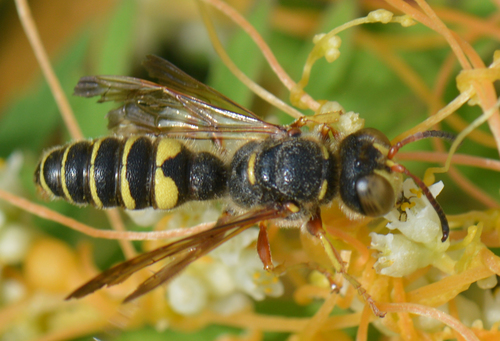
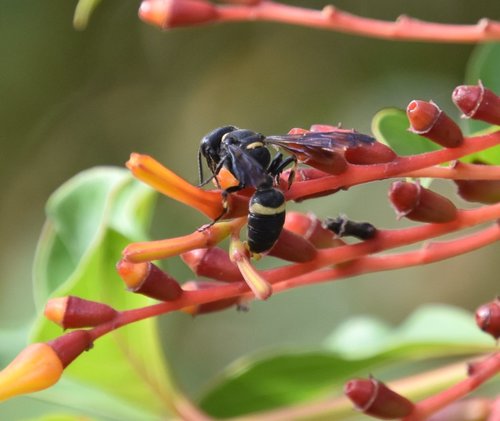
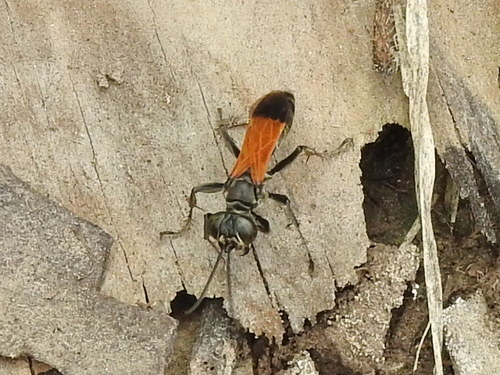
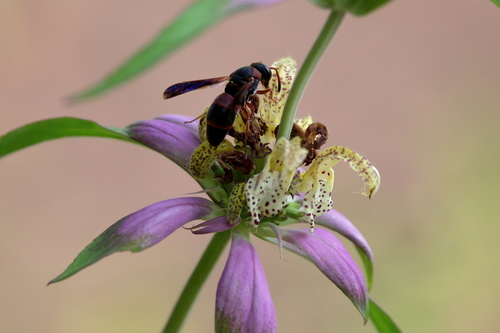
The organ pipe mud dauber (Trypoxylon politum) is a predatory wasp in the family Crabronidae. It is fairly large, ranging from 3.9 to 5.1 cm, and has been recorded to fly from May to September. Females and males are similar in colour, a shiny black, with the end part of the back leg being pale yellow to white.

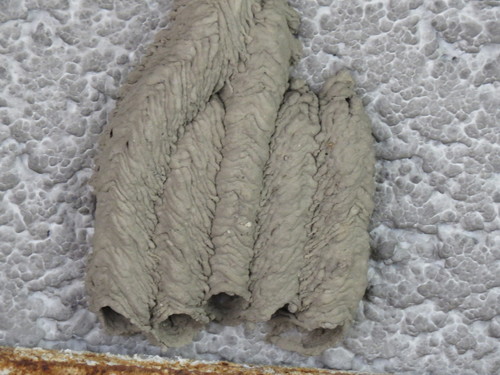
The organ pipe mud dauber gets its name from the distinctive shape and composition of its nests. It is native to eastern North America. Organ pipe mud daubers are also an exceedingly docile species of wasp, and generally beneficial to have around, as they serve to keep spider populations down; larvae feed on living paralyzed spiders.

The organ pipe mud dauber ranges from Southeastern Canada to the Eastern United States They use tree holes or the underside of bridges to construct their nests out of mud. Nest site choice usually depends on three specifications - a smooth, vertical surface with ample shade and rainfall protection, a source of mud nearby, and an adjacent forest. The females form long mud tubes consisting of multiple cells, which they fortify with paralyzed spiders. The female then lays an egg in each cell and leaves the nest; once the... Wikipedia →
Global Distribution

Parks Where Found

# Park Country Daily sighting probability
1 Great Smoky Mountains National Park 🇺🇸 United States
~10%
2 Shenandoah National Park 🇺🇸 United States
~10%

Cities Where Found

# City Country Daily sighting probability
1 New York City 🇺🇸 United States
<5%
2 Washington 🇺🇸 United States
<5%
3 Baltimore 🇺🇸 United States
<5%
4 Austin 🇺🇸 United States
<5%
5 Philadelphia 🇺🇸 United States
<5%
6 Toronto 🇨🇦 Canada
<5%
7 Houston 🇺🇸 United States
<5%
8 Dallas 🇺🇸 United States
<5%
9 San Antonio 🇺🇸 United States
<5%
10 Chicago 🇺🇸 United States
<5%

Before you go

What are the chances of seeing an Organ-Pipe Mud-Dauber Wasp in Houston?

Rare

Under 5% of wildlife watchers report an Organ-Pipe Mud-Dauber Wasp sighting in Houston on a given day, based on 12 verified sightings from GBIF citizen-science data. It is the 633rd most-seen of the 1057 insects we can rate there. Over three days the chance rises to about 10%, and over a week to about 20%, if each day is a fresh chance.

When is the best time to see an Organ-Pipe Mud-Dauber Wasp in Houston?

Any time of year

In every month with enough records, under 5% of wildlife watchers report an Organ-Pipe Mud-Dauber Wasp in Houston on a given day, so our monthly data shows no clear season.

What time of day is best to see an Organ-Pipe Mud-Dauber Wasp?

Between 2 and 5 pm

Across all the parks we cover, that three-hour window holds the most Organ-Pipe Mud-Dauber Wasp sightings with a recorded time, and about 9 in 10 of them come between 6 am and 6 pm: it is a daytime animal.

Is Houston the best place to see an Organ-Pipe Mud-Dauber Wasp?

Among the best

Of the 10 cities where we can rate Organ-Pipe Mud-Dauber Wasp sightings, Houston ranks 7th at under 5%, level with the leaders once rounded. The best odds are in New York City (United States, under 5%), Washington (United States, under 5%) and Baltimore (United States, under 5%).

Which relatives of the Organ-Pipe Mud-Dauber Wasp live in Houston?

Same family: Crabronidae

The closest relatives of the Organ-Pipe Mud-Dauber Wasp that you can see in Houston (family Crabronidae, Square-headed Wasps, Sand Wasps, and Allies) are Eastern Cicada-Killer Wasp (about 10%) and Four-Banded Stink Bug Wasp (about 10%), with each one's daily chance of a sighting.

Where does the Organ-Pipe Mud-Dauber Wasp sighting chance come from?

GBIF citizen-science records

It is estimated from how often the Organ-Pipe Mud-Dauber Wasp is recorded against all the insects logged in Houston (12 verified sightings), calibrated against known sighting rates. Figures are rounded to the nearest 10% because citizen-science data supports honest approximations, not decimals, and months with records from fewer than five people show "—". How it works.

← Back to Houston