About the Household Casebearer
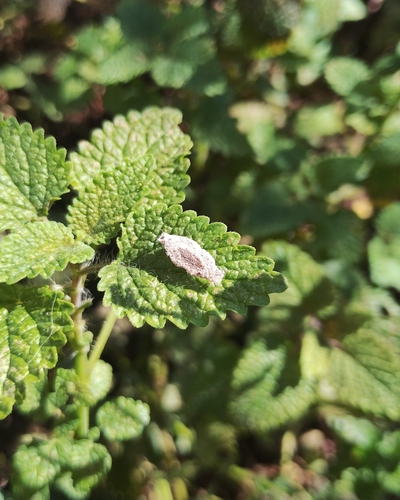
Phereoeca uterella, known by the vernacular names plaster bagworm and household casebearer, is a moth species in family Tineidae. It occurs in tropical climates, where it is common in houses, and is presumed native to the Neotropical realm. In the Americas, it has been recorded from Brazil, Guyana, and the southern United States as well as the Virgin Islands and Trinidad, and tentatively identified from Tobago.
As with other species of its genus, Phereoeca uterella has been the subject of taxonomical confusion, some of which is not yet fully resolved. The Sri Lankan case-bearing moth described as Tinea pachyspila and subsequently transferred to genus Phereoeca may either be considered to be this species, or to instead be Phereoeca allutella. Similarly, the Ugandan case-bearing moth originally described as Tinea barysticta may either be considered Phereoeca uterella or a valid species (as Phereoeca barysticta).
The adult female has a wingspan of up to 13 mm. The forewings are gray with distinct dark spots and the plain hindwings are fringed with long gray hairs. The male is smaller (wingspan up to 9 mm) and more slender with less distinct markings. The reduced mouthparts... Wikipedia →