Mediterranean Katydid

Mediterranean Katydid

Phaneroptera nana

Daily sighting probability ~10% · With luck
at Istanbul

In 3 days ~20% in a week ~40%

10 Verified sightings at Istanbul
91 In all 5 parks From 2019 to 2026
June Best month
☀️ Diurnal When it's spotted

About the Mediterranean Katydid

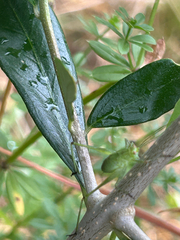
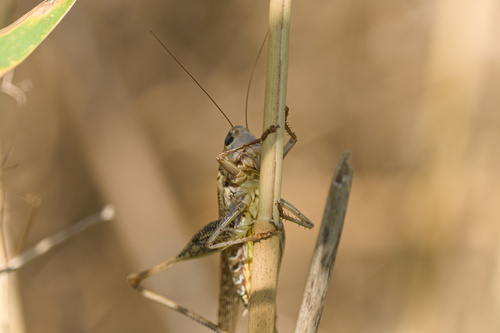
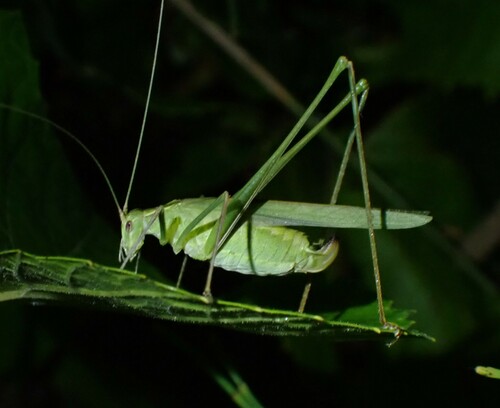
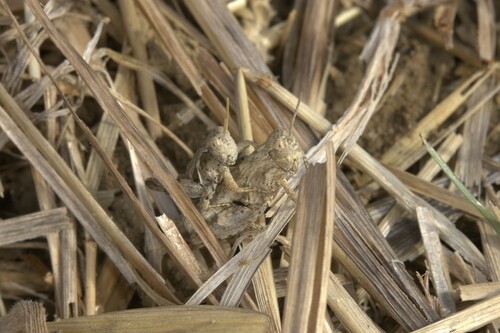
Phaneroptera nana, common name southern sickle bush-cricket, is a species in the family Tettigoniidae and subfamily Phaneropterinae. It has become an invasive species in California where it may be called the Mediterranean katydid.

This bush cricket is native to mainland Europe, the Near East and North Africa. The Indo-Malayan species Phaneropera subcarinata, described by Bolívar, is morphologically similar to P. nana, and was classified under the P. nana name by Carl Brunner von Wattenwyl. As an invasive species, it has spread to the San Francisco Bay Area and may be widespread in the Los Angeles Basin, with records of its presence in California dating from at least 1952. In addition, it has been recorded in Portland, Oregon since 2015 and South America and hypothesized in the Annals of Carnegie Museum to have spread via shipping.

It mainly inhabits sunny and dry habitats, especially shrubs and low branches of trees. The adult males grow up to 13–15 millimetres (0.51–0.59 in) long, while females can reach 15–18 millimetres (0.59–0.71 in) of length. In both sexes, the basic coloration of the body is light green, with many small black... Wikipedia →
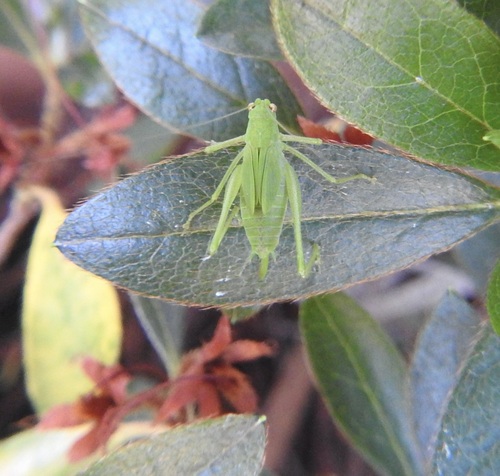
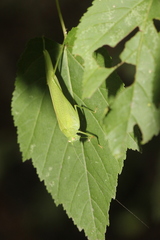
Global Distribution

Parks Where Found

# Park Country Daily sighting probability
1 Kiskunság National Park 🇭🇺 Hungary
~20%
2 Fertő-Hanság National Park 🇭🇺 Hungary
~10%
3 Cévennes National Park 🇫🇷 France
~10%
4 Pyrénées National Park 🇫🇷 France
~10%
5 Bavarian Forest National Park 🇩🇪 Germany
<5%

Cities Where Found

# City Country Daily sighting probability
1 Portland 🇺🇸 United States
~20%
2 Vienna 🇦🇹 Austria
~20%
3 Lyon 🇫🇷 France
~20%
4 Paris 🇫🇷 France
~20%
5 Jerusalem 🇮🇱 Israel
~20%
6 Prague 🇨🇿 Czechia
~20%
7 Budapest 🇭🇺 Hungary
~20%
8 Turin 🇮🇹 Italy
~20%
9 Kyiv 🇺🇦 Ukraine
~10%
10 Milan 🇮🇹 Italy
~10%

Before you go

What are the chances of seeing a Mediterranean Katydid in Istanbul?

With luck

About 10% of wildlife watchers report a Mediterranean Katydid sighting in Istanbul on a given day, based on 10 verified sightings from GBIF citizen-science data. It is the 141st most-seen of the 266 insects we can rate there. Over three days the chance rises to about 20%, and over a week to about 40%, if each day is a fresh chance.

When is the best time to see a Mediterranean Katydid in Istanbul?

June–September and November

In those months about 10% of wildlife watchers report a Mediterranean Katydid in Istanbul on a given day, against under 5% in October and December–May, the lowest months.

What time of day is best to see a Mediterranean Katydid?

Between 3 and 6 pm

Across all the parks we cover, that three-hour window holds the most Mediterranean Katydid sightings with a recorded time, and about 7 in 10 of them come between 6 am and 6 pm: it is a daytime animal.

Is Istanbul the best place to see a Mediterranean Katydid?

24th of 29

Of the 29 cities where we can rate Mediterranean Katydid sightings, Istanbul ranks 24th at about 10%. The best odds are in Portland (United States, about 20%), Vienna (Austria, about 20%) and Lyon (France, about 20%).

Which relatives of the Mediterranean Katydid live in Istanbul?

Same family: Tettigoniidae

The closest relatives of the Mediterranean Katydid that you can see in Istanbul (family Tettigoniidae, Katydids) are White-Faced Bush-Cricket (about 10%) and Smyrnean Bush-Cricket (about 10%), with each one's daily chance of a sighting.

Where does the Mediterranean Katydid sighting chance come from?

GBIF citizen-science records

It is estimated from how often the Mediterranean Katydid is recorded against all the insects logged in Istanbul (10 verified sightings), calibrated against known sighting rates. Figures are rounded to the nearest 10% because citizen-science data supports honest approximations, not decimals, and months with records from fewer than five people show "—". How it works.

← Back to Istanbul