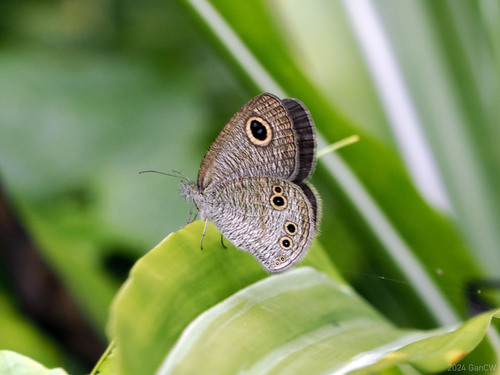
Commander

Commander

Moduza procris

Daily sighting probability ~10% · With luck
at Jakarta

In 3 days ~20% in a week ~50%

12 Verified sightings at Jakarta
184 In all 11 parks From 2019 to 2026
July Best month
☀️ Diurnal When it's spotted

About the Commander

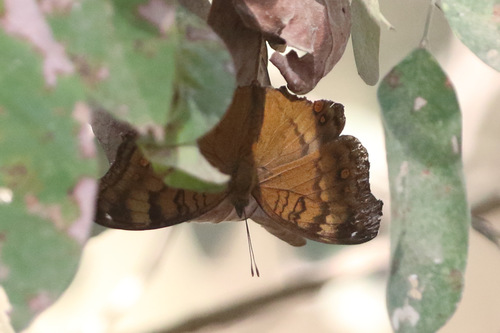
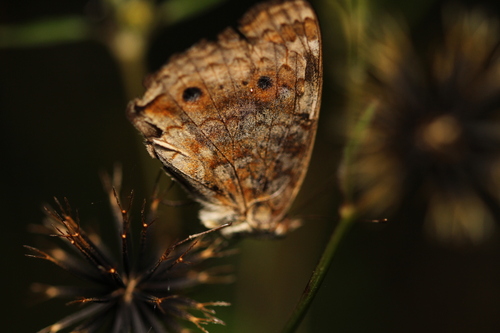
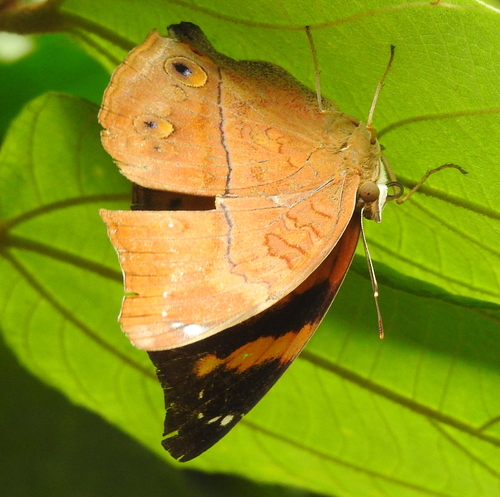
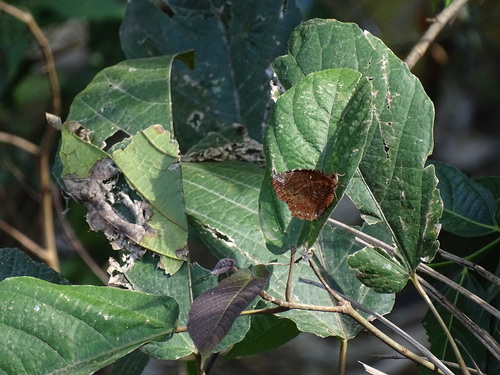
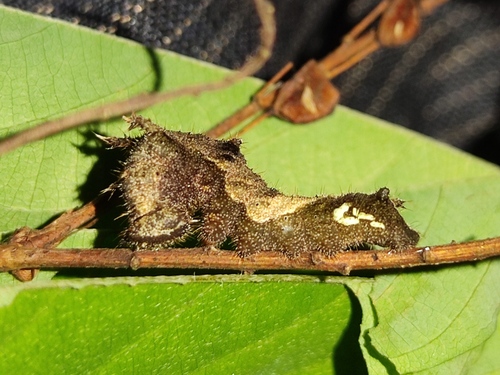
Moduza procris, the commander, sometimes included in the genus Limenitis, is a medium-sized, strikingly coloured brush-footed butterfly found in South Asia and Southeast Asia. It is notable for the mode of concealment employed by its caterpillar and the cryptic camouflage of its pupa.

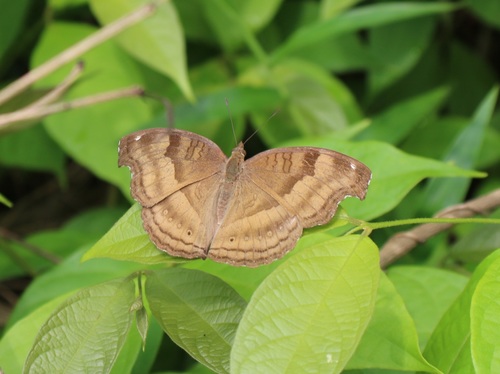
The commander has a wingspan of about 6 to 7.5 cm (2.4 to 3.0 in). The upperside of its wings are a bright reddish brown. Towards the centre of the wing are broad white spots. In flight, one can see a bright red brown butterfly with a white band forming a V shape. There are also a few white spots scattered on the wings. Its hindwings have crenulated margins. The undersides of the wings are a whitish grey toward the base and have a row of dull reddish brown and a row of black spots along the margins. The male and female are similar in appearance.

Male and female. Upper side, ground colour rich ferruginous-red, the basal area slightly tinged with olivescent yellowish-ferruginous. Cilia alternately black and white. Forewing with three black slender bars crossing the cell, and three similar bars below the cell between the basal interspaces of the middle and lower medians; beyond the cell... Wikipedia →

Global Distribution

Parks Where Found

# Park Country Daily sighting probability
1 Namdapha National Park 🇮🇳 India
~50%
2 Bandhavgarh National Park 🇮🇳 India
~30%
3 Sinharaja Forest Reserve 🇱🇰 Sri Lanka
~30%
4 Kanha National Park 🇮🇳 India
~30%
5 Khao Yai National Park 🇹🇭 Thailand
~30%
6 Taman Negara National Park 🇲🇾 Malaysia
~20%
7 Gunung Leuser National Park 🇮🇩 Indonesia
~20%
8 Cat Tien National Park 🇻🇳 Vietnam
~20%
9 Danum Valley Conservation Area 🇲🇾 Malaysia
~20%
10 Kaeng Krachan National Park 🇹🇭 Thailand
~10%
11 Sepilok 🇲🇾 Malaysia
~10%

Cities Where Found

# City Country Daily sighting probability
1 Jabalpur 🇮🇳 India
~30%
2 Mumbai 🇮🇳 India
~20%
3 Kalyan-Dombivli 🇮🇳 India
~20%
4 Kozhikode 🇮🇳 India
~20%
5 Thiruvananthapuram 🇮🇳 India
~20%
6 Kolkata 🇮🇳 India
~20%
7 Kochi 🇮🇳 India
~10%
8 Guwahati 🇮🇳 India
~10%
9 Bengaluru 🇮🇳 India
~10%
10 Singapore 🇸🇬 Singapore
~10%

Before you go

What are the chances of seeing a Commander in Jakarta?

With luck

About 10% of wildlife watchers report a Commander sighting in Jakarta on a given day, based on 12 verified sightings from GBIF citizen-science data. It is the 130th most-seen of the 239 insects we can rate there. Over three days the chance rises to about 20%, and over a week to about 50%, if each day is a fresh chance.

When is the best time to see a Commander in Jakarta?

January–March, May–July and November

In those months about 10% of wildlife watchers report a Commander in Jakarta on a given day, against under 5% in April, August–October and December, the lowest months.

What time of day is best to see a Commander?

Between 9 am and noon

Across all the parks we cover, that three-hour window holds the most Commander sightings with a recorded time, and about 9 in 10 of them come between 6 am and 6 pm: it is a daytime animal.

Is Jakarta the best place to see a Commander?

13th of 15

Of the 15 cities where we can rate Commander sightings, Jakarta ranks 13th at about 10%. The best odds are in Jabalpur (India, about 30%), Mumbai (India, about 20%) and Kalyan-Dombivli (India, about 20%).

Which relatives of the Commander live in Jakarta?

Same family: Nymphalidae

The closest relatives of the Commander that you can see in Jakarta (family Nymphalidae, Brush-footed Butterflies) are Great Eggfly (about 50%), Brown Pansy (about 40%) and Blue Pansy (about 30%), with each one's daily chance of a sighting.

Where does the Commander sighting chance come from?

GBIF citizen-science records

It is estimated from how often the Commander is recorded against all the insects logged in Jakarta (12 verified sightings), calibrated against known sighting rates. Figures are rounded to the nearest 10% because citizen-science data supports honest approximations, not decimals, and months with records from fewer than five people show "—". How it works.

← Back to Jakarta