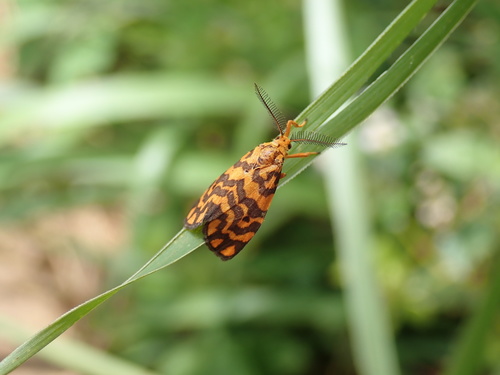
About the Baphomet Moth
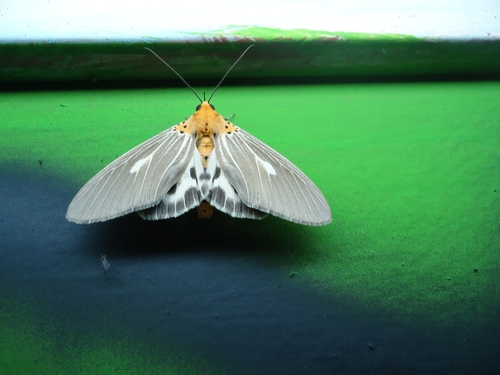
Creatonotos gangis, the Baphomet moth, is a species of arctiine moth in South East Asia and Australia. It was described by Carl Linnaeus in his 1763 Centuria Insectorum. It is often listed as a synonym of Creatonotos interrupta, but the identity is unclear.
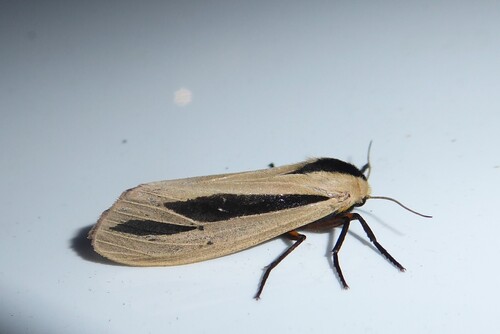
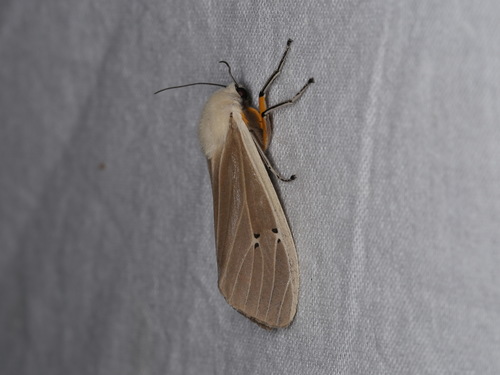
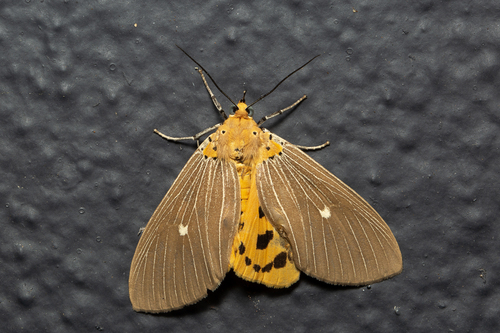
Adults have white hindwings and brown forewings, each with a dark streak, and a wingspan of 4 cm (1.6 in). The abdomen is red or, more rarely, yellow. Males have four large, grey-colored coremata behind them, which can exceed the length of the abdomen when inflated.
The eggs are yellow and round, and are laid in rows on the leaves of food plants. The caterpillars are brown hairy animals with a yellow stripe along the back, with a polyphagous diet, known as a minor pest which feeds on groundnuts, rice, ragi, sorghum, pearl millet, coffee, sweet potato, and lucerne crops.
In The Fauna of British India, Including Ceylon and Burma: Moths Vol. II, the species (listed as C. interrupta) is described as follows: Antennae minutely ciliated in both sexes. Head, thorax and fore wing pale pinkish ochreous. Palpi and legs smoky black, the femora yellow; a broad dorsal band on thorax; abdomen crimson above,... Wikipedia →