Red-tailed Shrike

Red-tailed Shrike

Lanius phoenicuroides

Silhouette: Andy Wilson · PhyloPic

LCLeast ConcernNTVUENCR
Daily sighting probability <5% · Rare
at Kuwait City

In 3 days ~10% in a week ~20%

17 Verified sightings at Kuwait City
616 In all 15 parks From 2019 to 2026
October Best month
☀️ Diurnal When it's spotted

About the Red-tailed Shrike

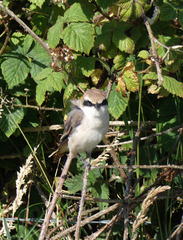
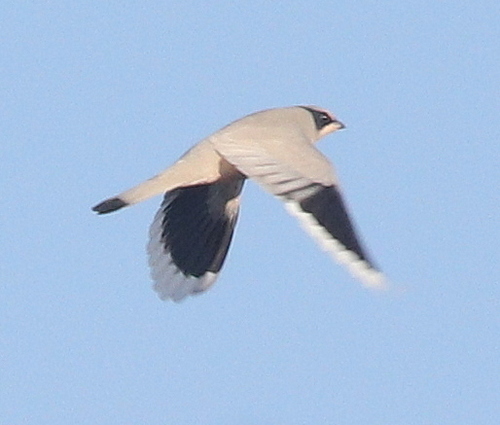
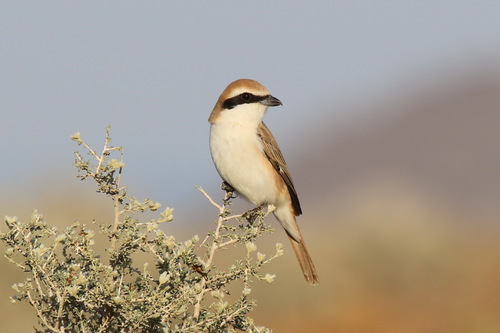
The red-tailed shrike or Turkestan shrike (Lanius phoenicuroides) is a member of the shrike family (Laniidae). It was formerly considered conspecific with the isabelline shrike and the red-backed shrike. The plumage is a sandy colour. It has a red tail.

The red-tailed shrike breeds in south Siberia and Central Asia. This migratory medium-sized passerine eats large insects, small birds, rodents and lizards. Like other shrikes it hunts from prominent perches, and impales corpses on thorns or barbed wire as a larder. It breeds in open cultivated country, preferably with thorn bushes.

Oiseaux Pictures Wikipedia →

Sounds

Song0:45

Oman · 2024

© Maarten Sluijter · XC984093 · CC BY-NC-SA 4.0

Song and call0:28

Kazakhstan · 2023

© Peter Boesman · XC813454 · CC BY-NC-ND 4.0

Call0:08

Oman · 2018

© James Lidster · XC529928 · CC BY-NC-SA 4.0

Global Distribution

Parks Where Found

# Park Country Daily sighting probability
1 Tsavo West National Park 🇰🇪 Kenya
~10%
2 Awash National Park 🇪🇹 Ethiopia
~10%
3 Tsavo East National Park 🇰🇪 Kenya
~10%
4 Samburu National Reserve 🇰🇪 Kenya
~10%
5 Mkomazi National Park 🇹🇿 Tanzania
~10%
6 Lake Manyara National Park 🇹🇿 Tanzania
~10%
7 Arusha National Park 🇹🇿 Tanzania
~10%
8 Nairobi National Park 🇰🇪 Kenya
<5%
9 Amboseli National Park 🇰🇪 Kenya
<5%
10 Murchison Falls National Park 🇺🇬 Uganda
<5%
11 Serengeti National Park 🇹🇿 Tanzania
<5%
12 Lake Nakuru National Park 🇰🇪 Kenya
<5%
13 Ngorongoro Conservation Area 🇹🇿 Tanzania
<5%
14 Masai Mara National Reserve 🇰🇪 Kenya
<5%
15 Tarangire National Park 🇹🇿 Tanzania
<5%

Cities Where Found

# City Country Daily sighting probability
1 Abu Dhabi 🇦🇪 United Arab Emirates
~10%
2 Dammam 🇸🇦 Saudi Arabia
~10%
3 Riyadh 🇸🇦 Saudi Arabia
~10%
4 Kuwait City 🇰🇼 Kuwait
<5%
5 Doha 🇶🇦 Qatar
<5%
6 Dubai 🇦🇪 United Arab Emirates
<5%

Before you go

What are the chances of seeing a Red-tailed Shrike in Kuwait City?

Rare

Under 5% of wildlife watchers report a Red-tailed Shrike sighting in Kuwait City on a given day, based on 17 verified sightings from GBIF citizen-science data. It is the 106th most-seen of the 157 birds we can rate there. Over three days the chance rises to about 10%, and over a week to about 20%, if each day is a fresh chance.

When is the best time to see a Red-tailed Shrike in Kuwait City?

March–April, October and December

In those months about 10% of wildlife watchers report a Red-tailed Shrike in Kuwait City on a given day, against under 5% in January–February, May–September and November, the lowest months.

What time of day is best to see a Red-tailed Shrike?

Between 7 and 10 am

Across all the parks we cover, that three-hour window holds the most Red-tailed Shrike sightings with a recorded time, and about 8 in 10 of them come between 6 am and 6 pm: it is a daytime animal.

Is Kuwait City the best place to see a Red-tailed Shrike?

4th of 6

Of the 6 cities where we can rate Red-tailed Shrike sightings, Kuwait City ranks 4th at under 5%. The best odds are in Abu Dhabi (United Arab Emirates, about 10%), Dammam (Saudi Arabia, about 10%) and Riyadh (Saudi Arabia, about 10%).

Which relatives of the Red-tailed Shrike live in Kuwait City?

Same genus: Lanius

The closest relatives of the Red-tailed Shrike that you can see in Kuwait City (genus Lanius, Typical Shrikes) are Masked Shrike (about 20%), Isabelline Shrike (about 20%) and Red-backed Shrike (about 10%), with each one's daily chance of a sighting.

Where does the Red-tailed Shrike sighting chance come from?

GBIF citizen-science records

It is estimated from how often the Red-tailed Shrike is recorded against all the birds logged in Kuwait City (17 verified sightings), calibrated against known sighting rates. Figures are rounded to the nearest 10% because citizen-science data supports honest approximations, not decimals, and months with records from fewer than five people show "—". How it works.
← Back to Kuwait City