Common Footman

Common Footman

Nyea lurideola

Daily sighting probability ~10% · With luck
at Leeds

In 3 days ~10% in a week ~30%

8 Verified sightings at Leeds
78 In all 6 parks From 2019 to 2026
April Best month
☀️🌙 Day & Night When it's spotted

About the Common Footman

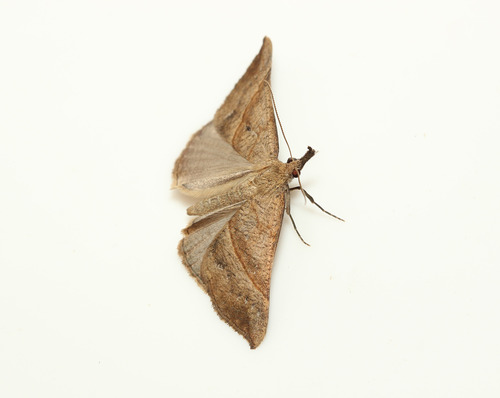
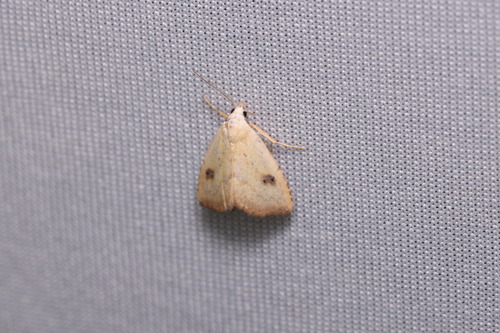
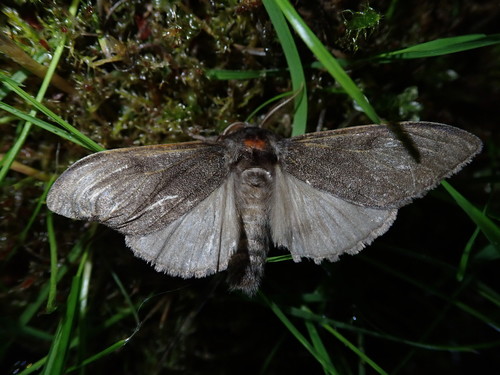
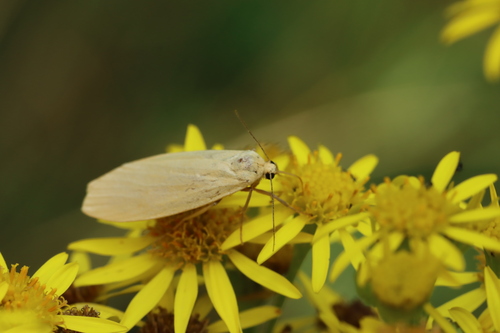
The common footman (Manulea lurideola) is a moth of the family Erebidae. The species was first described by Johann Leopold Theodor Friedrich Zincken in 1817. It is distributed throughout Europe and east through the Palearctic to Lake Baikal.

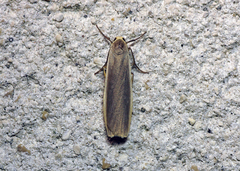
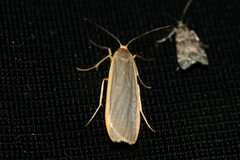
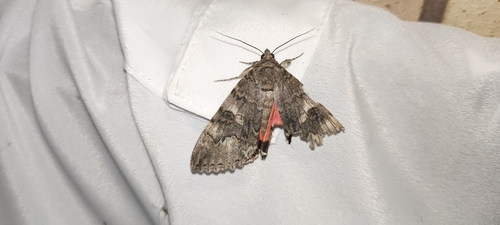
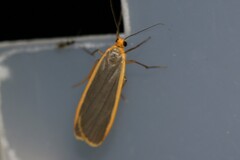
This species has a wingspan of 31–38 mm. The forewings are grey with a yellowish-buff streak along the costa. The hindwings are a uniform cream colour. Like other footmen, it rests with its wings wrapped around its body. (The common name footman comes from a supposed resemblance to the uniform of a footman.)

Wingspan 31–38 mm. Forewing broadened towards the outer margin, bright glossy lead grey with broad, regular, light yellow costal band, somewhat dulled at the apex, and pure yellow fringes; hindwing, head and neck and anal tuft of male ivory yellow. Beneath, the forewing is only suffused with sooty grey at the base and on the disc, so that a broad outer border is pale yellow. Hindwing pale yellow with a slightly dark costal margin.

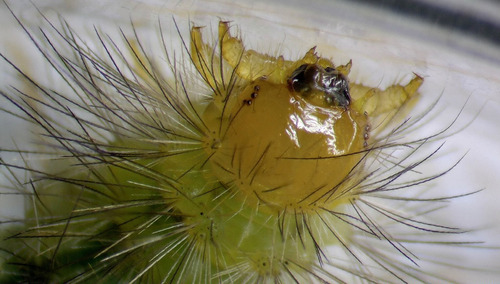
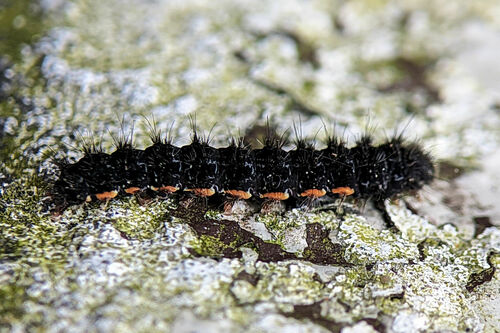
This moth flies at night in July and August and is attracted to light and nectar-rich flowers.[1] Larva dark lilac grey with black dorsal line and black head... Wikipedia →
Global Distribution

Parks Where Found

# Park Country Daily sighting probability
1 Snowdonia National Park 🇬🇧 United Kingdom
~10%
2 Vanoise National Park 🇫🇷 France
~10%
3 Bavarian Forest National Park 🇩🇪 Germany
~10%
4 Ecrins National Park 🇫🇷 France
~10%
5 Pyrénées National Park 🇫🇷 France
~10%
6 Cévennes National Park 🇫🇷 France
<5%

Cities Where Found

# City Country Daily sighting probability
1 Kharkiv 🇺🇦 Ukraine
~10%
2 London 🇬🇧 United Kingdom
~10%
3 Liverpool 🇬🇧 United Kingdom
~10%
4 Birmingham 🇬🇧 United Kingdom
~10%
5 Manchester 🇬🇧 United Kingdom
~10%
6 Leeds 🇬🇧 United Kingdom
~10%
7 Paris 🇫🇷 France
<5%
8 Vienna 🇦🇹 Austria
<5%

Before you go

What are the chances of seeing a Common Footman in Leeds?

With luck

About 10% of wildlife watchers report a Common Footman sighting in Leeds on a given day, based on 8 verified sightings from GBIF citizen-science data. It is the 195th most-seen of the 284 insects we can rate there. Over three days the chance rises to about 10%, and over a week to about 30%, if each day is a fresh chance.

When is the best time to see a Common Footman in Leeds?

April and July

In those months about 10% of wildlife watchers report a Common Footman in Leeds on a given day, against under 5% in May–June and August–March, the lowest months.

What time of day is best to see a Common Footman?

Between 10 pm and 1 am

Across all the parks we cover, that three-hour window holds the most Common Footman sightings with a recorded time, and about 6 in 10 of them come between 6 am and 6 pm: it is seen both by day and at night.

Is Leeds the best place to see a Common Footman?

Among the best

Of the 8 cities where we can rate Common Footman sightings, Leeds ranks 6th at about 10%, level with the leaders once rounded. The best odds are in Kharkiv (Ukraine, about 10%), London (United Kingdom, about 10%) and Liverpool (United Kingdom, about 10%).

Which relatives of the Common Footman live in Leeds?

Same family: Erebidae

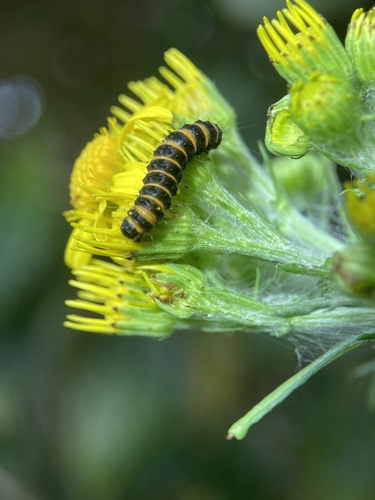
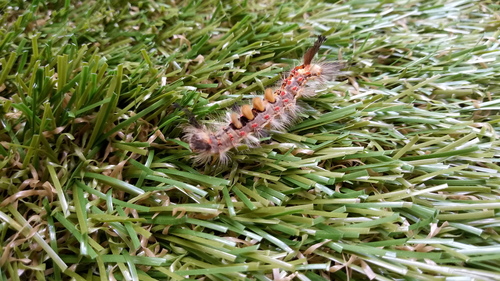
The closest relatives of the Common Footman that you can see in Leeds (family Erebidae, Underwing, Tiger, Tussock, and Allied Moths) are Cinnabar Moth (about 20%), Rusty Tussock Moth (about 10%) and Ruby Tiger Moth (about 10%), with each one's daily chance of a sighting.

Where does the Common Footman sighting chance come from?

GBIF citizen-science records

It is estimated from how often the Common Footman is recorded against all the insects logged in Leeds (8 verified sightings), calibrated against known sighting rates. Figures are rounded to the nearest 10% because citizen-science data supports honest approximations, not decimals, and months with records from fewer than five people show "—". How it works.

← Back to Leeds