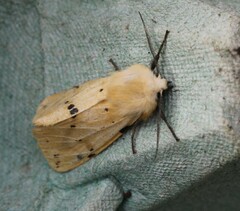
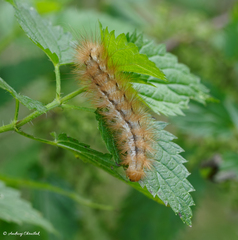
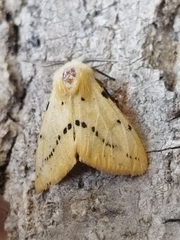
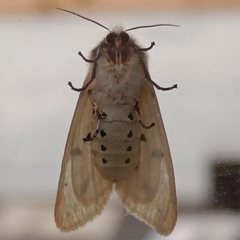
Buff Ermine
Daily sighting probability <5% · Rare
at Leeds

In 3 days ~10% in a week ~30%

6 Verified sightings at Leeds
151 In all 5 parks From 2019 to 2026
June Best month
🌅 Crepuscular When it's spotted

About the Buff Ermine

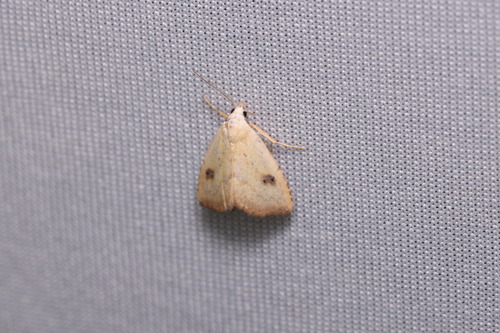
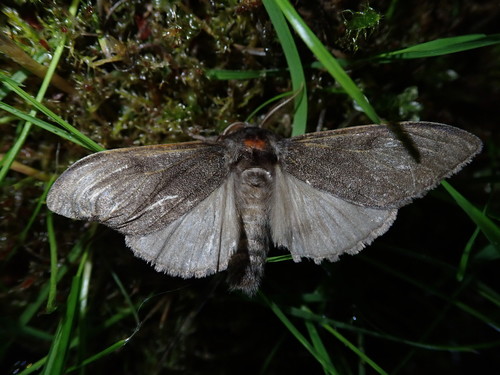
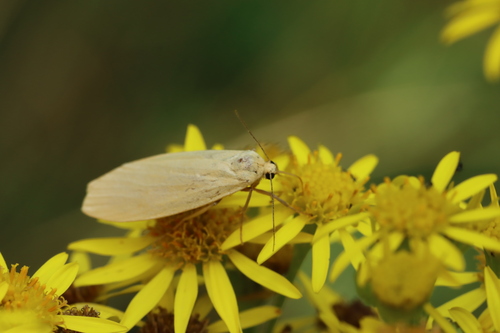
The buff ermine (Spilarctia luteum) is a moth of the family Erebidae. It is sometimes placed in the genus Spilosoma. The species was first described by Johann Siegfried Hufnagel in 1766. It is found throughout the temperate belt of the Palearctic region south to northern Turkey, Georgia, Kazakhstan, southern Siberia (excluding Buryatia), eastern Mongolia, Amur Region, China, Korea and Japan.

The wings of this species are buffish yellow (the males tend to be more yellow than the females) and are typically marked with a diagonal row of dark spots on the forewing and a few other scattered spots on both forewings and hindwings. The extent of black markings varies considerably, however, from almost spotless examples to largely black melanic forms. The wingspan is 34–42 mm. The species flies from May to July in the British Isles. This may vary in other parts of the range. It is attracted to light.

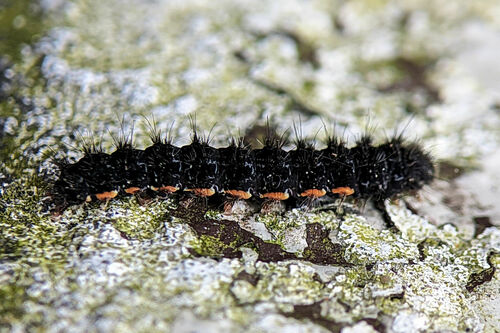
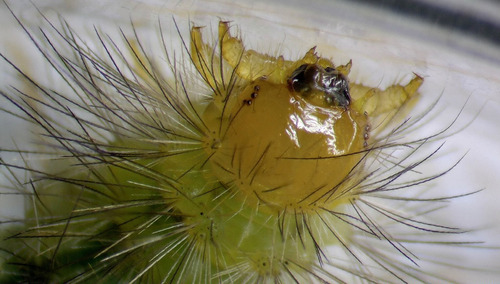
The larva is pale brown and very hairy. It is polyphagous, feeding on a wide variety of trees, shrubs and herbaceous plants (see list). This species overwinters as a pupa. Some larval food plants include: Spilarctia lutea lutea

Spilarctia lutea adzharica... Wikipedia →
Global Distribution

Parks Where Found

# Park Country Daily sighting probability
1 Snowdonia National Park 🇬🇧 United Kingdom
~20%
2 Cévennes National Park 🇫🇷 France
~10%
3 Wadden Sea National Park 🇩🇪 Germany
~10%
4 Bavarian Forest National Park 🇩🇪 Germany
~10%
5 Pyrénées National Park 🇫🇷 France
~10%

Cities Where Found

# City Country Daily sighting probability
1 Liverpool 🇬🇧 United Kingdom
~20%
2 Porto 🇵🇹 Portugal
~10%
3 Manchester 🇬🇧 United Kingdom
~10%
4 Birmingham 🇬🇧 United Kingdom
~10%
5 London 🇬🇧 United Kingdom
~10%
6 Leeds 🇬🇧 United Kingdom
<5%
7 Hamburg 🇩🇪 Germany
<5%
8 Rotterdam [The Hague] 🇳🇱 Netherlands
<5%
9 Copenhagen 🇩🇰 Denmark
<5%
10 Helsinki 🇫🇮 Finland
<5%

Before you go

What are the chances of seeing a Buff Ermine in Leeds?

Rare

Under 5% of wildlife watchers report a Buff Ermine sighting in Leeds on a given day, based on 6 verified sightings from GBIF citizen-science data. It is the 230th most-seen of the 284 insects we can rate there. Over three days the chance rises to about 10%, and over a week to about 30%, if each day is a fresh chance.

When is the best time to see a Buff Ermine in Leeds?

June and August

In those months about 10% of wildlife watchers report a Buff Ermine in Leeds on a given day, against under 5% in July and September–May, the lowest months.

What time of day is best to see a Buff Ermine?

Between 6 and 9 am

Across all the parks we cover, that three-hour window holds the most Buff Ermine sightings with a recorded time, and about 7 in 10 of them come between 6 am and 6 pm: it is most active around dawn and dusk.

Is Leeds the best place to see a Buff Ermine?

6th of 11

Of the 11 cities where we can rate Buff Ermine sightings, Leeds ranks 6th at under 5%. The best odds are in Liverpool (United Kingdom, about 20%), Porto (Portugal, about 10%) and Manchester (United Kingdom, about 10%).

Which relatives of the Buff Ermine live in Leeds?

Same family: Erebidae

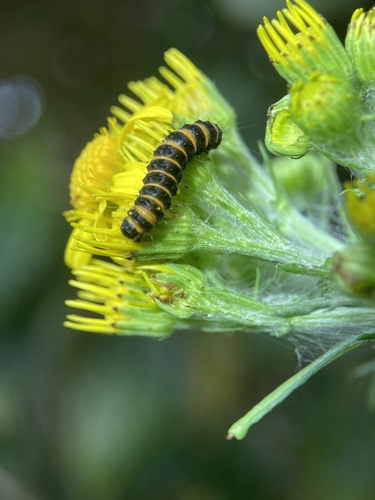
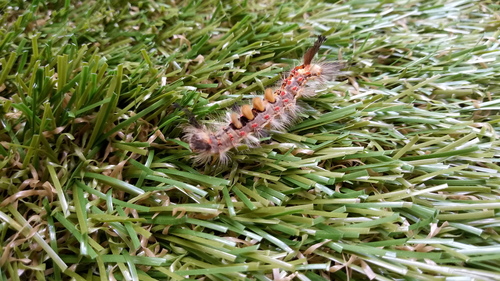
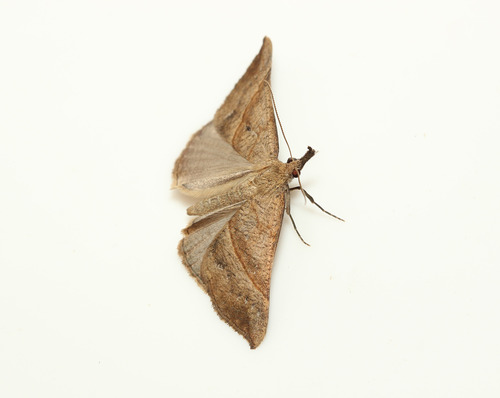
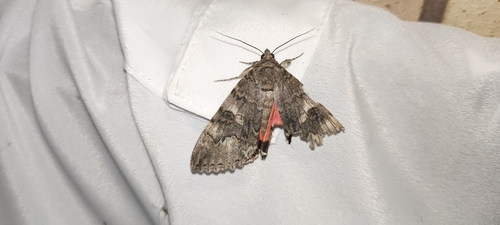
The closest relatives of the Buff Ermine that you can see in Leeds (family Erebidae, Underwing, Tiger, Tussock, and Allied Moths) are Cinnabar Moth (about 20%), Rusty Tussock Moth (about 10%) and Ruby Tiger Moth (about 10%), with each one's daily chance of a sighting.

Where does the Buff Ermine sighting chance come from?

GBIF citizen-science records

It is estimated from how often the Buff Ermine is recorded against all the insects logged in Leeds (6 verified sightings), calibrated against known sighting rates. Figures are rounded to the nearest 10% because citizen-science data supports honest approximations, not decimals, and months with records from fewer than five people show "—". How it works.

← Back to Leeds