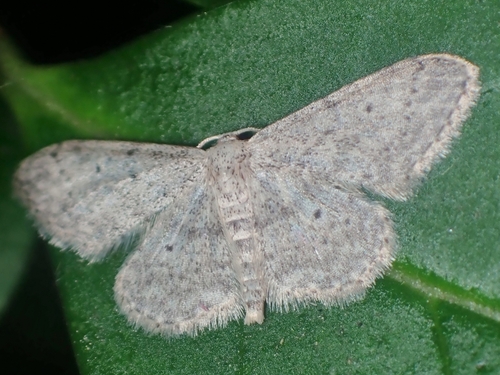
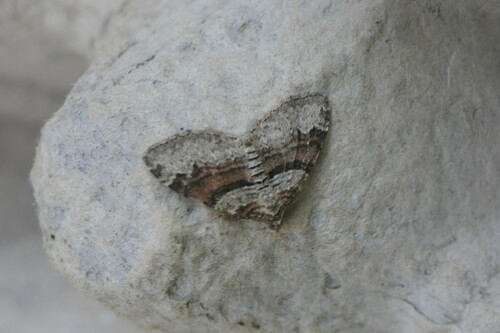
Green Carpet

Green Carpet

Colostygia pectinataria

Daily sighting probability ~10% · With luck
at Liverpool

In 3 days ~30% in a week ~60%

46 Verified sightings at Liverpool
152 In all 5 parks From 2019 to 2026
September Best month
☀️🌙 Day & Night When it's spotted

About the Green Carpet

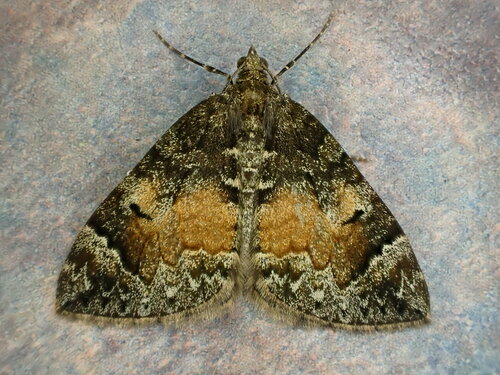
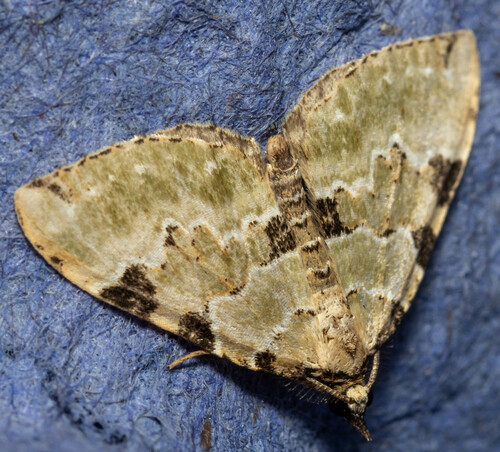
Colostygia pectinataria, the green carpet, is a Palearctic moth of the genus Colostygia in the family Geometridae. It was first described by August Wilhelm Knoch in 1781. The moth has a wingspan from 22 to 28 millimetres (0.87 to 1.10 in). The strong forewing ground colour is green to bluish green. The wing pattern shows the following colour sequence: a small region at the wing base brown green, the ensuing basal region brighter green, a wide and strongly serrated on the outside discal region dark green edged with white, the postdiscal region whitish green and the marginal region tinted brownish green. There are two distinct blackish spots near the front edge of the wing (costa) and one on the inner edge. In older specimens, the greenish colour can fade. Sometimes newly emerged hatched moths have a whitish, yellowish or pink colour. The hindwings shimmer grey white and have faint lines. The antennae of the males are combed, those of females are simple. The larva is stout, gnarled and light grey violet in colour. It has numerous small black spots that each carry a short, stiff brush.

It occurs in many different biotopes, on moors, in marshy terrain and also in forests. The larvae feed primarily on Galium but also on Rumex and Lamium. The moths fly at night in June – July and often come to light. It is a Palearctic species found in the Iberian Peninsula over western and central Europe including the British Isles and east to the Altai Mountains. C. pectinataria reaches the Arctic Circle in Fennoscandia, to the south the occurrence ranges from the western Mediterranean to the Balkan Peninsula, the Black Sea region and the Caucasus.

In the mountains C. pectinataria has been recorded at elevations of over 2,000 metres (6,600 ft). Bogs, forests, bushy forest edges and damp heath areas are preferred. Wikipedia →

Global Distribution

Parks Where Found

# Park Country Daily sighting probability
1 Snowdonia National Park 🇬🇧 United Kingdom
~20%
2 Cairngorms National Park 🇬🇧 United Kingdom
~10%
3 Bavarian Forest National Park 🇩🇪 Germany
~10%
4 Pyrénées National Park 🇫🇷 France
~10%
5 Wadden Sea National Park 🇩🇪 Germany
~10%

Cities Where Found

# City Country Daily sighting probability
1 Liverpool 🇬🇧 United Kingdom
~10%
2 Birmingham 🇬🇧 United Kingdom
~10%
3 Leeds 🇬🇧 United Kingdom
~10%
4 Hamburg 🇩🇪 Germany
~10%
5 Manchester 🇬🇧 United Kingdom
~10%
6 London 🇬🇧 United Kingdom
<5%
7 Berlin 🇩🇪 Germany
<5%
8 Moscow 🇷🇺 Russia
<5%

Before you go

What are the chances of seeing a Green Carpet in Liverpool?

With luck

About 10% of wildlife watchers report a Green Carpet sighting in Liverpool on a given day, based on 46 verified sightings from GBIF citizen-science data. It is the 175th most-seen of the 632 insects we can rate there. Over three days the chance rises to about 30%, and over a week to about 60%, if each day is a fresh chance.

When is the best time to see a Green Carpet in Liverpool?

September

In that month about 30% of wildlife watchers report a Green Carpet in Liverpool on a given day, against under 5% in June–July and October–March, the lowest months.

What time of day is best to see a Green Carpet?

Between 10 pm and 1 am

Across all the parks we cover, that three-hour window holds the most Green Carpet sightings with a recorded time, and about half of them come between 6 am and 6 pm: it is seen both by day and at night.

Is Liverpool the best place to see a Green Carpet?

Yes

Of the 8 cities where we can rate Green Carpet sightings, Liverpool has the highest daily chance: about 10%. Next come Birmingham (United Kingdom, about 10%) and Leeds (United Kingdom, about 10%).

Which relatives of the Green Carpet live in Liverpool?

Same family: Geometridae

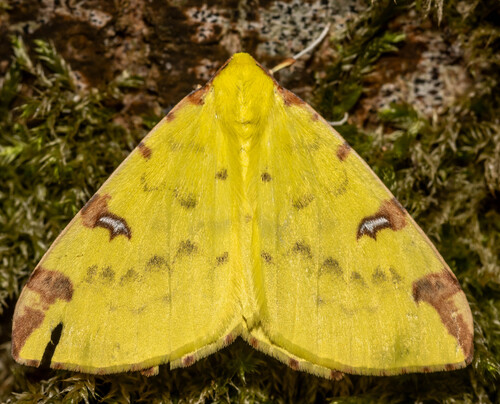
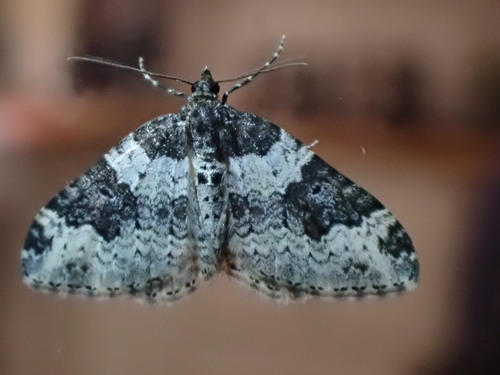
The closest relatives of the Green Carpet that you can see in Liverpool (family Geometridae, Geometer Moths) are Willow Beauty (about 40%), Marbled Carpet Moth (about 30%) and Brimstone Moth (about 30%), with each one's daily chance of a sighting.

Where does the Green Carpet sighting chance come from?

GBIF citizen-science records

It is estimated from how often the Green Carpet is recorded against all the insects logged in Liverpool (46 verified sightings), calibrated against known sighting rates. Figures are rounded to the nearest 10% because citizen-science data supports honest approximations, not decimals, and months with records from fewer than five people show "—". How it works.

← Back to Liverpool