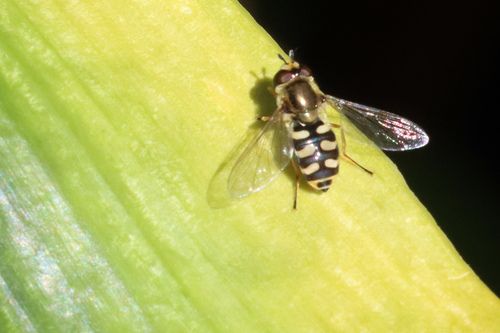
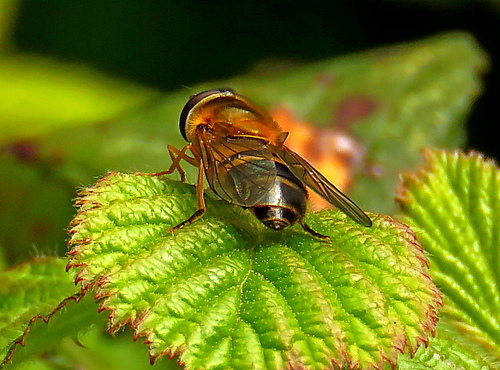
Orange-Belted Leafwalker

Orange-Belted Leafwalker

Xylota segnis

Daily sighting probability ~10% · With luck
at Liverpool

In 3 days ~20% in a week ~40%

19 Verified sightings at Liverpool
47 In all 5 parks From 2019 to 2026
June Best month
☀️ Diurnal When it's spotted

About the Orange-Belted Leafwalker

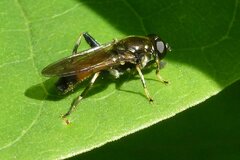
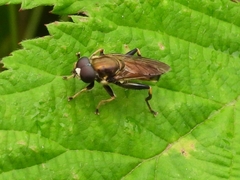
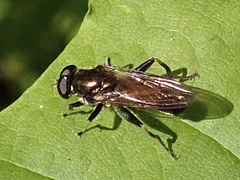
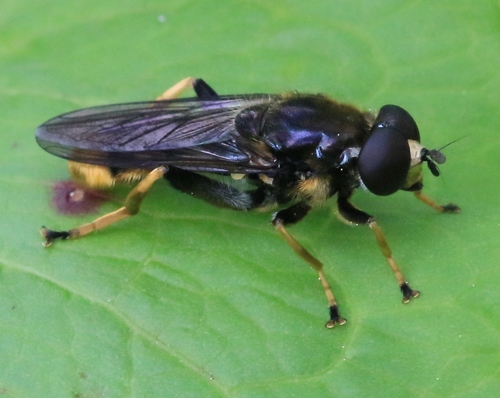
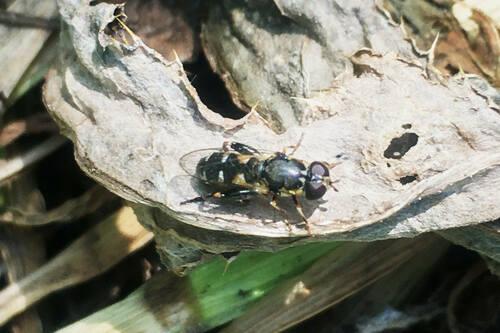
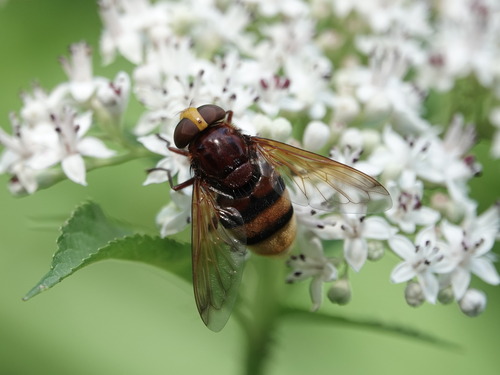
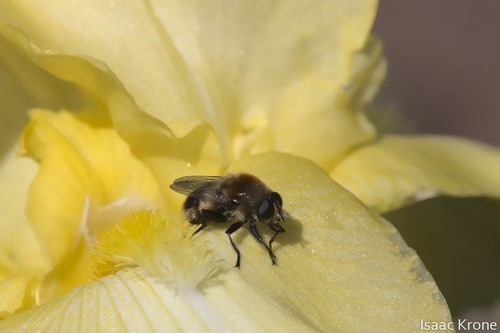
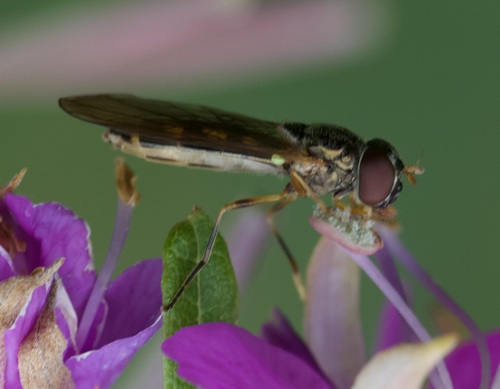
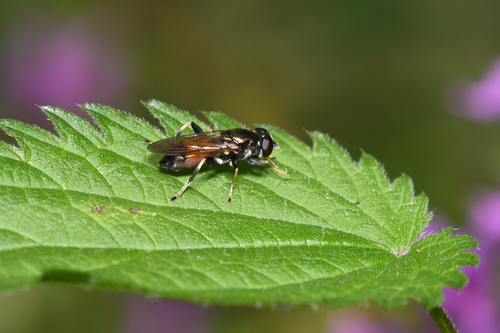
Xylota segnis, the brown-toed forest fly, is a common species of hoverfly. The genus name Xylota is the Latinized form of the rare Byzantine-Greek ξυλωτή [xsylōtē] meaning wooden, while the Latin species name segnis means slipping or lazy, as this hoverfly usually rests on a leaf and it does not fly frequently. The translation of the taxon could be "lazy wood fly".

This species has a Palearctic and Nearctic distribution. It is present in all Europe including the Mediterranean, the Caucasus and through Russia to the Russian Far East and Japan. It is also present in the Nearctic eastern parts, in southeastern Canada and northeastern United States.

GBIF species page, with map This species mainly inhabits low bushes in woods. External images For terms see Morphology of Diptera Xylota segnis can reach a length of 10–14 millimetres (0.39–0.55 in) and has a wing length reaching 7–9.5 millimetres (0.28–0.37 in). Thorax is greenish black, with long yellowish hairs. Abdomen is black with a large red or yellowish red patch. In particular, tergites 2 and 3 are yellow or reddish except for the back of tergite 3 which is black.... Wikipedia →
Global Distribution

Parks Where Found

# Park Country Daily sighting probability
1 Snowdonia National Park 🇬🇧 United Kingdom
~10%
2 Cairngorms National Park 🇬🇧 United Kingdom
~10%
3 Wadden Sea National Park 🇩🇪 Germany
<5%
4 Cévennes National Park 🇫🇷 France
<5%
5 Pyrénées National Park 🇫🇷 France
<5%

Cities Where Found

# City Country Daily sighting probability
1 Manchester 🇬🇧 United Kingdom
~10%
2 Birmingham 🇬🇧 United Kingdom
~10%
3 London 🇬🇧 United Kingdom
~10%
4 Essen 🇩🇪 Germany
~10%
5 Copenhagen 🇩🇰 Denmark
~10%
6 Rotterdam [The Hague] 🇳🇱 Netherlands
~10%
7 Liverpool 🇬🇧 United Kingdom
~10%
8 Amsterdam 🇳🇱 Netherlands
~10%
9 Warsaw 🇵🇱 Poland
~10%
10 Leeds 🇬🇧 United Kingdom
~10%

Before you go

What are the chances of seeing an Orange-Belted Leafwalker in Liverpool?

With luck

About 10% of wildlife watchers report an Orange-Belted Leafwalker sighting in Liverpool on a given day, based on 19 verified sightings from GBIF citizen-science data. It is the 296th most-seen of the 632 insects we can rate there. Over three days the chance rises to about 20%, and over a week to about 40%, if each day is a fresh chance.

When is the best time to see an Orange-Belted Leafwalker in Liverpool?

April to September

In those months about 10% of wildlife watchers report an Orange-Belted Leafwalker in Liverpool on a given day, against under 5% in October to March, the lowest months.

What time of day is best to see an Orange-Belted Leafwalker?

Between 2 and 5 pm

Across all the parks we cover, that three-hour window holds the most Orange-Belted Leafwalker sightings with a recorded time, and nearly all of them come between 6 am and 6 pm: it is a daytime animal.

Is Liverpool the best place to see an Orange-Belted Leafwalker?

Among the best

Of the 18 cities where we can rate Orange-Belted Leafwalker sightings, Liverpool ranks 7th at about 10%, level with the leaders once rounded. The best odds are in Manchester (United Kingdom, about 10%), Birmingham (United Kingdom, about 10%) and London (United Kingdom, about 10%).

Where does the Orange-Belted Leafwalker sighting chance come from?

GBIF citizen-science records

It is estimated from how often the Orange-Belted Leafwalker is recorded against all the insects logged in Liverpool (19 verified sightings), calibrated against known sighting rates. Figures are rounded to the nearest 10% because citizen-science data supports honest approximations, not decimals, and months with records from fewer than five people show "—". How it works.

← Back to Liverpool