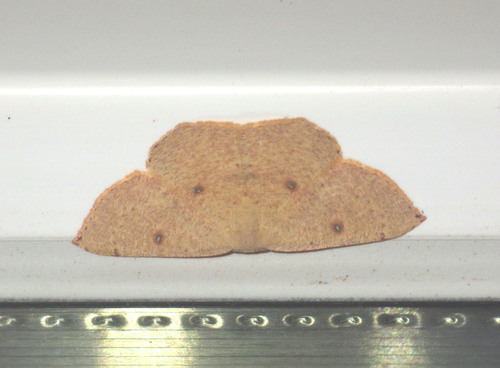
Satin Wave

Satin Wave

Idaea subsericeata

Daily sighting probability <5% · Rare
at Madrid

In 3 days ~10% in a week ~20%

6 Verified sightings at Madrid
107 In all 4 parks From 2019 to 2026
July Best month
🌙 Nocturnal When it's spotted

About the Satin Wave

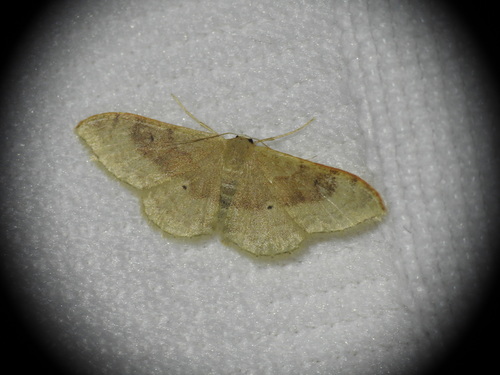
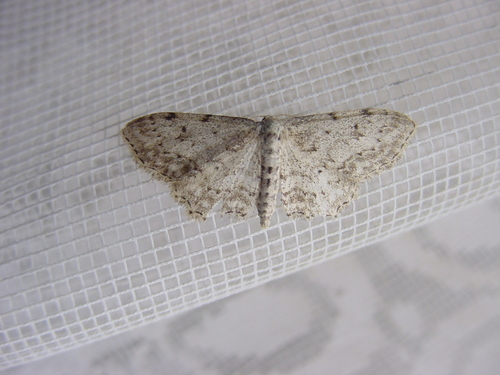
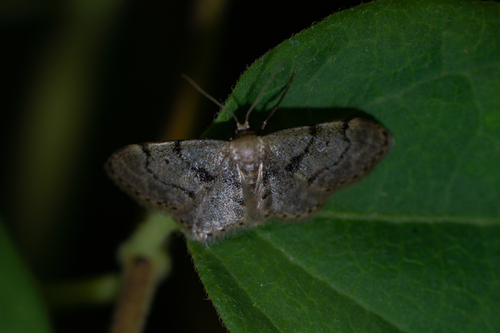
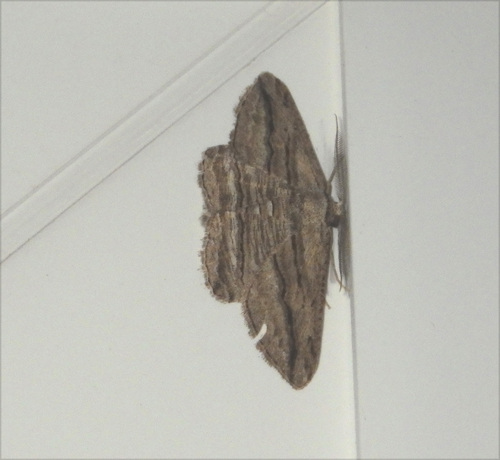
Idaea subsericeata, the satin wave, is a moth of the family Geometridae. The species was first described by Adrian Hardy Haworth in 1809. It is found from central and southern Europe, North Africa, Asia Minor to Transcaspia.

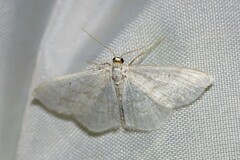
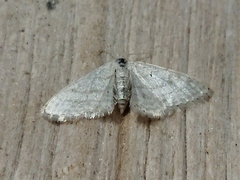
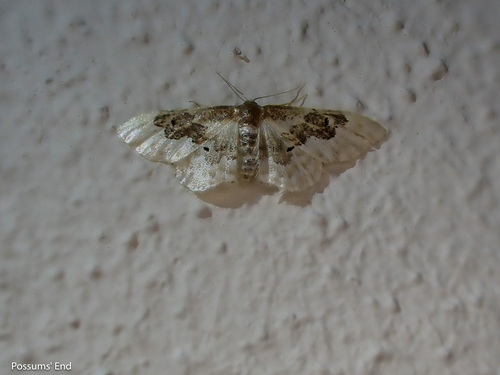
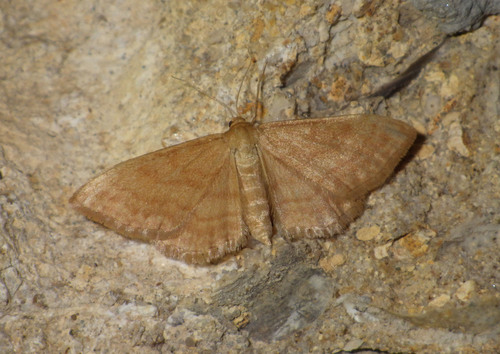
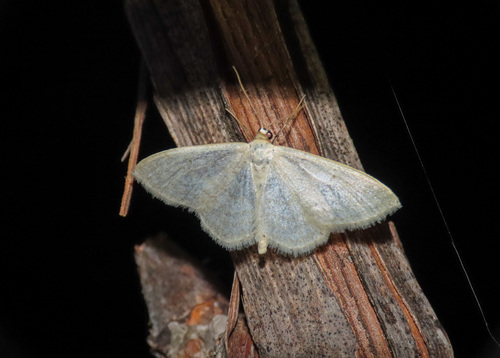
The ground colour is white with strong silky gloss, the lines grey, seldom strongly expressed, on the other hand usually all present, thus numbering five on the forewing and four on the hindwing; the outermost line (distal shading of subterminal) the oftenest absent; all except the median are parallel with the distal margin, but slightly wavy; the median on the forewing is usually somewhat oblique, but occasionally almost parallel with the others; that of the hindwing runs straighter across the wing, instead of following the curve of the strongly convex distal margin. Cellspots and terminal line wanting or rarely the former present, minute; fringe usually with a series of minute black dots at the base, which are sometimes in part, more rarely entirely obsolete. Forewing beneath often with a smoky suffusion, either basally or all over; median and postmedian lines present, often well developed; a small discal dot present. Hindwing beneath white,... Wikipedia →
Global Distribution

Parks Where Found

# Park Country Daily sighting probability
1 Cévennes National Park 🇫🇷 France
~10%
2 Pyrénées National Park 🇫🇷 France
~10%
3 Sierra de Guadarrama National Park 🇪🇸 Spain
<5%
4 Wadden Sea National Park 🇩🇪 Germany
<5%

Cities Where Found

# City Country Daily sighting probability
1 Porto 🇵🇹 Portugal
~20%
2 Rotterdam [The Hague] 🇳🇱 Netherlands
~10%
3 Lyon 🇫🇷 France
~10%
4 London 🇬🇧 United Kingdom
<5%
5 Madrid 🇪🇸 Spain
<5%
6 Paris 🇫🇷 France
<5%

Before you go

What are the chances of seeing a Satin Wave in Madrid?

Rare

Under 5% of wildlife watchers report a Satin Wave sighting in Madrid on a given day, based on 6 verified sightings from GBIF citizen-science data. It is the 377th most-seen of the 457 insects we can rate there. Over three days the chance rises to about 10%, and over a week to about 20%, if each day is a fresh chance.

When is the best time to see a Satin Wave in Madrid?

July

In that month about 10% of wildlife watchers report a Satin Wave in Madrid on a given day, against under 5% in August to June, the lowest months. That is one of Madrid's driest months, with about 10 mm of rain against 65 mm in October.

What time of day is best to see a Satin Wave?

Between 10 pm and 1 am

Across all the parks we cover, that three-hour window holds the most Satin Wave sightings with a recorded time, and about 7 in 10 of them come between 6 pm and 6 am: it is mostly seen at night.

Is Madrid the best place to see a Satin Wave?

5th of 6

Of the 6 cities where we can rate Satin Wave sightings, Madrid ranks 5th at under 5%. The best odds are in Porto (Portugal, about 20%), Rotterdam [The Hague] (Netherlands, about 10%) and Lyon (France, about 10%).

Which relatives of the Satin Wave live in Madrid?

Same genus: Idaea

The closest relatives of the Satin Wave that you can see in Madrid (genus Idaea) are Least Carpet (about 10%) and Bright Wave (about 10%), with each one's daily chance of a sighting.

Where does the Satin Wave sighting chance come from?

GBIF citizen-science records

It is estimated from how often the Satin Wave is recorded against all the insects logged in Madrid (6 verified sightings), calibrated against known sighting rates. Figures are rounded to the nearest 10% because citizen-science data supports honest approximations, not decimals, and months with records from fewer than five people show "—". How it works.

← Back to Madrid