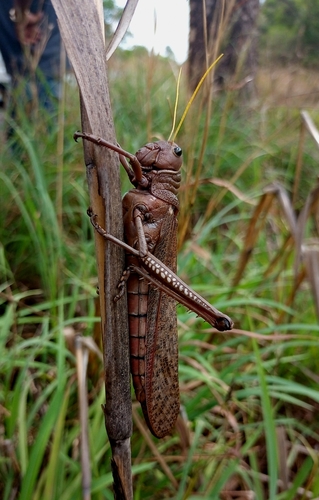
Violet-Winged Grasshopper

Violet-Winged Grasshopper

Tropidacris collaris

Daily sighting probability ~30% · Possible
at Manaus

In 3 days ~70% in a week >90%

38 Verified sightings at Manaus
33 In all 2 parks From 2019 to 2026
December Best month
☀️ Diurnal When it's spotted

About the Violet-Winged Grasshopper

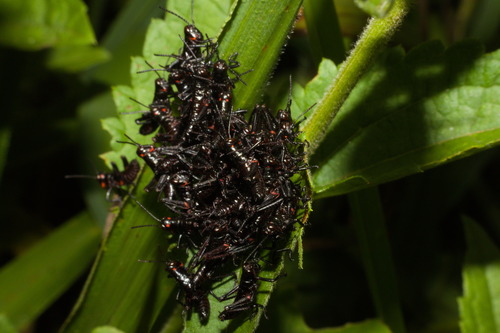
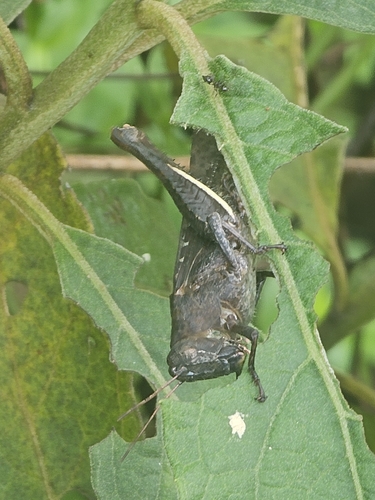
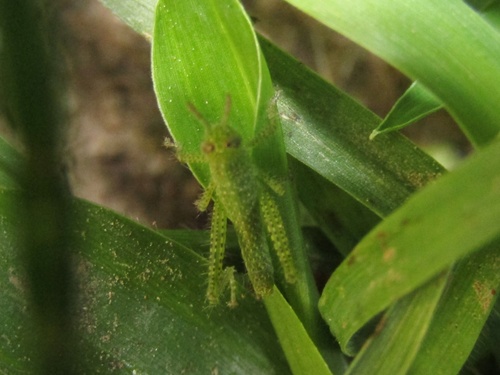
Tropidacris collaris, the blue-winged grasshopper or violet-winged grasshopper, is a large South American species of grasshopper in the family Romaleidae. As suggested by its name, in flight the wings are usually conspicuously blue, but they can occasionally be grayish or greenish. Adult males are typically 5–7 cm (2.0–2.8 in) long and females typically 8.5–10.5 cm (3.3–4.1 in) long; the wingspan is usually about 18 cm (7 in). The gregarious and flightless nymphs are aposematically colored in black, red and yellow and are presumed to be toxic; a researcher who tasted one noted, that it was very bitter, similar to a monarch butterfly.

Tropidacris collaris is common in a wide range of habitats from rainforests to dry open areas like Caatinga and Cerrado. It is widespread in South America east of the Andes, from Colombia and the Guianas to central Argentina, but generally avoiding highlands. They feed on many types of plants, including several species of agricultural crops, trees grown in plantations and ornamental plants, and they are considered a pest in some parts of their range. They are popular among insect and terrarium enthusiasts.

A grasshopper of this species was spotted landing on the arm of James Rodríguez, after he scored a goal during Colombia's 1–2 loss to Brazil, at the quarter-finals of the 2014 FIFA World Cup. Wikipedia →
Global Distribution

Parks Where Found

# Park Country Daily sighting probability
1 Chapada Diamantina National Park 🇧🇷 Brazil
~40%
2 Anavilhanas National Park 🇧🇷 Brazil
~30%

Cities Where Found

# City Country Daily sighting probability
1 Salvador 🇧🇷 Brazil
~40%
2 João Pessoa 🇧🇷 Brazil
~40%
3 Manaus 🇧🇷 Brazil
~30%
4 Fortaleza 🇧🇷 Brazil
~20%
5 Belém 🇧🇷 Brazil
~20%
6 Mendoza 🇦🇷 Argentina
~20%
7 São Luís 🇧🇷 Brazil
~10%
8 Recife 🇧🇷 Brazil
~10%
9 Cordoba 🇦🇷 Argentina
~10%

Before you go

What are the chances of seeing a Violet-Winged Grasshopper in Manaus?

Possible

About 30% of wildlife watchers report a Violet-Winged Grasshopper sighting in Manaus on a given day, based on 38 verified sightings from GBIF citizen-science data. It is the most-seen of the 86 insects we can rate there. Over three days the chance rises to about 70%, and over a week to over 90%, if each day is a fresh chance.

When is the best time to see a Violet-Winged Grasshopper in Manaus?

February and December

In those months about 50% of wildlife watchers report a Violet-Winged Grasshopper in Manaus on a given day, against under 5% in September and October, the lowest months.

What time of day is best to see a Violet-Winged Grasshopper?

Between 2 and 5 pm

Across all the parks we cover, that three-hour window holds the most Violet-Winged Grasshopper sightings with a recorded time, and about 9 in 10 of them come between 6 am and 6 pm: it is a daytime animal.

Is Manaus the best place to see a Violet-Winged Grasshopper?

3rd of 9

Of the 9 cities where we can rate Violet-Winged Grasshopper sightings, Manaus ranks 3rd at about 30%. The best odds are in Salvador (Brazil, about 40%) and João Pessoa (Brazil, about 40%).

Which relatives of the Violet-Winged Grasshopper live in Manaus?

Same family: Romaleidae

The closest relatives of the Violet-Winged Grasshopper that you can see in Manaus (family Romaleidae, Lubber Grasshoppers) are Prionolopha serrata (about 20%) and Soldier Grasshopper (about 10%), with each one's daily chance of a sighting.

Where does the Violet-Winged Grasshopper sighting chance come from?

GBIF citizen-science records

It is estimated from how often the Violet-Winged Grasshopper is recorded against all the insects logged in Manaus (38 verified sightings), calibrated against known sighting rates. Figures are rounded to the nearest 10% because citizen-science data supports honest approximations, not decimals, and months with records from fewer than five people show "—". How it works.

← Back to Manaus