True Lover's Knot

True Lover's Knot

Lycophotia porphyrea

Daily sighting probability <5% · Rare
at Manchester

In 3 days ~10% in a week ~30%

9 Verified sightings at Manchester
108 In all 4 parks From 2019 to 2026
July Best month
☀️🌙 Day & Night When it's spotted

About the True Lover's Knot

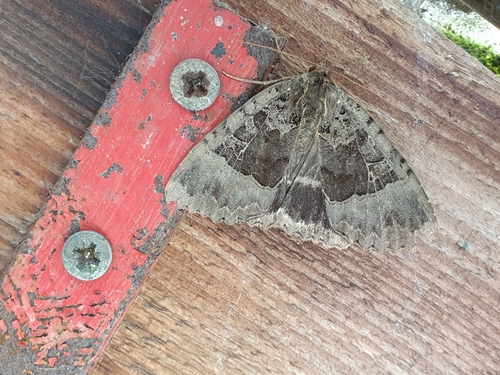
The true lover's knot (Lycophotia porphyrea) is a moth of the family Noctuidae. The species was first described by Michael Denis and Ignaz Schiffermüller in 1775. It is found in the west Palearctic in a wide band through northern, central and eastern Europe and Russia (up to the Ural Mountains). In the south it is spread through northern Spain and northern Portugal, northern Italy, Macedonia, Bulgaria, and northern Greece. In Europe it is found wherever its food plants grow. It is traditionally thought of as a species typical of heathland and moorland but it can often be found in places where heather and its relatives are in garden cultivation, or sunny slopes and forest edges. In the mountains it is found up to an elevation of over 2000 metres above sea level.

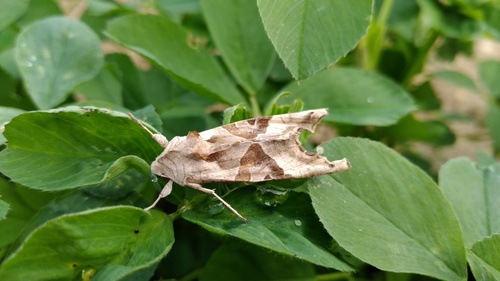
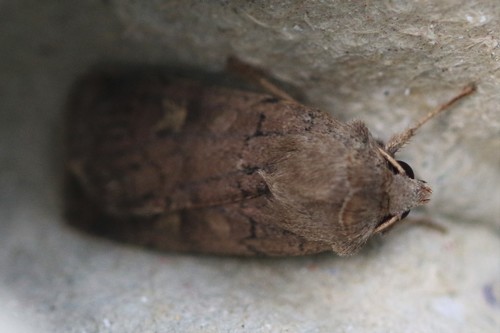
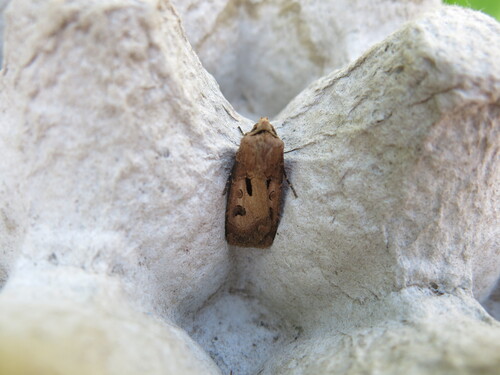
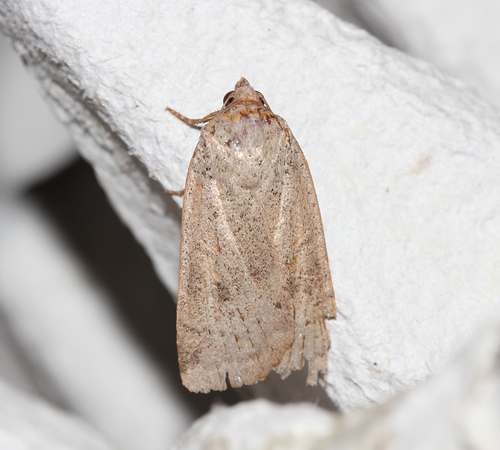
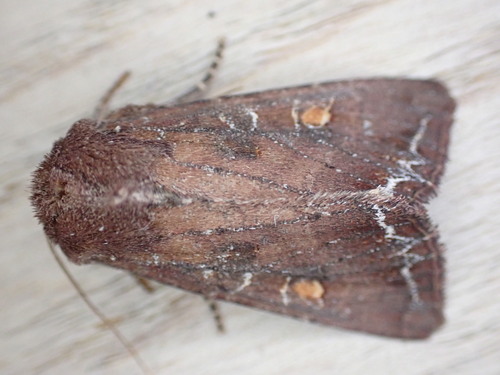
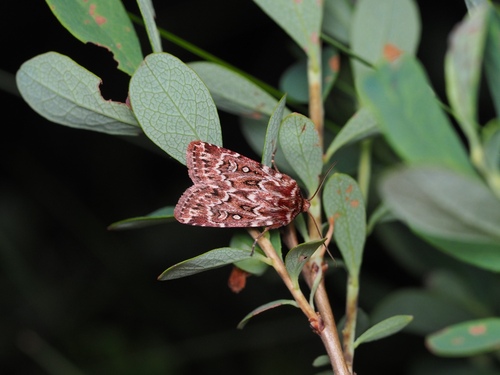
This is a small but attractive species, with a wingspan of 26–34 mm (individuals hatched in higher altitudes tend to be smaller than those from the lowlands). The forewings are brown, often tinged with purple and marked with a complex pattern of white markings which are supposed to recall a true lover's knot. The hindwings are grey or buff. It flies from the latter half of June to the beginning of August and is attracted to light and the flowers of its food plants. Wikipedia →

Global Distribution

Parks Where Found

# Park Country Daily sighting probability
1 Snowdonia National Park 🇬🇧 United Kingdom
~20%
2 Cairngorms National Park 🇬🇧 United Kingdom
~10%
3 Wadden Sea National Park 🇩🇪 Germany
~10%
4 Pyrénées National Park 🇫🇷 France
<5%

Cities Where Found

# City Country Daily sighting probability
1 Manchester 🇬🇧 United Kingdom
<5%
2 Hamburg 🇩🇪 Germany
<5%
3 Birmingham 🇬🇧 United Kingdom
<5%

Before you go

What are the chances of seeing a True Lover's Knot in Manchester?

Rare

Under 5% of wildlife watchers report a True Lover's Knot sighting in Manchester on a given day, based on 9 verified sightings from GBIF citizen-science data. It is the 387th most-seen of the 458 insects we can rate there. Over three days the chance rises to about 10%, and over a week to about 30%, if each day is a fresh chance.

When is the best time to see a True Lover's Knot in Manchester?

July

In that month about 10% of wildlife watchers report a True Lover's Knot in Manchester on a given day, against under 5% in August to June, the lowest months.

What time of day is best to see a True Lover's Knot?

Between 6 and 9 am

Across all the parks we cover, that three-hour window holds the most True Lover's Knot sightings with a recorded time, and about 6 in 10 of them come between 6 am and 6 pm: it is seen both by day and at night.

Is Manchester the best place to see a True Lover's Knot?

Yes

Of the 3 cities where we can rate True Lover's Knot sightings, Manchester has the highest daily chance: under 5%. Next come Hamburg (Germany, under 5%) and Birmingham (United Kingdom, under 5%).

Which relatives of the True Lover's Knot live in Manchester?

Same family: Noctuidae

The closest relatives of the True Lover's Knot that you can see in Manchester (family Noctuidae, Cutworm Moths and Allies) are Large Yellow Underwing (about 30%), Angle Shades (about 20%) and Silver Υ (about 20%), with each one's daily chance of a sighting.

Where does the True Lover's Knot sighting chance come from?

GBIF citizen-science records

It is estimated from how often the True Lover's Knot is recorded against all the insects logged in Manchester (9 verified sightings), calibrated against known sighting rates. Figures are rounded to the nearest 10% because citizen-science data supports honest approximations, not decimals, and months with records from fewer than five people show "—". How it works.
← Back to Manchester