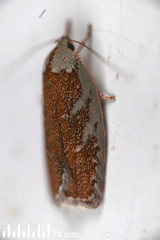
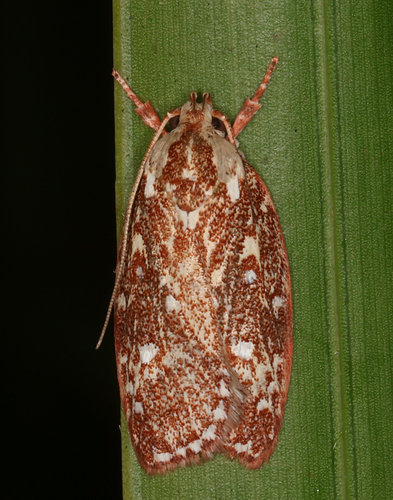
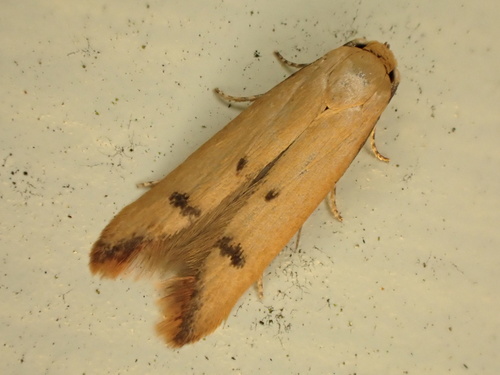
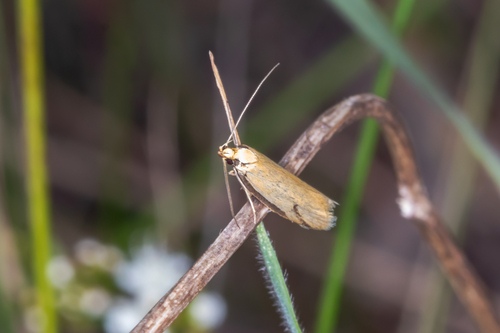
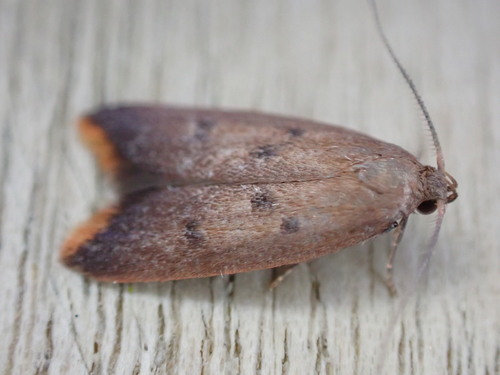
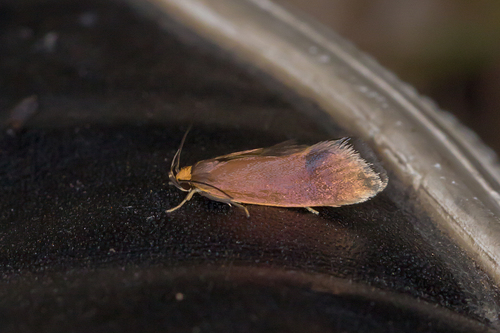
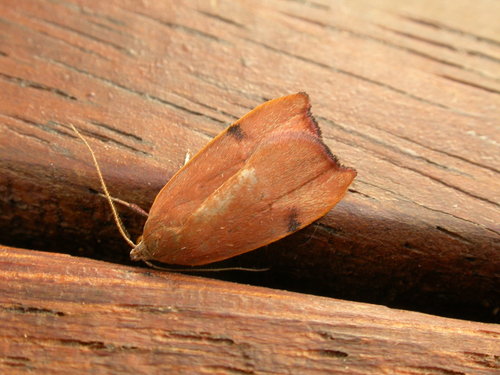
Euchaetis rhizobola

Euchaetis rhizobola

Euchaetis rhizobola

Daily sighting probability <5% · Rare
at Melbourne

In 3 days ~10% in a week ~20%

15 Verified sightings at Melbourne
29 In all 2 parks From 2019 to 2026
September Best month
☀️🌙 Day & Night When it's spotted

About the Euchaetis rhizobola

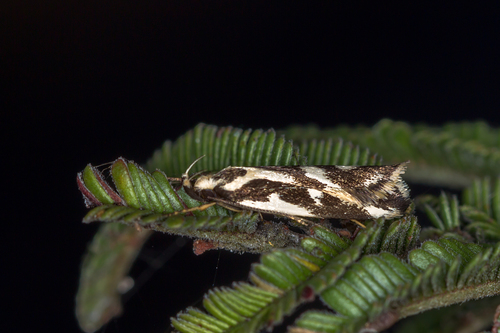
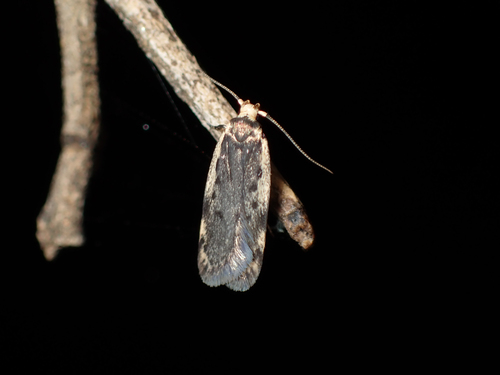
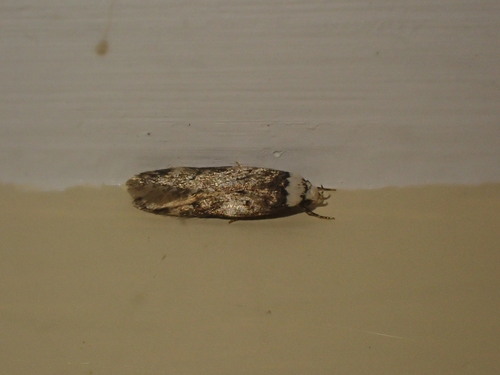
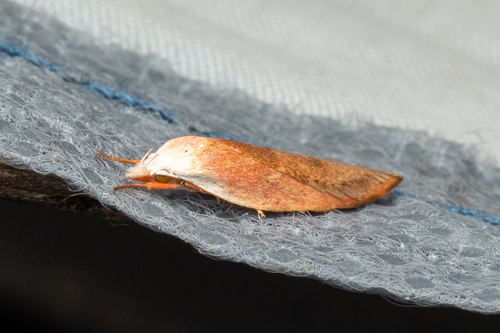
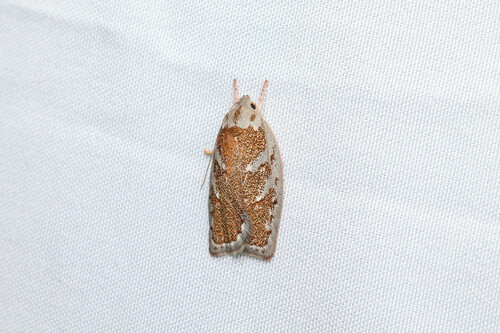
Euchaetis rhizobola is a moth of the family Oecophoridae. It is found in Australia, including New South Wales, Queensland, the Australian Capital Territory, Victoria, South Australia and Western Australia. The wingspan is 31–33 mm. The forewings are ferruginous, irrorated with very pale greyish-ochreous and with very pale greyish-ochreous; markings and a rosy costal edge. There is a short streak along the base of the inner margin, forming a spot at the base and a moderate rather irregular-edged costal streak, rather broad at the base, emitting two irregular oblique wedge-shaped projections, at one-fourth and the middle, first running to the fold before middle, the second to a whitish dot in the disc at three-fifths. There are three ill-defined grey-whitish dots beneath the posterior half of the costal streak, almost confluent with it and there is a grey whitish submarginal line, becoming marginal on the lower half of the hindmargin and with the anterior edge waved. The hindwings are pale whitish-ochreous, yellowish-tinged and with the apex more ochreous-yellowish, sometimes slightly rosy-tinged. Wikipedia →
Global Distribution

Parks Where Found

# Park Country Daily sighting probability
1 Springbrook National Park 🇦🇺 Australia
~10%
2 Blue Mountains National Park 🇦🇺 Australia
~10%

Cities Where Found

# City Country Daily sighting probability
1 Brisbane 🇦🇺 Australia
<5%
2 Melbourne 🇦🇺 Australia
<5%

Before you go

What are the chances of seeing a Euchaetis rhizobola in Melbourne?

Rare

Under 5% of wildlife watchers report a Euchaetis rhizobola sighting in Melbourne on a given day, based on 15 verified sightings from GBIF citizen-science data. It is the 537th most-seen of the 875 insects we can rate there. Over three days the chance rises to about 10%, and over a week to about 20%, if each day is a fresh chance.

When is the best time to see a Euchaetis rhizobola in Melbourne?

September

In that month about 10% of wildlife watchers report a Euchaetis rhizobola in Melbourne on a given day, against under 5% in October to August, the lowest months.

What time of day is best to see a Euchaetis rhizobola?

Between 9 am and noon

Across all the parks we cover, that three-hour window holds the most Euchaetis rhizobola sightings with a recorded time, and about 6 in 10 of them come between 6 am and 6 pm: it is seen both by day and at night.

Is Melbourne the best place to see a Euchaetis rhizobola?

Among the best

Of the 2 cities where we can rate Euchaetis rhizobola sightings, Melbourne ranks 2nd at under 5%, level with the leaders once rounded. The best odds are in Brisbane (Australia, under 5%).

Where does the Euchaetis rhizobola sighting chance come from?

GBIF citizen-science records

It is estimated from how often the Euchaetis rhizobola is recorded against all the insects logged in Melbourne (15 verified sightings), calibrated against known sighting rates. Figures are rounded to the nearest 10% because citizen-science data supports honest approximations, not decimals, and months with records from fewer than five people show "—". How it works.

← Back to Melbourne