Plectophila discalis

Plectophila discalis

Plectophila discalis

Daily sighting probability <5% · Rare
at Melbourne

In 3 days ~10% in a week ~20%

14 Verified sightings at Melbourne
47 In all 2 parks From 2019 to 2026
February Best month
☀️ Diurnal When it's spotted

About the Plectophila discalis

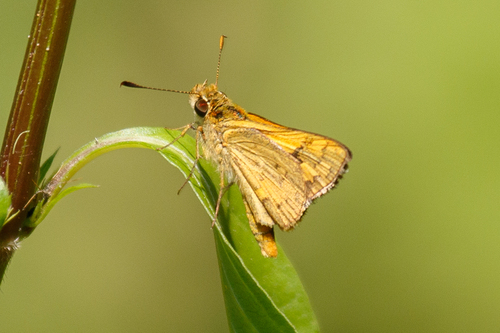
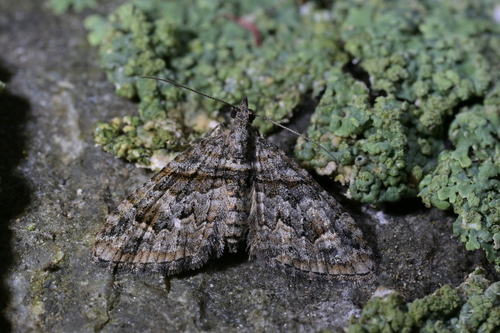
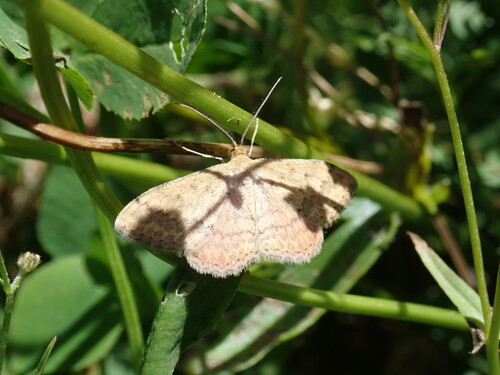
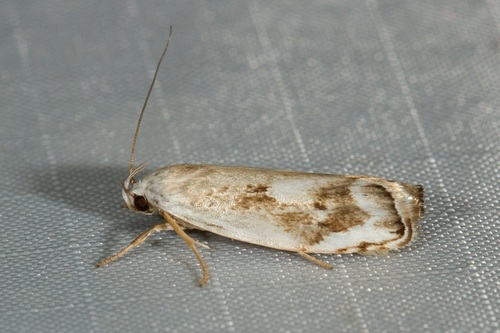
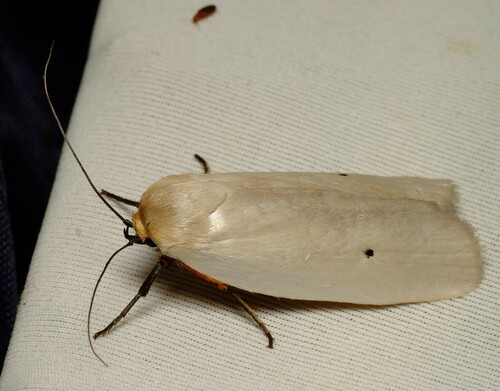
Plectophila discalis is a moth of the family Xyloryctidae first described by Francis Walker in 1865. It is found in Australia, where it has been recorded from New South Wales, Queensland and Victoria. The wingspan is 20–25 mm. The forewings are white, in females with a light fuscous suffusion forming a cloudy fascia, its outer edge distinct and rectangularly angulated in the middle, from three-fifths of the costa to the inner margin before the anal angle, and occupying the entire dorsal two-thirds of the wing from the base up to this, except a cloudy white spot below the middle, sometimes sprinkled with dark fuscous longitudinally in the disc, and on the posterior margin of the fascia. In males, these markings are largely reduced or nearly obsolete, showing only partial indications of the posterior fascia and a small spot on the fold before middle. There is an irregular suffused fuscous streak along the hindmargin, the hindmarginal edge dark fuscous. The hindwings are pale whitish ochreous grey, the terminal half suffused with rather dark grey, the extreme apex whitish ochreous.

The larvae feed on Syncarpia glomulifera, Eucalyptus scabra, Cryptocarya glaucescens and Hibiscus tiliaceus. They feed from within a shelter of tied leaves. Wikipedia →
Global Distribution

Parks Where Found

# Park Country Daily sighting probability
1 Blue Mountains National Park 🇦🇺 Australia
~10%
2 Great Otway National Park 🇦🇺 Australia
<5%

Cities Where Found

# City Country Daily sighting probability
1 Melbourne 🇦🇺 Australia
<5%

Before you go

What are the chances of seeing a Plectophila discalis in Melbourne?

Rare

Under 5% of wildlife watchers report a Plectophila discalis sighting in Melbourne on a given day, based on 14 verified sightings from GBIF citizen-science data. It is the 583rd most-seen of the 875 insects we can rate there. Over three days the chance rises to about 10%, and over a week to about 20%, if each day is a fresh chance.

When is the best time to see a Plectophila discalis in Melbourne?

February

In that month about 10% of wildlife watchers report a Plectophila discalis in Melbourne on a given day, against under 5% in March to January, the lowest months.

What time of day is best to see a Plectophila discalis?

Between 8 and 11 am

Across all the parks we cover, that three-hour window holds the most Plectophila discalis sightings with a recorded time, and about 9 in 10 of them come between 6 am and 6 pm: it is a daytime animal.

Where else can you see a Plectophila discalis?

Only Melbourne, in our data

Melbourne is the only city on Wallace's Line with enough records to rate Plectophila discalis sightings: under 5% of wildlife watchers there report one on a given day.

Where does the Plectophila discalis sighting chance come from?

GBIF citizen-science records

It is estimated from how often the Plectophila discalis is recorded against all the insects logged in Melbourne (14 verified sightings), calibrated against known sighting rates. Figures are rounded to the nearest 10% because citizen-science data supports honest approximations, not decimals, and months with records from fewer than five people show "—". How it works.

← Back to Melbourne