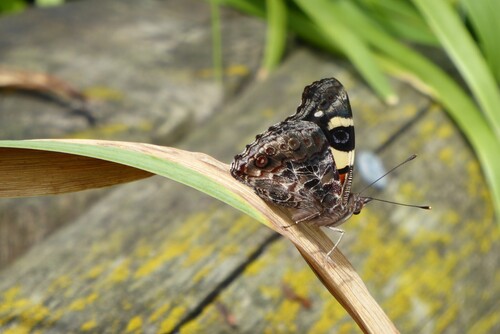
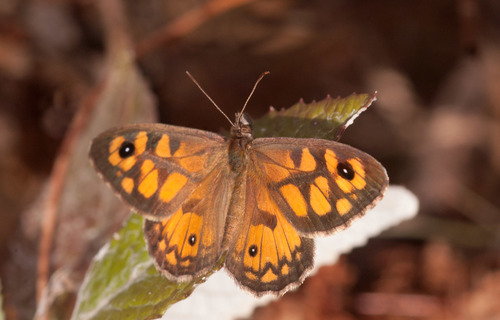
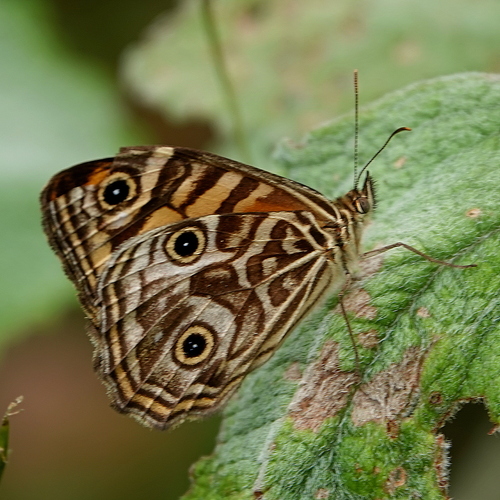
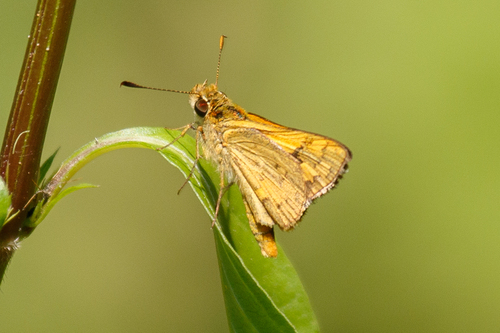
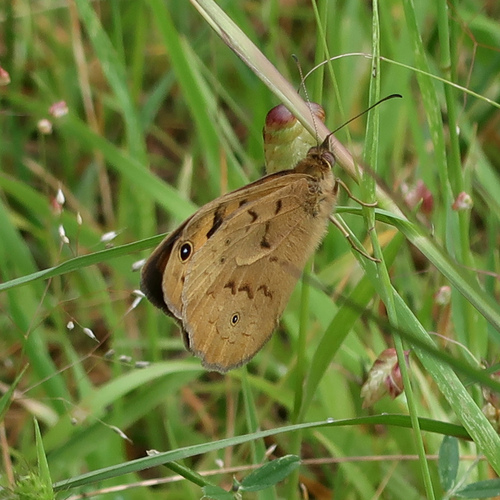
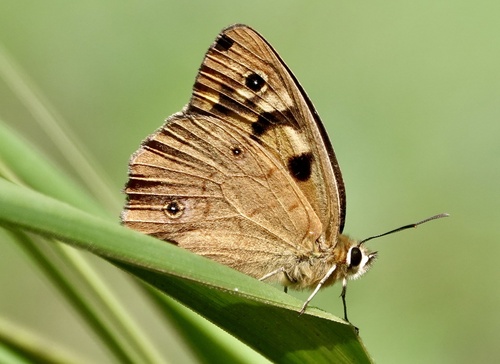
Common Brown

Common Brown

Heteronympha merope

Endemic
Daily sighting probability ~30% · Possible
at Melbourne

In 3 days ~60% in a week ~90%

1,885 Verified sightings at Melbourne
809 In all 11 parks From 2019 to 2026
December Best month
☀️ Diurnal When it's spotted

About the Common Brown

Heteronympha merope, the common brown, is a species of butterfly of the family Nymphalidae, endemic to the southern half of Australia. The wingspan is about 60 millimetres (2.4 in) for males and 70 mm (2.8 in) for females.

The larvae feed on Poaceae species, including Brachypodium distachyon, Cynodon dactylon, Ehrharta erecta, Poa poiformis, Microlaena stipoides, Poa tenera and Themeda triandra. The common brown butterfly is emerging ten days earlier than it did 65 years ago due to the effects of climate change.

Schlossmann, Jessie. "Climate Change Causing Butterflies to Emerge Ten days Early". Australian Geographic 3-23-10 [1] South Australian Butterflies Data Sheet.[2] Media related to Heteronympha merope at Wikimedia Commons Data related to Heteronympha merope at Wikispecies Wikipedia →
Global Distribution

Parks Where Found

# Park Country Daily sighting probability
1 Maria Island National Park 🇦🇺 Australia
~40%
2 Wilsons Promontory National Park 🇦🇺 Australia
~40%
3 Grampians National Park 🇦🇺 Australia
~40%
4 Great Otway National Park 🇦🇺 Australia
~30%
5 Freycinet National Park 🇦🇺 Australia
~30%
6 Blue Mountains National Park 🇦🇺 Australia
~30%
7 Kosciuszko National Park 🇦🇺 Australia
~20%
8 Royal National Park 🇦🇺 Australia
~20%
9 Booderee National Park 🇦🇺 Australia
~20%
10 Lamington National Park 🇦🇺 Australia
~20%
11 Springbrook National Park 🇦🇺 Australia
~10%

Cities Where Found

# City Country Daily sighting probability
1 Melbourne 🇦🇺 Australia
~30%
2 Hobart 🇦🇺 Australia
~10%
3 Sydney 🇦🇺 Australia
~10%

Before you go

What are the chances of seeing a Common Brown in Melbourne?

Possible

About 30% of wildlife watchers report a Common Brown sighting in Melbourne on a given day, based on 1,885 verified sightings from GBIF citizen-science data. It is the 5th most-seen of the 875 insects we can rate there. Over three days the chance rises to about 60%, and over a week to about 90%, if each day is a fresh chance.

When is the best time to see a Common Brown in Melbourne?

December

In that month about 50% of wildlife watchers report a Common Brown in Melbourne on a given day, against under 5% in June to September, the lowest months.

What time of day is best to see a Common Brown?

Between noon and 3 pm

Across all the parks we cover, that three-hour window holds the most Common Brown sightings with a recorded time, and about 9 in 10 of them come between 6 am and 6 pm: it is a daytime animal.

Is Melbourne the best place to see a Common Brown?

Yes

Of the 3 cities where we can rate Common Brown sightings, Melbourne has the highest daily chance: about 30%. Next come Hobart (Australia, about 10%) and Sydney (Australia, about 10%).

Where does the Common Brown sighting chance come from?

GBIF citizen-science records

It is estimated from how often the Common Brown is recorded against all the insects logged in Melbourne (1,885 verified sightings), calibrated against known sighting rates. Figures are rounded to the nearest 10% because citizen-science data supports honest approximations, not decimals, and months with records from fewer than five people show "—". How it works.

← Back to Melbourne