





Completed


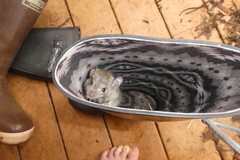
Brown Rat
Rattus norvegicus
- KingdomAnimalia (Animals)
- PhylumChordata (Chordates)
- ClassMammalia (Mammals)
- OrderRodentia (Rodents)
- FamilyMuridae (Old World Mice and Rats)
- GenusRattus (Old World Rats)
- SpeciesRattus norvegicus (Brown Rat)
In 3 days ~10% in a week ~20%
6 Verified sightings at Minneapolis [Saint Paul]
November Best month
☀️ Diurnal When it's spotted






Completed
About the Brown Rat
The brown rat (Rattus norvegicus), also known as the common rat, street rat, sewer rat, wharf rat, Hanover rat, Norway rat and Norwegian rat, is a widespread, common species of rat. One of the largest muroids, it is a brown or grey rodent with a body length of up to 28 cm (11 in) long, and a tail slightly shorter than that. It weighs between 140 and 500 g (4.9 and 17.6 oz). Thought to have originated in northern China and neighbouring areas, it has now spread to all continents except Antarctica, and is the dominant rat in Europe and much of North America, having become naturalised across the world. With rare exceptions, the brown rat lives wherever humans live, particularly in urban areas. It is omnivorous, reproduces rapidly, and can be a vector for several human diseases.
Selective breeding of the brown rat has produced the fancy rat (rats kept as pets), as well as the laboratory rat (rats used as model organisms in biological research). Both fancy rats and laboratory rats are of the domesticated subspecies Rattus norvegicus domestica. Studies of wild rats in New York City have shown that populations living in different neighborhoods can evolve distinct genomic profiles over time, by slowly accruing different traits. Wikipedia →
Recent sightings of Brown Rat in Minneapolis [Saint Paul]
LIVEiNaturalistGlobal Distribution
Parks Where Found
| # | Park | Country | Daily sighting probability |
|---|
More parks will be added in future updates.
Cities Where Found
| # | City | Country | Daily sighting probability |
|---|---|---|---|
| 1 | Liverpool | 🇬🇧 United Kingdom | |
| 2 | Xiuying District | 🇨🇳 China | |
| 3 | Tehran | 🇮🇷 Iran | |
| 4 | Birmingham | 🇬🇧 United Kingdom | |
| 5 | London | 🇬🇧 United Kingdom | |
| 6 | Hanoi | 🇻🇳 Vietnam | |
| 7 | Ho Chi Minh City | 🇻🇳 Vietnam | |
| 8 | Manchester | 🇬🇧 United Kingdom | |
| 9 | Paris | 🇫🇷 France | |
| 10 | New York City | 🇺🇸 United States |
Closest Relatives at Minneapolis [Saint Paul]




Before you go
What are the chances of seeing a Brown Rat in Minneapolis [Saint Paul]?
Rare
Under 5% of wildlife watchers report a Brown Rat sighting in Minneapolis [Saint Paul] on a given day, based on 6 verified sightings from GBIF citizen-science data. It is the 22nd most-seen of the 23 mammals we can rate there. Over three days the chance rises to about 10%, and over a week to about 20%, if each day is a fresh chance.
When is the best time to see a Brown Rat in Minneapolis [Saint Paul]?
November to January
In those months about 10% of wildlife watchers report a Brown Rat in Minneapolis [Saint Paul] on a given day, against under 5% in February to October, the lowest months. Those are among Minneapolis [Saint Paul]'s driest months, with about 30 mm of rain a month against 130 mm in June.
What time of day is best to see a Brown Rat?
Between 3 and 6 pm
Across all the parks we cover, that three-hour window holds the most Brown Rat sightings with a recorded time, and about 7 in 10 of them come between 6 am and 6 pm: it is a daytime animal.
Is Minneapolis [Saint Paul] the best place to see a Brown Rat?
98th of 105
Of the 105 cities where we can rate Brown Rat sightings, Minneapolis [Saint Paul] ranks 98th at under 5%. The best odds are in Liverpool (United Kingdom, about 30%), Xiuying District (China, about 30%) and Tehran (Iran, about 30%).
Which relatives of the Brown Rat live in Minneapolis [Saint Paul]?
Same order: Rodentia
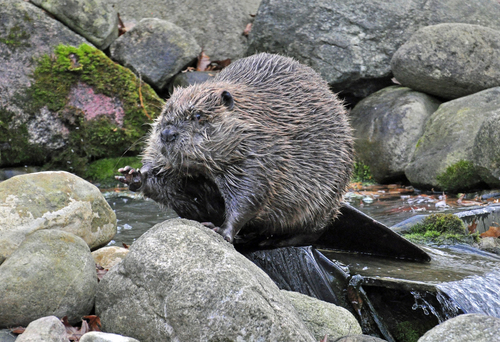
The closest relatives of the Brown Rat that you can see in Minneapolis [Saint Paul] (order Rodentia, Rodents) are Eastern Gray Squirrel (about 60%), Eastern Chipmunk (about 30%) and Muskrat (about 20%), with each one's daily chance of a sighting.
Where does the Brown Rat sighting chance come from?
GBIF citizen-science records
It is estimated from how often the Brown Rat is recorded against all the mammals logged in Minneapolis [Saint Paul] (6 verified sightings), calibrated against known sighting rates. Figures are rounded to the nearest 10% because citizen-science data supports honest approximations, not decimals, and months with records from fewer than five people show "—". How it works.
