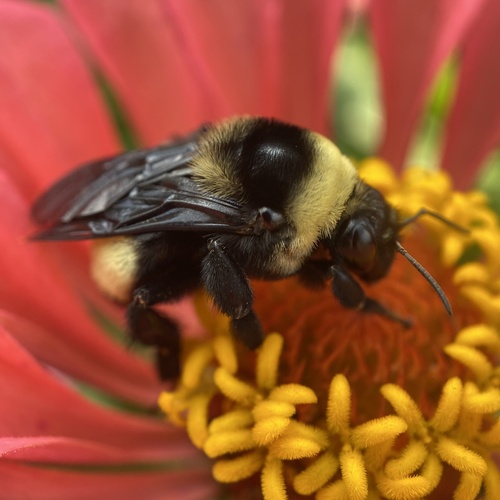
About the Common Blue Mud-Dauber Wasp
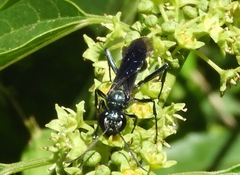
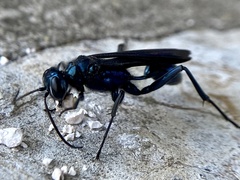
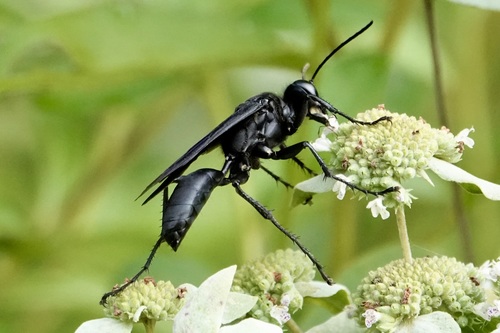
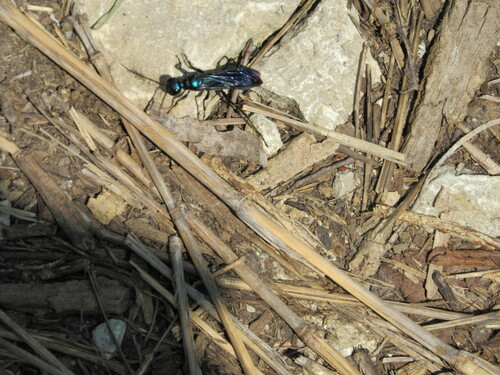
Chalybion californicum, the Nearctic blue mud-dauber wasp or common blue mud-dauber wasp of North America, is a metallic blue species of mud dauber wasp formally described by Henri Louis Frédéric de Saussure in 1867. It is not normally aggressive towards humans. It is similar in shape and color to the steel-blue cricket hunter (Chlorion aerarium). Like other types of wasps, males do not have an ovipositor, and therefore cannot sting.
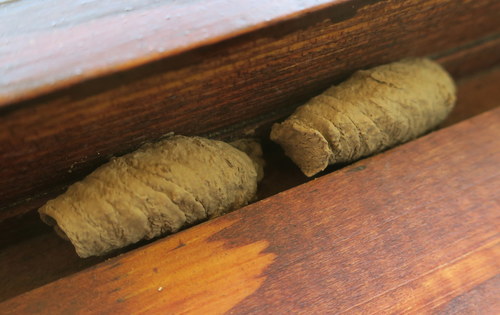
It is ranged from northern Mexico to southern Canada, including most of the United States. It has also been introduced to regions including Hawaii, Bermuda, Croatia, and other European countries. Females can build their own nests, but often refurbish nests abandoned by other wasps and bees, particularly those of Sceliphron caementarium, removing any spiders captured by S. caementarium and the larva, replacing it with an egg of its own and freshly caught spiders. They go through multiple generations in a year.
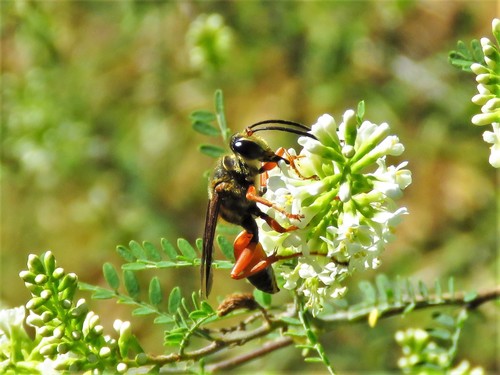
This species is most famous for its predation of black widow spiders. Adults feed on the nectar of flowers, which powers their flight. They pollinate some common wildflowers... Wikipedia →