Common Scoter

Common Scoter

Melanitta nigra

Silhouette: Sheatherius · PhyloPic

LCLeast ConcernNTVUENCR
Daily sighting probability <5% · Rare
at Moscow

In 3 days <5%

20 Verified sightings at Moscow
1,317 In all 4 parks From 2019 to 2026
November Best month
☀️ Diurnal When it's spotted

About the Common Scoter

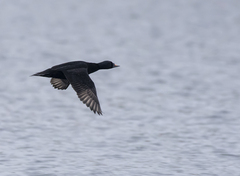
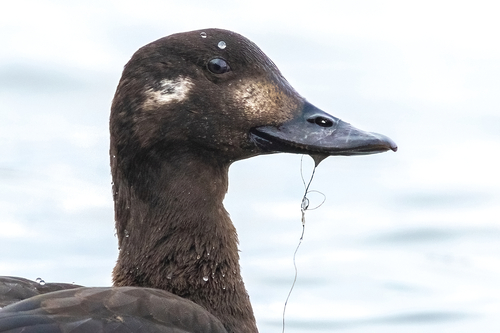
The common scoter (Melanitta nigra) is a large sea duck, 43–54 cm (17–21 in) in length, which breeds over the far north of Europe and the Palearctic east to the Olenyok River. The black scoter (M. americana) of North America and eastern Siberia was formerly considered to be a subspecies.

The common scoter was formally described in 1758 by the Swedish naturalist Carl Linnaeus in the tenth edition of his Systema Naturae under the binomial name Anas nigra. Linnaeus specified the type locality as Lapland, England. The common scoter is now one of six species placed in the genus Melanitta that was introduced in 1822 by the German zoologist Friedrich Boie. The genus name combines the Ancient Greek melas meaning "black" and netta meaning "duck". The common scoter was formerly considered to be conspecific with the black scoter (Melanitta americana) but the two taxa are now treated as separate species. The common scoter is monotypic: no subspecies are recognised.

The common scoter is characterised by its bulky shape and large bill. The male is all black with a bulbous bill which shows some yellow coloration around the nostrils. The female is a brown bird with... Wikipedia →

Sounds

Alarm call0:16

Sweden · 2024

© Thomas Bergman · XC915469 · CC BY-NC-SA 4.0

Call0:55

Sweden · 2025

© Mats Rellmar · XC1004619 · CC BY-NC-SA 4.0

Nocturnal flight call0:12

France · 2022

© Corentin Rivière · XC732503 · CC BY-NC-SA 4.0

Global Distribution

Parks Where Found

# Park Country Daily sighting probability
1 Wadden Sea National Park 🇩🇪 Germany
~10%
2 Snowdonia National Park 🇬🇧 United Kingdom
<5%
3 Svalbard 🇳🇴 Norway
<5%
4 Doñana National Park 🇪🇸 Spain
<5%

Cities Where Found

# City Country Daily sighting probability
1 Liverpool 🇬🇧 United Kingdom
<5%
2 Dublin 🇮🇪 Ireland
<5%
3 Minsk 🇧🇾 Belarus
<5%
4 Manchester 🇬🇧 United Kingdom
<5%
5 Porto 🇵🇹 Portugal
<5%
6 Rotterdam [The Hague] 🇳🇱 Netherlands
<5%
7 Birmingham 🇬🇧 United Kingdom
<5%
8 Helsinki 🇫🇮 Finland
<5%
9 Vienna 🇦🇹 Austria
<5%
10 Prague 🇨🇿 Czechia
<5%

Zoos & Centres Where Found

# Zoo / Centre Country
1 Santillana Zoo 🇪🇸 Spain In captivity

Before you go

What are the chances of seeing a Common Scoter in Moscow?

Rare

Under 5% of wildlife watchers report a Common Scoter sighting in Moscow on a given day, based on 20 verified sightings from GBIF citizen-science data. It is the 144th most-seen of the 171 birds we can rate there. Over three days the chance rises to under 5%, if each day is a fresh chance.

When is the best time to see a Common Scoter in Moscow?

November

In that month about 10% of wildlife watchers report a Common Scoter in Moscow on a given day, against under 5% in December to October, the lowest months.

What time of day is best to see a Common Scoter?

Between 10 am and 1 pm

Across all the parks we cover, that three-hour window holds the most Common Scoter sightings with a recorded time, and about 9 in 10 of them come between 6 am and 6 pm: it is a daytime animal.

Is Moscow the best place to see a Common Scoter?

Among the best

Of the 16 cities where we can rate Common Scoter sightings, Moscow ranks 12th at under 5%, level with the leaders once rounded. The best odds are in Liverpool (United Kingdom, under 5%), Dublin (Ireland, under 5%) and Minsk (Belarus, under 5%).

Where does the Common Scoter sighting chance come from?

GBIF citizen-science records

It is estimated from how often the Common Scoter is recorded against all the birds logged in Moscow (20 verified sightings), calibrated against known sighting rates. Figures are rounded to the nearest 10% because citizen-science data supports honest approximations, not decimals, and months with records from fewer than five people show "—". How it works.

← Back to Moscow