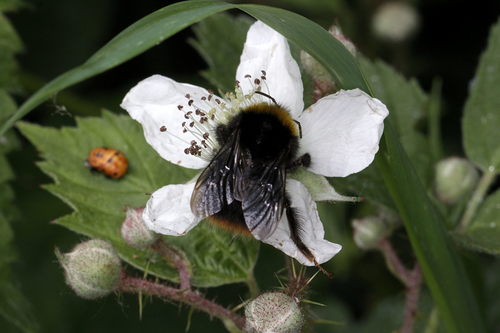
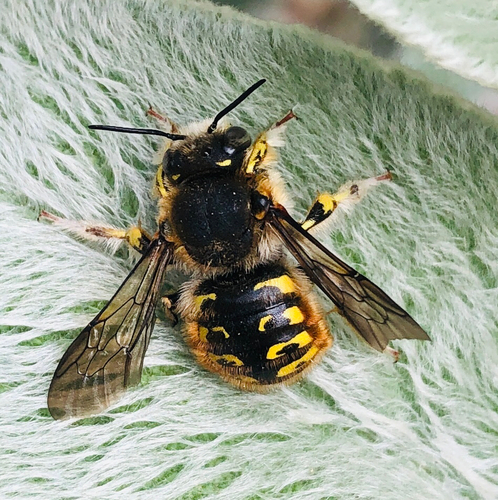
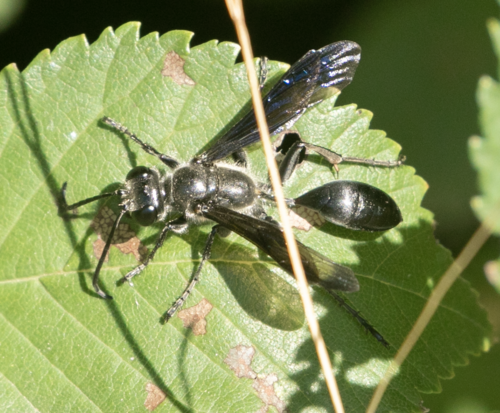
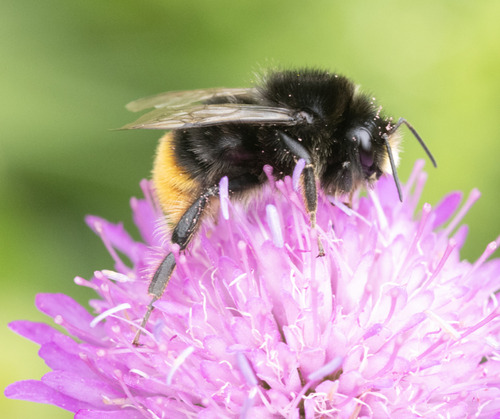
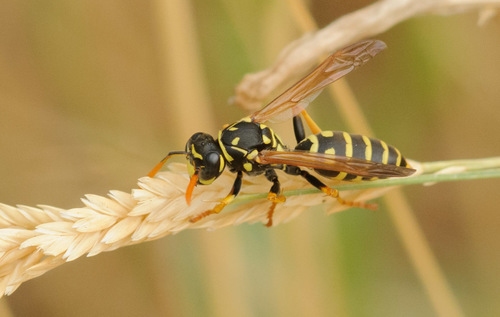
Orange-Legged Furrow Bee

Orange-Legged Furrow Bee

Halictus rubicundus

Daily sighting probability <5% · Rare
at Munich

In 3 days ~10% in a week ~30%

12 Verified sightings at Munich
68 In all 6 parks From 2019 to 2026
April Best month
☀️ Diurnal When it's spotted

About the Orange-Legged Furrow Bee

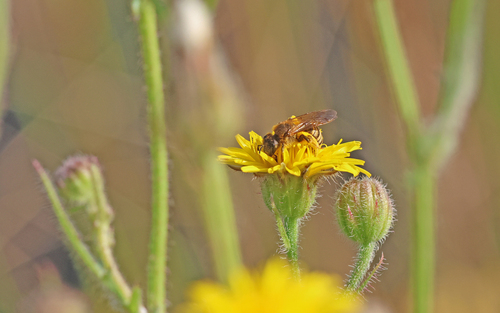
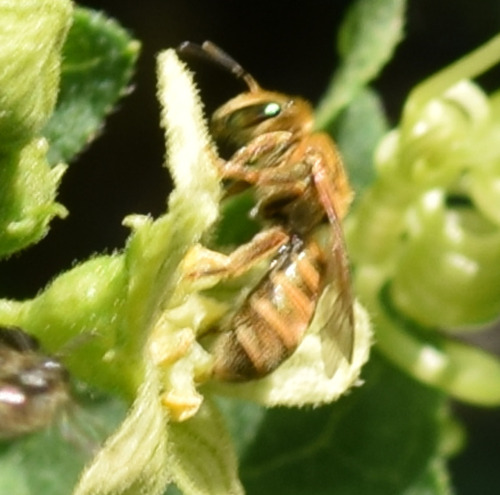
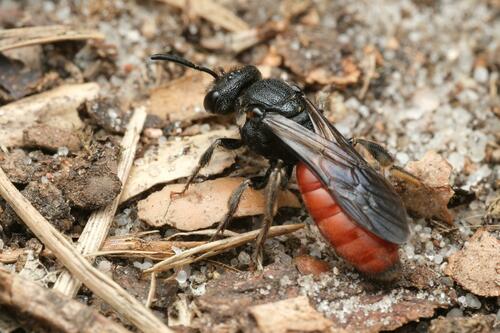
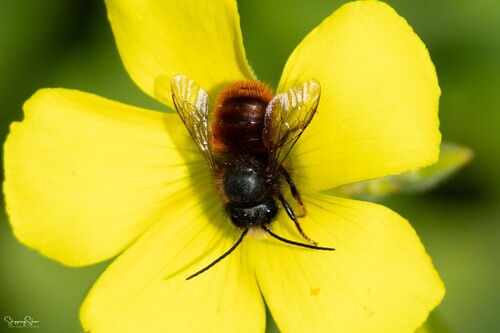
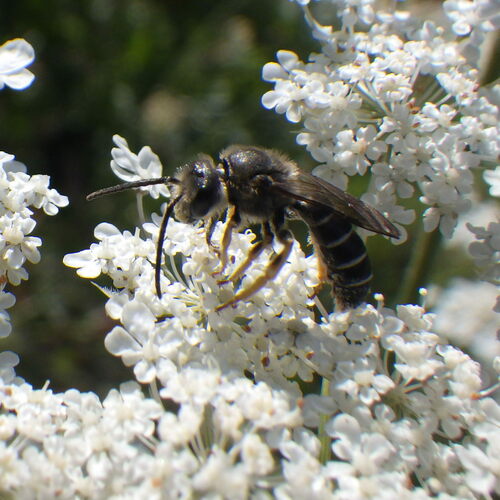
Halictus rubicundus, the orange-legged furrow bee, is a species of sweat bee found throughout the Northern Hemisphere. H. rubicundus entered North America from the Old World during one of two main invasions of Halictus subgenera. These invasions likely occurred via the Bering land bridge at times of low sea level during the Pleistocene epoch.

The species exhibits different social behaviors depending on climate: it is a solitary species in high elevations or latitudes where the season is short, but eusocial in other areas. Often, solitary and eusocial colonies appear simultaneously in the same population. These sweat bees are extensively studied for their variability in social behavior, which has become a model for social plasticity. This variability has contributed to an understanding of evolution of social behavior.

Halictus rubicundus is a species of Hymenoptera in the bee family Halictidae, more commonly known as sweat bees. This common name comes from their frequent attraction to perspiration. This species exhibits polymorphic social behavior that varies with environmental conditions, and other species of the family Halictidae are thought to have similar... Wikipedia →
Global Distribution

Parks Where Found

# Park Country Daily sighting probability
1 Acadia National Park 🇺🇸 United States
~10%
2 Olympic National Park 🇺🇸 United States
~10%
3 Glacier National Park 🇺🇸 United States
~10%
4 Yellowstone National Park 🇺🇸 United States
~10%
5 Great Bear Rainforest 🇨🇦 Canada
<5%
6 Wadden Sea National Park 🇩🇪 Germany
<5%

Cities Where Found

# City Country Daily sighting probability
1 Minneapolis [Saint Paul] 🇺🇸 United States
~10%
2 Anchorage 🇺🇸 United States
~10%
3 Salt Lake City 🇺🇸 United States
~10%
4 Warsaw 🇵🇱 Poland
~10%
5 Vancouver 🇨🇦 Canada
~10%
6 Seattle 🇺🇸 United States
~10%
7 Calgary 🇨🇦 Canada
~10%
8 Montreal 🇨🇦 Canada
~10%
9 Boston 🇺🇸 United States
~10%
10 Portland 🇺🇸 United States
~10%

Before you go

What are the chances of seeing an Orange-Legged Furrow Bee in Munich?

Rare

Under 5% of wildlife watchers report an Orange-Legged Furrow Bee sighting in Munich on a given day, based on 12 verified sightings from GBIF citizen-science data. It is the 238th most-seen of the 521 insects we can rate there. Over three days the chance rises to about 10%, and over a week to about 30%, if each day is a fresh chance.

When is the best time to see an Orange-Legged Furrow Bee in Munich?

April and August

In those months about 10% of wildlife watchers report an Orange-Legged Furrow Bee in Munich on a given day, against under 5% in May–July and September–March, the lowest months.

What time of day is best to see an Orange-Legged Furrow Bee?

Between 2 and 5 pm

Across all the parks we cover, that three-hour window holds the most Orange-Legged Furrow Bee sightings with a recorded time, and nearly all of them come between 6 am and 6 pm: it is a daytime animal.

Is Munich the best place to see an Orange-Legged Furrow Bee?

14th of 21

Of the 21 cities where we can rate Orange-Legged Furrow Bee sightings, Munich ranks 14th at under 5%. The best odds are in Minneapolis [Saint Paul] (United States, about 10%), Anchorage (United States, about 10%) and Salt Lake City (United States, about 10%).

Which relatives of the Orange-Legged Furrow Bee live in Munich?

Same genus: Halictus

The closest relatives of the Orange-Legged Furrow Bee that you can see in Munich (genus Halictus, Furrow Bees) are Great Banded Furrow Bee (about 10%) and Golden Furrow Bee (about 10%), with each one's daily chance of a sighting.

Where does the Orange-Legged Furrow Bee sighting chance come from?

GBIF citizen-science records

It is estimated from how often the Orange-Legged Furrow Bee is recorded against all the insects logged in Munich (12 verified sightings), calibrated against known sighting rates. Figures are rounded to the nearest 10% because citizen-science data supports honest approximations, not decimals, and months with records from fewer than five people show "—". How it works.

← Back to Munich