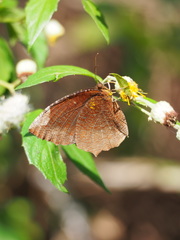
Common Palmfly

Common Palmfly

Elymnias hypermnestra

Daily sighting probability ~20% · Possible
at Nashik

In 3 days ~40% in a week ~70%

9 Verified sightings at Nashik
161 In all 9 parks From 2019 to 2026
October Best month
☀️ Diurnal When it's spotted

About the Common Palmfly

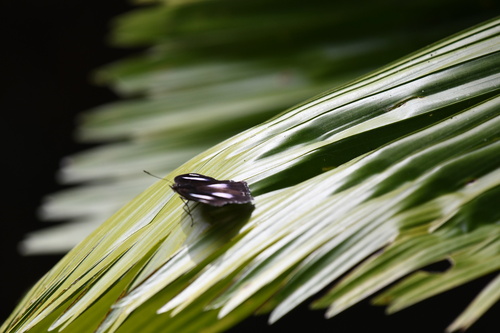
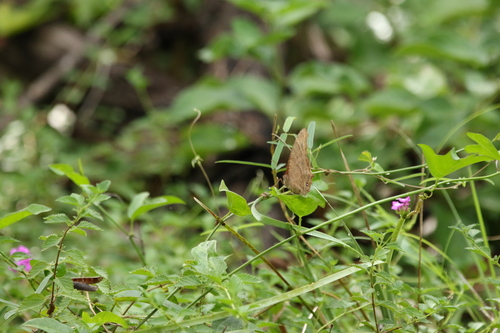
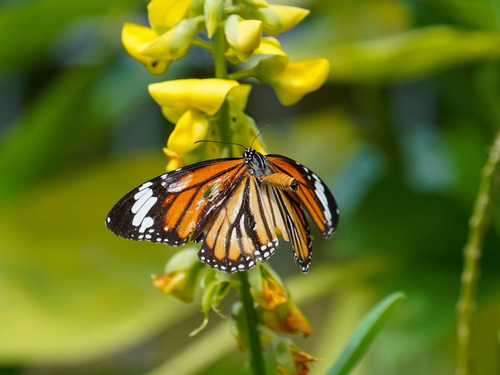
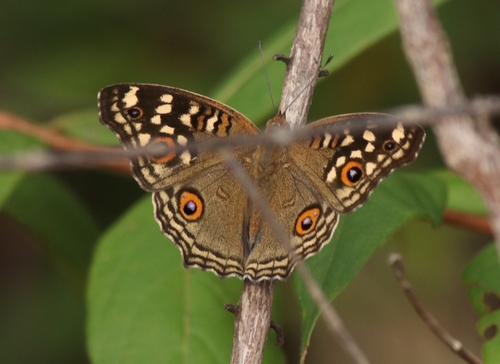
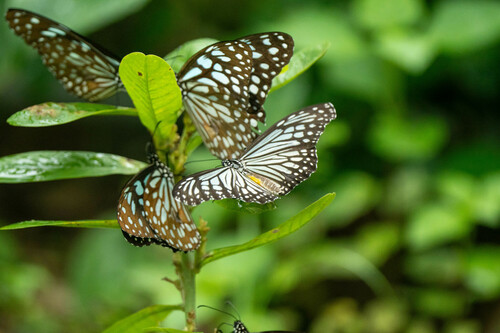
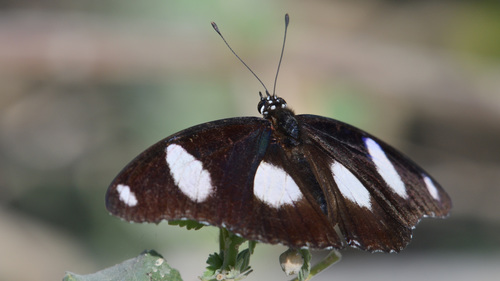
Elymnias hypermnestra, the common palmfly, is a species of satyrine butterfly found in South and Southeast Asia. As in some other species in the genus Elymnias, the common palmfly has a precostal cell in the hindwings and a tuft of androconial scales on the dorsal discal cell of the hindwings. Some populations of this butterfly species are sexually dimorphic: males and females do not look alike. In sexually dimorphic populations, males have black upperside forewings with small blue patches and mimic Euploea species, while the females mimic butterfly species of the genus Danaus.

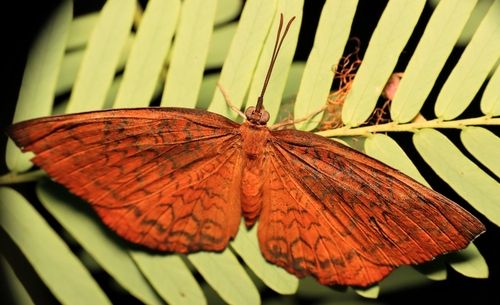
Race undularis (Subhimalayas and Southeast Asia) male upperside blackish brown. Forewing with a subterminal series of blue or sometimes slightly green elongate spots, curving strongly inwards and getting more elongate opposite the apex, forming almost an oblique bar up to the costa. Hindwing: the terminal margin broadly bright chestnut, sometimes with a subterminal paler spot in two or more of the interspaces. Underside pale brown, the basal two-thirds of both forewing and hindwing densely, the outer third more sparsely covered with dark ferruginous, somewhat broad, transverse striae. Forewing... Wikipedia →

Global Distribution

Parks Where Found

# Park Country Daily sighting probability
1 Taroko National Park 🇹🇼 Taiwan
~30%
2 Sundarbans National Park 🇮🇳 India
~30%
3 Kanha National Park 🇮🇳 India
~30%
4 Sinharaja Forest Reserve 🇱🇰 Sri Lanka
~20%
5 Khao Yai National Park 🇹🇭 Thailand
~10%
6 Doi Inthanon National Park 🇹🇭 Thailand
~10%
7 Khao Sok National Park 🇹🇭 Thailand
~10%
8 Cat Tien National Park 🇻🇳 Vietnam
~10%
9 Kaeng Krachan National Park 🇹🇭 Thailand
~10%

Cities Where Found

# City Country Daily sighting probability
1 Hanoi 🇻🇳 Vietnam
~40%
2 Xiuying District 🇨🇳 China
~40%
3 Jabalpur 🇮🇳 India
~30%
4 Guwahati 🇮🇳 India
~30%
5 Bhubaneshwar 🇮🇳 India
~30%
6 Mumbai 🇮🇳 India
~30%
7 Dhaka 🇧🇩 Bangladesh
~30%
8 Colombo [Sri Jayawardenepura Kotte] 🇱🇰 Sri Lanka
~30%
9 Jamshedpur 🇮🇳 India
~30%
10 Kalyan-Dombivli 🇮🇳 India
~30%

Before you go

What are the chances of seeing a Common Palmfly in Nashik?

Possible

About 20% of wildlife watchers report a Common Palmfly sighting in Nashik on a given day, based on 9 verified sightings from GBIF citizen-science data. It is the 24th most-seen of the 42 insects we can rate there. Over three days the chance rises to about 40%, and over a week to about 70%, if each day is a fresh chance.

When is the best time to see a Common Palmfly in Nashik?

October

In that month about 40% of wildlife watchers report a Common Palmfly in Nashik on a given day, against under 5% in December to July, the lowest months. That is one of Nashik's driest months, with about 75 mm of rain against 520 mm in July.

What time of day is best to see a Common Palmfly?

Between 8 and 11 am

Across all the parks we cover, that three-hour window holds the most Common Palmfly sightings with a recorded time, and about 9 in 10 of them come between 6 am and 6 pm: it is a daytime animal.

Is Nashik the best place to see a Common Palmfly?

25th of 37

Of the 37 cities where we can rate Common Palmfly sightings, Nashik ranks 25th at about 20%. The best odds are in Hanoi (Vietnam, about 40%), Xiuying District (China, about 40%) and Jabalpur (India, about 30%).

Which relatives of the Common Palmfly live in Nashik?

Same family: Nymphalidae

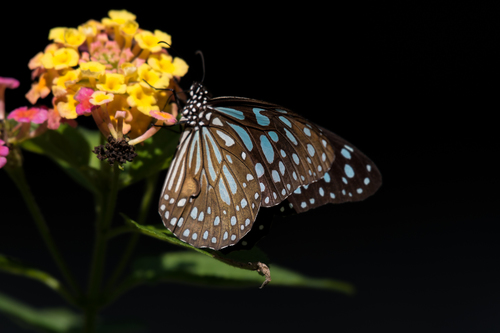
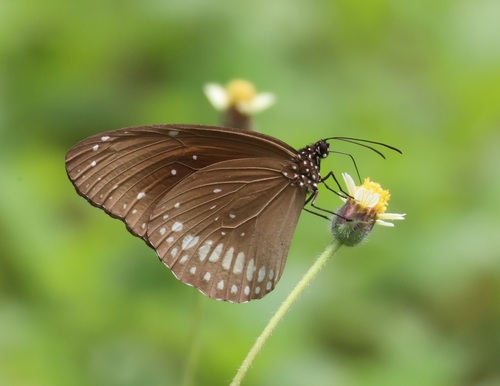
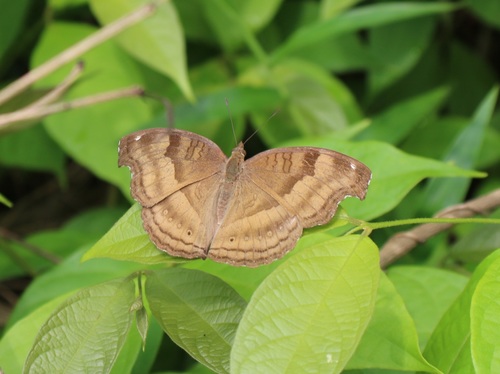
The closest relatives of the Common Palmfly that you can see in Nashik (family Nymphalidae, Brush-footed Butterflies) are Blue Tiger (about 30%), Common Crow (about 30%) and Chocolate Pansy (about 30%), with each one's daily chance of a sighting.

Where does the Common Palmfly sighting chance come from?

GBIF citizen-science records

It is estimated from how often the Common Palmfly is recorded against all the insects logged in Nashik (9 verified sightings), calibrated against known sighting rates. Figures are rounded to the nearest 10% because citizen-science data supports honest approximations, not decimals, and months with records from fewer than five people show "—". How it works.
← Back to Nashik