About the Chinese Mantis
The Chinese mantis (Tenodera sinensis), is a species of mantis native to temperate Asia and the nearby islands. In 1896, this species was accidentally introduced by a nursery tender at Mt. Airy, a neighborhood of Philadelphia, United States. T. sinensis often is erroneously referred to as Tenodera aridifolia sinensis because it was at first described as a subspecies of Tenodera aridifolia, but T. sinensis is now established as a full species.
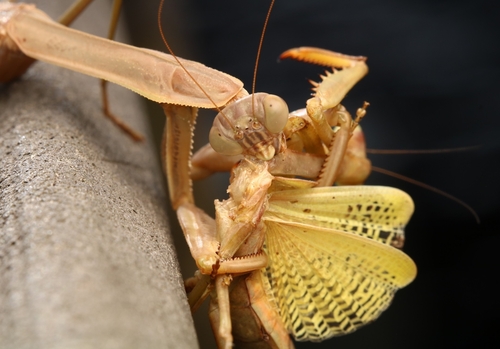
T. sinensis feeds primarily on other large insects, though adult females sometimes catch small vertebrates. For example, they have been observed feeding on hornets, spiders, grasshoppers, katydids, small reptiles, amphibians, and even hummingbirds. Like most mantids, they are known to be cannibalistic. One study found that cannibalism occurs in up to 50% of matings. These mantids have been observed eating the larvae of monarch butterflies, while discarding the entrails.
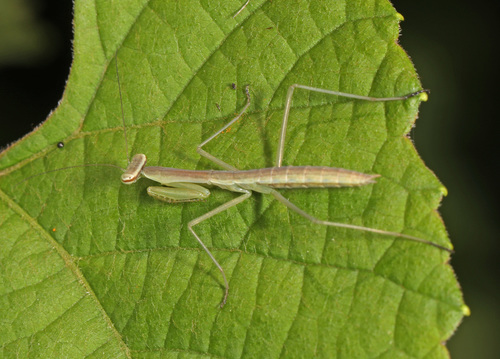
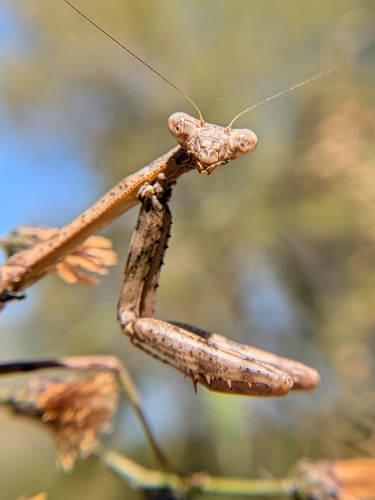
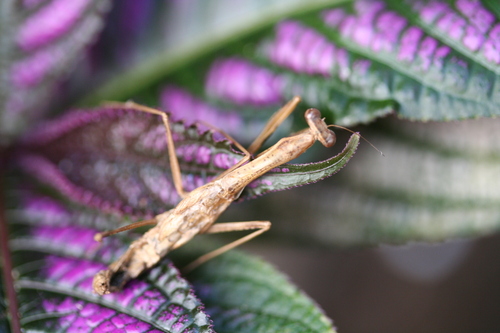
The Chinese mantis is a long, slender, brown and green praying mantis. It is typically longer than other praying mantis species, reaching just over 11 cm (4.3 in), and is the largest mantis species in North America (spread throughout the Northeast United States... Wikipedia →