Horace's Duskywing

Horace's Duskywing

Erynnis horatius

Daily sighting probability <5% · Rare
at New York City

In 3 days ~10% in a week ~30%

134 Verified sightings at New York City
99 In all 4 parks From 2019 to 2026
July Best month
☀️ Diurnal When it's spotted

About the Horace's Duskywing

Erynnis horatius, commonly known as Horace's duskywing, is a species of butterfly in the family Hesperiidae. It is found in the United States from Massachusetts to Florida, and west to eastern South Dakota, the Gulf Coast, south-eastern Utah, Colorado, north-eastern Arizona, and New Mexico. It is listed as a species of special concern in the US state of Connecticut.

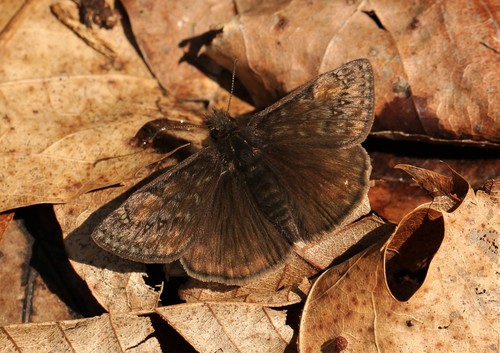
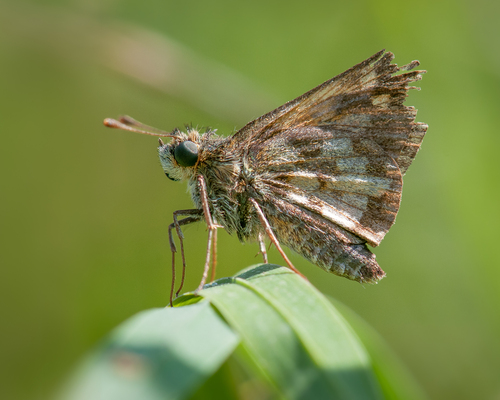
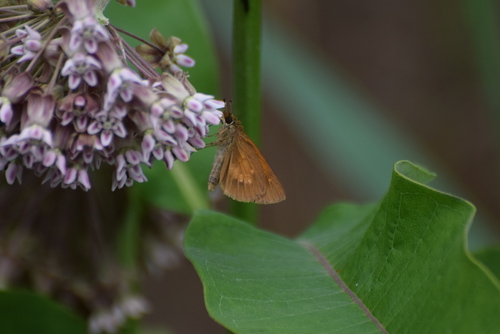
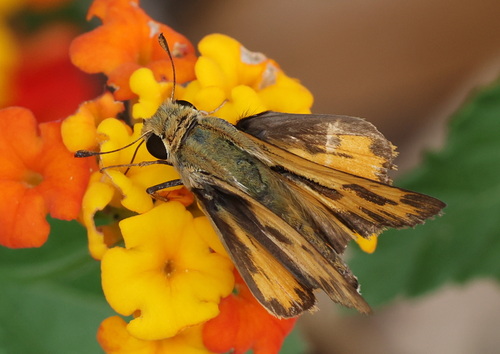
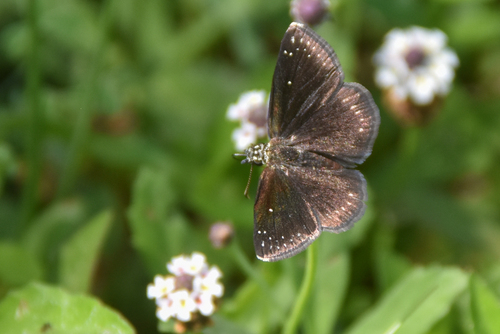
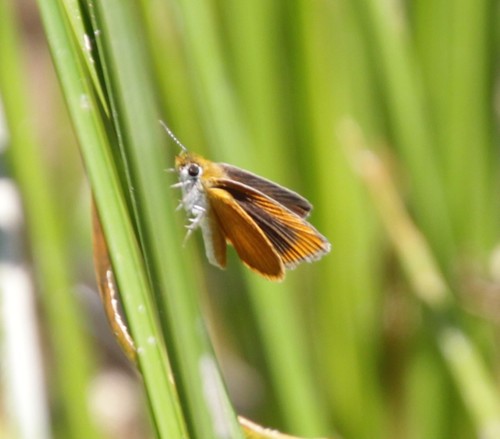
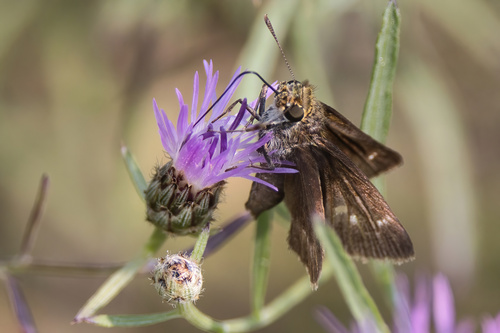
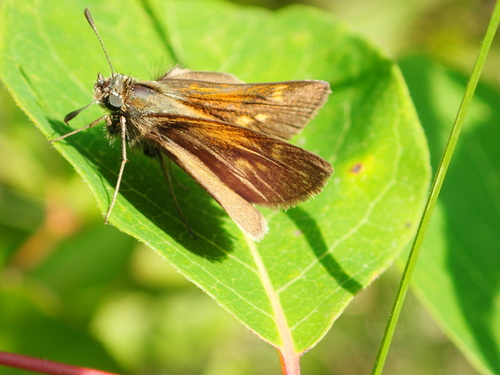
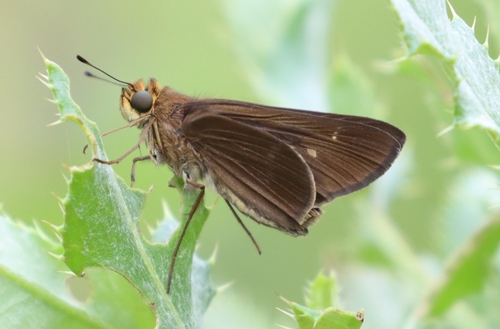
Fringes are brown. Upperside of male forewing is dark brown with little contrast and no white overscaling. Upperside of female forewing is light brown with a contrasting pattern and large transparent spots. Underside of hindwing is usually without two spots below the apex. The male has a costal fold containing yellow scent scales; the female has a patch of scent scales on the 7th abdominal segment. The wingspan is 36–49 mm.

There are two generations in the north, with adults on the wing from April to September; there are three generations in the deep south and Texas, with adults on the wing from January to November. Adults prefer open woodlands and edges, clearings, fence rows, wooded swamps, power-line right-of-ways, open fields and roadsides.

Caterpillars are hosted by various oak species such as willow oak (Quercus phellos), northern red oak (Q. velutina), scrub oak (Q. ilicifolia), water oak (Q. nigra), post oak (Q. stellata), and live oak (Q. virginiana). Adults consume nectar from flowers up to about 4.5 feet (1.4 m) above ground level, including those of dogbane, buttonbush, sneezeweed, goldenrod, peppermint, boneset, and winter cress. Wikipedia →

Global Distribution

Parks Where Found

# Park Country Daily sighting probability
1 Congaree National Park 🇺🇸 United States
~20%
2 Merritt Island National Wildlife Refuge 🇺🇸 United States
~10%
3 Shenandoah National Park 🇺🇸 United States
~10%
4 Great Smoky Mountains National Park 🇺🇸 United States
~10%

Cities Where Found

# City Country Daily sighting probability
1 Miami 🇺🇸 United States
~20%
2 San Antonio 🇺🇸 United States
~10%
3 Austin 🇺🇸 United States
~10%
4 Orlando 🇺🇸 United States
~10%
5 Dallas 🇺🇸 United States
~10%
6 Houston 🇺🇸 United States
~10%
7 Washington 🇺🇸 United States
~10%
8 Baltimore 🇺🇸 United States
~10%
9 Philadelphia 🇺🇸 United States
~10%
10 New York City 🇺🇸 United States
<5%

Before you go

What are the chances of seeing a Horace's Duskywing in New York City?

Rare

Under 5% of wildlife watchers report a Horace's Duskywing sighting in New York City on a given day, based on 134 verified sightings from GBIF citizen-science data. It is the 197th most-seen of the 1623 insects we can rate there. Over three days the chance rises to about 10%, and over a week to about 30%, if each day is a fresh chance.

When is the best time to see a Horace's Duskywing in New York City?

July and August

In those months about 10% of wildlife watchers report a Horace's Duskywing in New York City on a given day, against under 5% in September to June, the lowest months.

What time of day is best to see a Horace's Duskywing?

Between 10 am and 1 pm

Across all the parks we cover, that three-hour window holds the most Horace's Duskywing sightings with a recorded time, and nearly all of them come between 6 am and 6 pm: it is a daytime animal.

Is New York City the best place to see a Horace's Duskywing?

10th of 11

Of the 11 cities where we can rate Horace's Duskywing sightings, New York City ranks 10th at under 5%. The best odds are in Miami (United States, about 20%), San Antonio (United States, about 10%) and Austin (United States, about 10%).

Where does the Horace's Duskywing sighting chance come from?

GBIF citizen-science records

It is estimated from how often the Horace's Duskywing is recorded against all the insects logged in New York City (134 verified sightings), calibrated against known sighting rates. Figures are rounded to the nearest 10% because citizen-science data supports honest approximations, not decimals, and months with records from fewer than five people show "—". How it works.

← Back to New York City