Least Skipper

Least Skipper

Ancyloxypha numitor

Daily sighting probability <5% · Rare
at New York City

In 3 days ~10% in a week ~30%

133 Verified sightings at New York City
130 In all 7 parks From 2019 to 2026
August Best month
☀️ Diurnal When it's spotted

About the Least Skipper

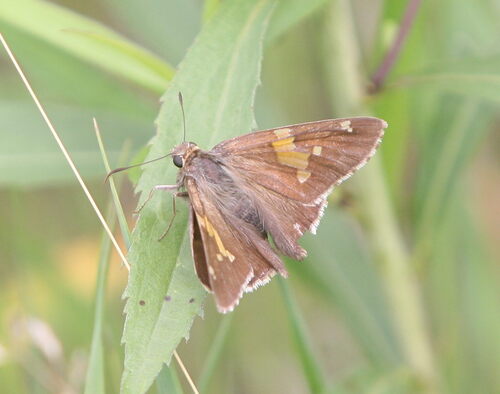
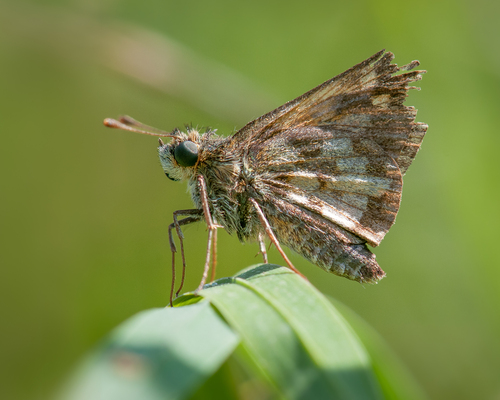
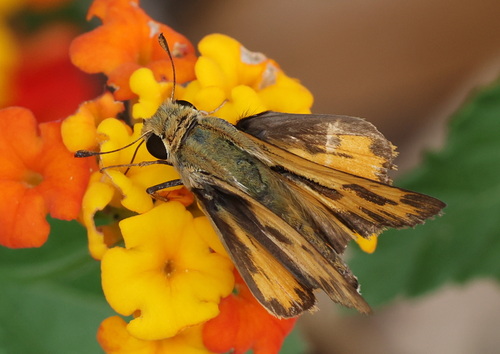
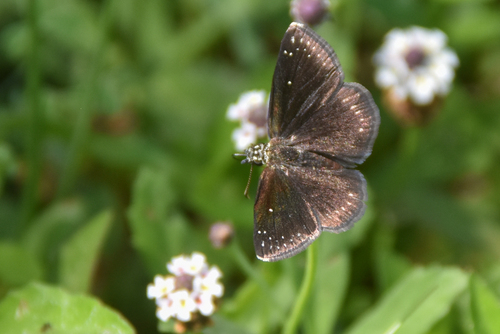
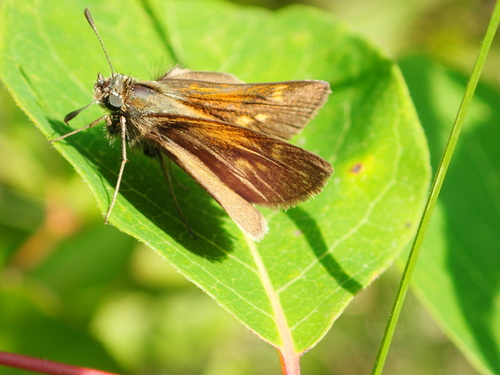
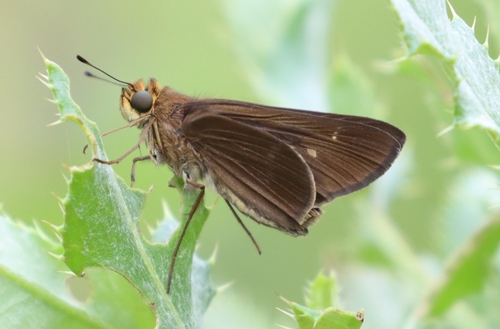
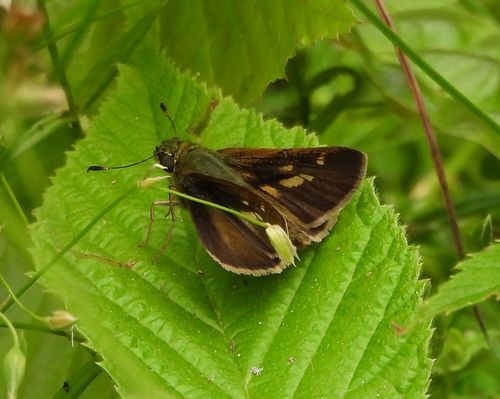
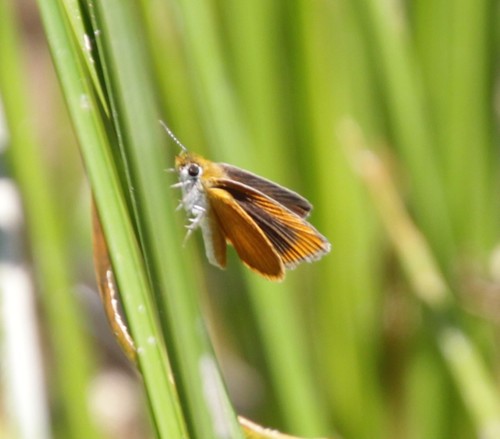
Ancyloxypha numitor, the least skipper, is a North American butterfly in the family Hesperiidae. They have a weak, Satyrinae-like flight. The least skipper's rounded wings and slender body are distinctive. Their checkered antennae have no hooks. Males lack stigmata. The upper sides of the forewings are dark brownish black sometimes having a patch of orange. The hindwing is orange with a broad dark brownish-black band surrounding the orange area completely. The underside of the wings is orange with the hindwing discal area being a little bit darker. The hindwing veins are whitish. Its wingspan ranges from 17 to 26 mm.

There are four similar species in the least skipper's range. They are the European skipper (Thymelicus lineola), the tropical least skipper (Ancyloxypha arene), the orange skipperling (Copaeodes aurantiaca), and the southern skipperling (Copaeodes minima).

The European skipper has more pointed wings than the least skipper, the antennae are short and not checkered, and the upper side of the wings is mostly orange or reddish orange with thin black wing margins. Males also have very thin, black stigmata near the costal forewing edge... Wikipedia →

Global Distribution

Parks Where Found

# Park Country Daily sighting probability
1 Congaree National Park 🇺🇸 United States
~20%
2 Point Pelee National Park 🇨🇦 Canada
~10%
3 Shenandoah National Park 🇺🇸 United States
~10%
4 Everglades National Park 🇺🇸 United States
~10%
5 Big Cypress National Preserve 🇺🇸 United States
~10%
6 Great Smoky Mountains National Park 🇺🇸 United States
~10%
7 Acadia National Park 🇺🇸 United States
~10%

Cities Where Found

# City Country Daily sighting probability
1 Washington 🇺🇸 United States
~10%
2 Minneapolis [Saint Paul] 🇺🇸 United States
~10%
3 Baltimore 🇺🇸 United States
~10%
4 Toronto 🇨🇦 Canada
~10%
5 Chicago 🇺🇸 United States
<5%
6 Philadelphia 🇺🇸 United States
<5%
7 New York City 🇺🇸 United States
<5%
8 Detroit 🇺🇸 United States
<5%
9 Austin 🇺🇸 United States
<5%
10 Boston 🇺🇸 United States
<5%

Before you go

What are the chances of seeing a Least Skipper in New York City?

Rare

Under 5% of wildlife watchers report a Least Skipper sighting in New York City on a given day, based on 133 verified sightings from GBIF citizen-science data. It is the 212th most-seen of the 1623 insects we can rate there. Over three days the chance rises to about 10%, and over a week to about 30%, if each day is a fresh chance.

When is the best time to see a Least Skipper in New York City?

June and August

In those months about 10% of wildlife watchers report a Least Skipper in New York City on a given day, against under 5% in July and September–May, the lowest months.

What time of day is best to see a Least Skipper?

Between 10 am and 1 pm

Across all the parks we cover, that three-hour window holds the most Least Skipper sightings with a recorded time, and about 9 in 10 of them come between 6 am and 6 pm: it is a daytime animal.

Is New York City the best place to see a Least Skipper?

7th of 14

Of the 14 cities where we can rate Least Skipper sightings, New York City ranks 7th at under 5%. The best odds are in Washington (United States, about 10%), Minneapolis [Saint Paul] (United States, about 10%) and Baltimore (United States, about 10%).

Which relatives of the Least Skipper live in New York City?

Same family: Hesperiidae

The closest relatives of the Least Skipper that you can see in New York City (family Hesperiidae, Skippers) are Zabulon Skipper (about 10%), Silver-Spotted Skipper (about 10%) and Peck's Skipper (about 10%), with each one's daily chance of a sighting.

Where does the Least Skipper sighting chance come from?

GBIF citizen-science records

It is estimated from how often the Least Skipper is recorded against all the insects logged in New York City (133 verified sightings), calibrated against known sighting rates. Figures are rounded to the nearest 10% because citizen-science data supports honest approximations, not decimals, and months with records from fewer than five people show "—". How it works.

← Back to New York City