About the Asiatic Garden Beetle
Maladera formosae, commonly known as the Asiatic garden beetle and formerly known as Maladera castanea, is a species of beetle in the family Scarabaeidae. It is native to Japan, China, Taiwan, South Korea, North Korea, and Russia but was introduced to North America in the 1920s where it is considered a pest of turfs, gardens, and crop fields. Adults are active in the summer during which they can be found feeding on leaves and flowers or gathering around light sources at night.
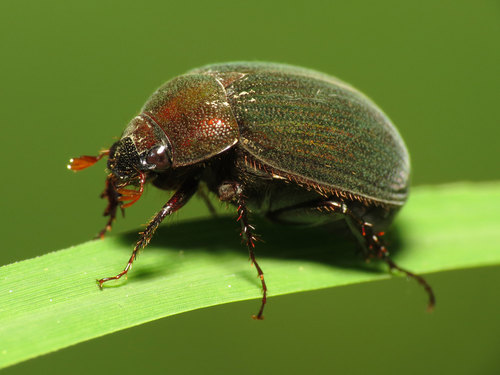
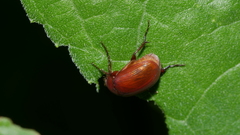
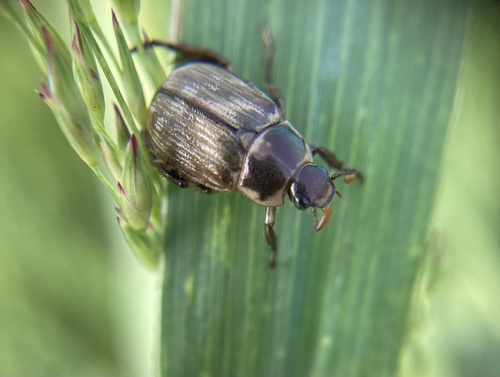
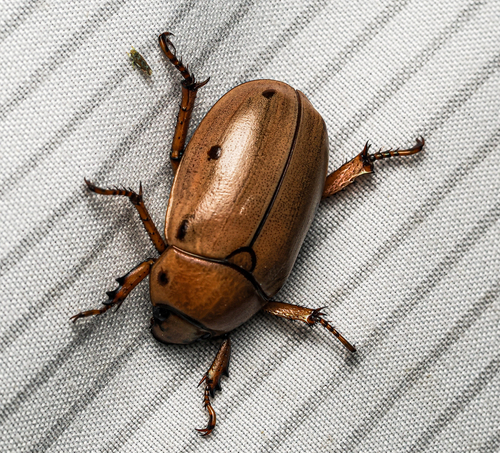
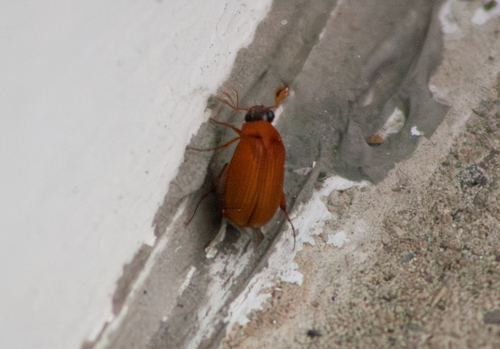
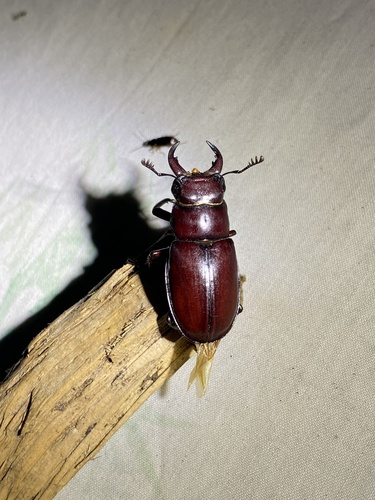
Adults range in length from 8-9mm and are reddish-brown in color with an iridescent sheen. Larvae, similarly to larvae of other species in the family Scarabaeidae, are referred to as white grubs. M. formosae grubs grow from approximately 1.4 mm to 19 mm in length as they feed on plant roots and decaying plant material.
Maladera formosae are frequently mistaken for other species of scarab beetles. However, adults can be distinguished by their sturdy bodies, reddish-brown hue with an iridescent shine, concealed labrum, antenna with 10 segments, flat rear tibia featuring apical spurs separated by tarsal articulations, and elongated male genitalia with sizable, movable apical hooks.
Larvae have C... Wikipedia →