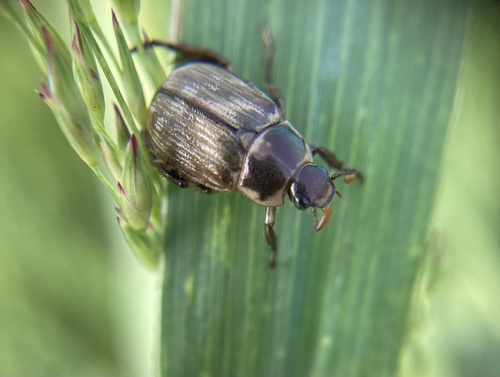
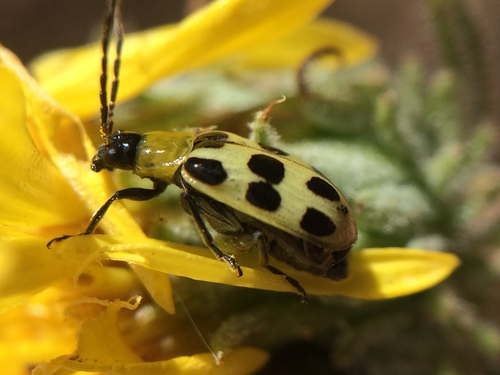
Common Green June Beetle

Common Green June Beetle

Cotinis nitida

Daily sighting probability ~20% · Possible
at Philadelphia

In 3 days ~50% in a week ~80%

319 Verified sightings at Philadelphia
93 In all 2 parks From 2019 to 2026
July Best month
☀️ Diurnal When it's spotted

About the Common Green June Beetle

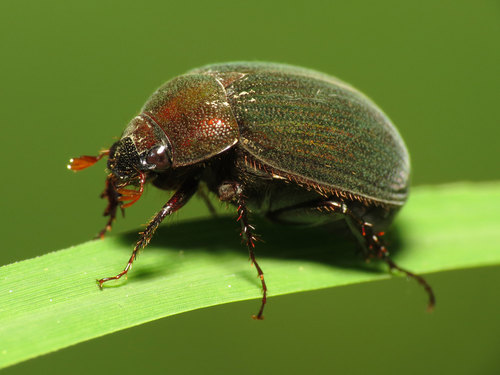
Cotinis nitida, commonly known as the green June beetle, June bug or June beetle, is a beetle of the family Scarabaeidae. It is found in the eastern United States and Canada, where it is most abundant in the South. It is sometimes confused with the related southwestern species figeater beetle Cotinis mutabilis, which is less destructive.

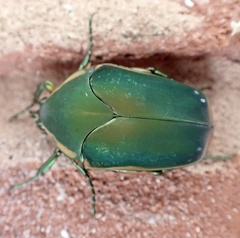
The green June beetle is active during daylight hours. The adult is usually 15–22 mm (0.6–0.9 in) long with dull, metallic green wings; its sides are gold and the head, legs and underside are very bright shiny green. Their habitat extends from New Brunswick to Georgia, and as far west as California, with possible population crossover in Texas with their western cousin, the figeater beetle.

The green June beetle is a part of the Scarabaeidae family, with defining characteristics such as modified forewings called elytra sinuate, and a prominent mesosternum. The scutellum is covered by the prothorax attached to the base node. The Cotinis genus is separated by the male species having a small horn on the lower portion of the face (clypeus).

This beetle species differs from the common brown May or June beetle by its larger body index and... Wikipedia →

Global Distribution

Parks Where Found

# Park Country Daily sighting probability
1 Shenandoah National Park 🇺🇸 United States
~20%
2 Great Smoky Mountains National Park 🇺🇸 United States
~10%

Cities Where Found

# City Country Daily sighting probability
1 Philadelphia 🇺🇸 United States
~20%
2 Baltimore 🇺🇸 United States
~10%
3 Washington 🇺🇸 United States
~10%
4 Chicago 🇺🇸 United States
~10%
5 Austin 🇺🇸 United States
~10%
6 San Antonio 🇺🇸 United States
~10%
7 Houston 🇺🇸 United States
~10%
8 New York City 🇺🇸 United States
~10%
9 Orlando 🇺🇸 United States
~10%
10 Dallas 🇺🇸 United States
~10%

Before you go

What are the chances of seeing a Common Green June Beetle in Philadelphia?

Possible

About 20% of wildlife watchers report a Common Green June Beetle sighting in Philadelphia on a given day, based on 319 verified sightings from GBIF citizen-science data. It is the 15th most-seen of the 632 insects we can rate there. Over three days the chance rises to about 50%, and over a week to about 80%, if each day is a fresh chance.

When is the best time to see a Common Green June Beetle in Philadelphia?

July

In that month about 40% of wildlife watchers report a Common Green June Beetle in Philadelphia on a given day, against under 5% in October to May, the lowest months.

What time of day is best to see a Common Green June Beetle?

Between 11 am and 2 pm

Across all the parks we cover, that three-hour window holds the most Common Green June Beetle sightings with a recorded time, and about 9 in 10 of them come between 6 am and 6 pm: it is a daytime animal.

Is Philadelphia the best place to see a Common Green June Beetle?

Yes

Of the 12 cities where we can rate Common Green June Beetle sightings, Philadelphia has the highest daily chance: about 20%. Next come Baltimore (United States, about 10%) and Washington (United States, about 10%).

Which relatives of the Common Green June Beetle live in Philadelphia?

Same family: Scarabaeidae

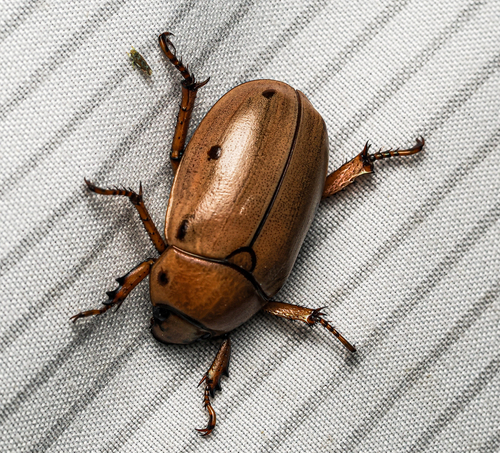
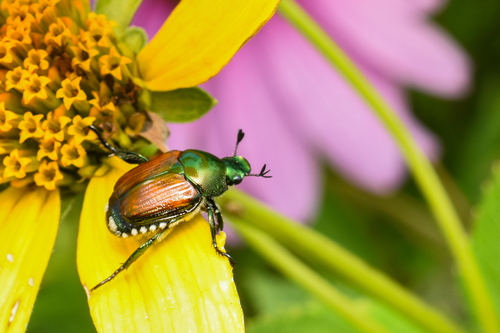
The closest relatives of the Common Green June Beetle that you can see in Philadelphia (family Scarabaeidae, Scarabs) are Oriental Beetle (about 10%), Grapevine Beetle (about 10%) and Japanese Beetle (about 10%), with each one's daily chance of a sighting.

Where does the Common Green June Beetle sighting chance come from?

GBIF citizen-science records

It is estimated from how often the Common Green June Beetle is recorded against all the insects logged in Philadelphia (319 verified sightings), calibrated against known sighting rates. Figures are rounded to the nearest 10% because citizen-science data supports honest approximations, not decimals, and months with records from fewer than five people show "—". How it works.

← Back to Philadelphia