Carolina Sphinx

Carolina Sphinx

Manduca sexta

Daily sighting probability ~10% · With luck
at Philadelphia

In 3 days ~20% in a week ~30%

40 Verified sightings at Philadelphia
98 In all 8 parks From 2019 to 2026
August Best month
☀️🌙 Day & Night When it's spotted

About the Carolina Sphinx

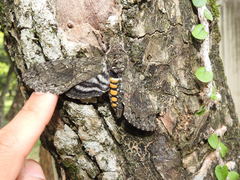
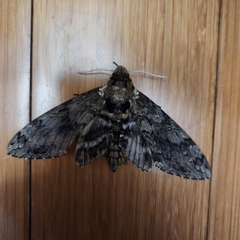
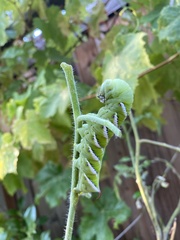
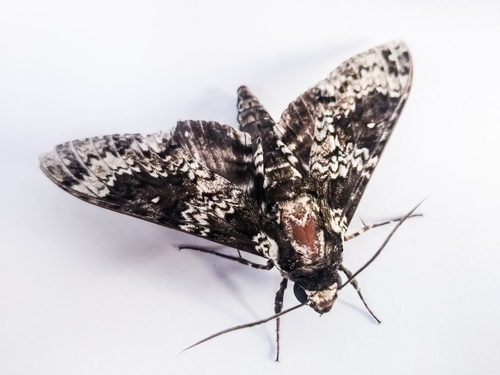
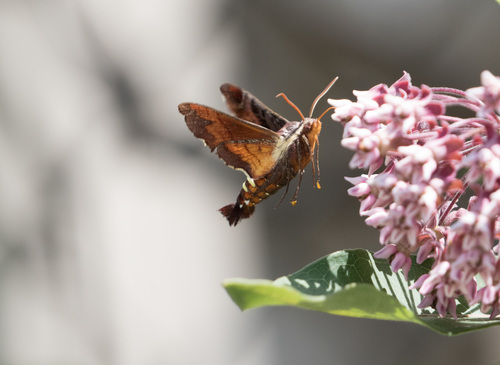
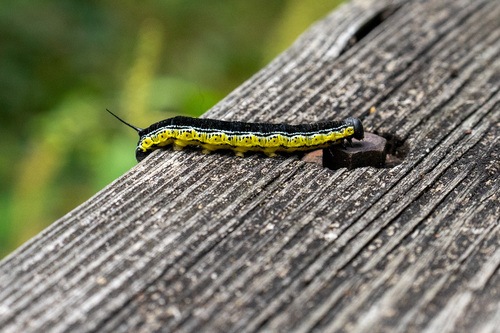
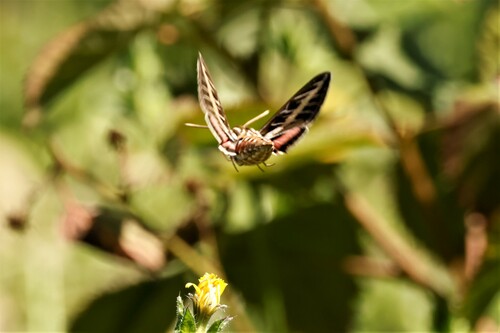
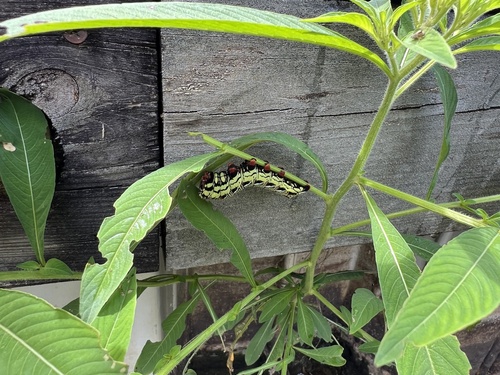
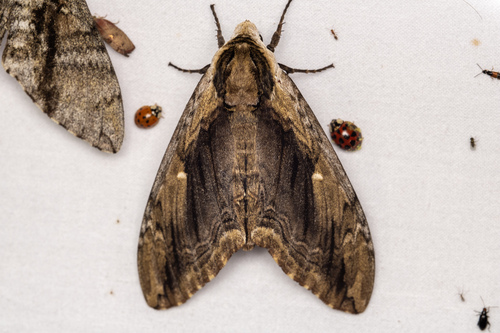
Manduca sexta is a moth of the family Sphingidae present through much of the Americas. The species was first described by Carl Linnaeus in his 1763 Centuria Insectorum. Commonly known as the Carolina sphinx moth and the tobacco hawk moth (as adults) and the tobacco hornworm and the Goliath worm (as larvae), it is closely related to and often confused with the very similar tomato hornworm (Manduca quinquemaculata); the larvae of both feed on the foliage of various plants of the family Solanaceae. The larvae of these species can be distinguished by their lateral markings: tomato hornworms have eight V-shaped white markings with no borders, while tobacco hornworms have seven white diagonal lines with a black border. Additionally, tobacco hornworms have red horns, while tomato hornworms have dark blue or black horns. A mnemonic to remember the markings is tobacco hornworms have straight white lines like cigarettes, while tomato hornworms have V-shaped markings (as in "vine-ripened" tomatoes). M. sexta has mechanisms for selectively sequestering and secreting the neurotoxin nicotine present in tobacco.

M. sexta is a common model organism, especially in neurobiology, due to its easily accessible nervous system and short life cycle. Because of its immense size M. sexta is big enough for medical imaging modalities (like CT, MRI, or PET) and used as a model in imaging and gut inflammation. It is used in a variety of biomedical and biological scientific experiments. It can be easily raised on a wheat-germ-based diet. The larva is large, and thus it is relatively easy to dissect it and isolate its organs. Wikipedia →
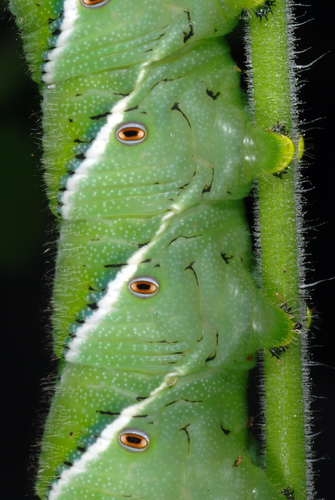
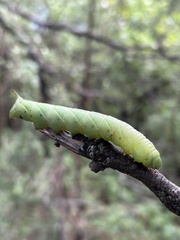
Global Distribution

Parks Where Found

# Park Country Daily sighting probability
1 Joshua Tree National Park 🇺🇸 United States
~10%
2 Zion National Park 🇺🇸 United States
~10%
3 Cumbres de Monterrey National Park 🇲🇽 Mexico
~10%
4 Saguaro National Park 🇺🇸 United States
~10%
5 Channel Islands National Park 🇺🇸 United States
~10%
6 Great Smoky Mountains National Park 🇺🇸 United States
~10%
7 Shenandoah National Park 🇺🇸 United States
~10%
8 Everglades National Park 🇺🇸 United States
<5%

Cities Where Found

# City Country Daily sighting probability
1 Tijuana 🇲🇽 México
~10%
2 Las Vegas 🇺🇸 United States
~10%
3 Detroit 🇺🇸 United States
~10%
4 Austin 🇺🇸 United States
~10%
5 Salt Lake City 🇺🇸 United States
~10%
6 San Diego 🇺🇸 United States
~10%
7 Los Angeles 🇺🇸 United States
~10%
8 Phoenix 🇺🇸 United States
~10%
9 Denver 🇺🇸 United States
~10%
10 Dallas 🇺🇸 United States
~10%

Before you go

What are the chances of seeing a Carolina Sphinx in Philadelphia?

With luck

About 10% of wildlife watchers report a Carolina Sphinx sighting in Philadelphia on a given day, based on 40 verified sightings from GBIF citizen-science data. It is the 142nd most-seen of the 632 insects we can rate there. Over three days the chance rises to about 20%, and over a week to about 30%, if each day is a fresh chance.

When is the best time to see a Carolina Sphinx in Philadelphia?

June to September

In those months about 10% of wildlife watchers report a Carolina Sphinx in Philadelphia on a given day, against under 5% in October to May, the lowest months.

What time of day is best to see a Carolina Sphinx?

Between 8 and 11 pm

Across all the parks we cover, that three-hour window holds the most Carolina Sphinx sightings with a recorded time, and about 6 in 10 of them come between 6 am and 6 pm: it is seen both by day and at night.

Is Philadelphia the best place to see a Carolina Sphinx?

Among the best

Of the 27 cities where we can rate Carolina Sphinx sightings, Philadelphia ranks 16th at about 10%, level with the leaders once rounded. The best odds are in Tijuana (México, about 10%), Las Vegas (United States, about 10%) and Detroit (United States, about 10%).

Where does the Carolina Sphinx sighting chance come from?

GBIF citizen-science records

It is estimated from how often the Carolina Sphinx is recorded against all the insects logged in Philadelphia (40 verified sightings), calibrated against known sighting rates. Figures are rounded to the nearest 10% because citizen-science data supports honest approximations, not decimals, and months with records from fewer than five people show "—". How it works.

← Back to Philadelphia