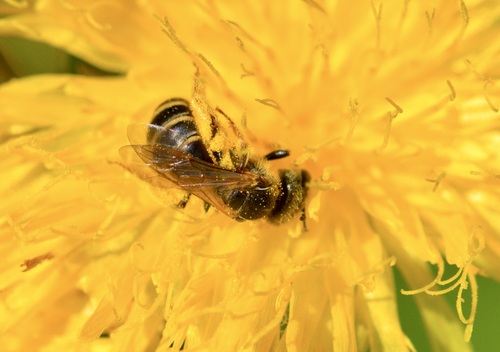
Valley Carpenter Bee

Valley Carpenter Bee

Xylocopa sonorina

Daily sighting probability ~10% · With luck
at Phoenix

In 3 days ~30% in a week ~60%

94 Verified sightings at Phoenix
35 In all 3 parks From 2019 to 2026
March Best month
☀️ Diurnal When it's spotted

About the Valley Carpenter Bee

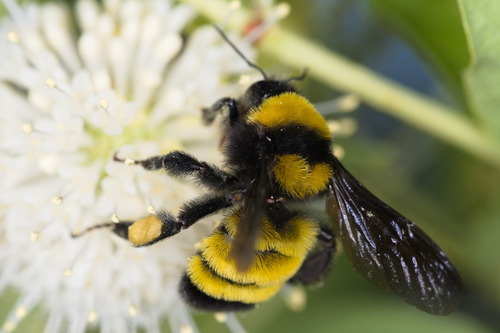
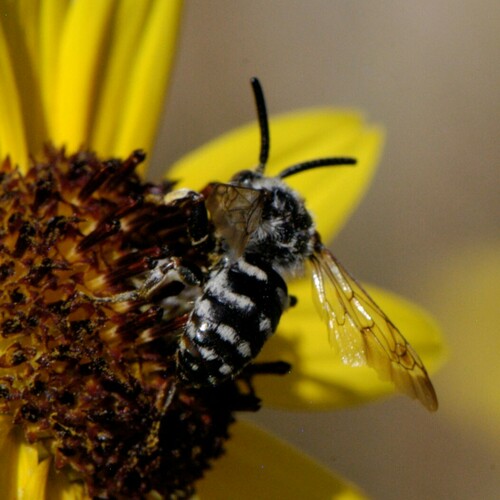
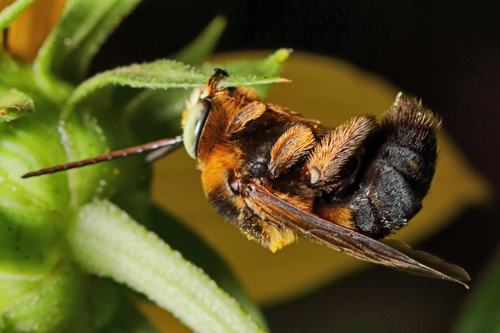
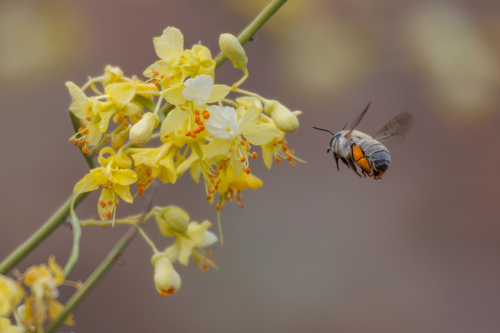
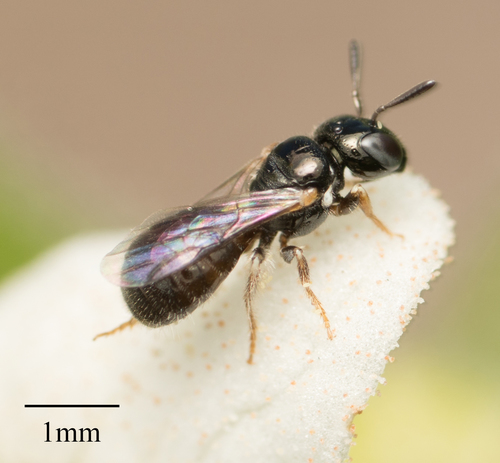
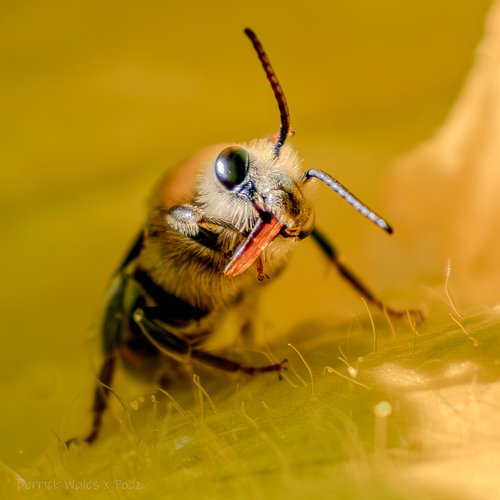
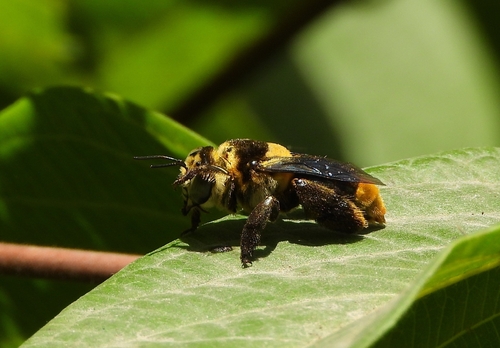
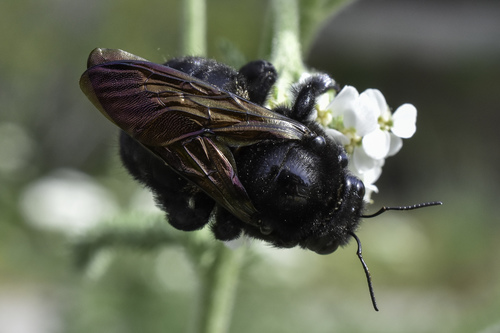
Xylocopa sonorina, the valley carpenter bee or Hawaiian carpenter bee, is a species of carpenter bee found from western Texas to northern California, and the eastern Pacific islands. Females are black while males are golden-brown with green eyes.

X. sonorina is one of three southwestern US species in the genus Xylocopa, which has 31 subgenera and 500 species worldwide. Frederick Smith, Assistant in the Zoological Department of the British Museum and member of the council of the Entomological Society of London, first described X. sonorina in 1874 from specimens collected in Hawaii. Until 1956, it was thought that X. sonorina came from the Sunda Islands, but in a paper published that year, M. A. Lieftinck showed that Smith's interpretation of the original specimen labels was in error: Smith had mistakenly read the label of X. sonorina as meaning the Sunda Islands instead of the Sandwich Islands.

In 1899, R. C. L. Perkins described the same species as Xylocopa aeneipennis, and in 1922, P. H. Timberlake claimed that the Hawaiian Xylocopa was the same as the mainland X. varipuncta, that had been named in 1879, and Roy Snelling predicted in 2003 that X. varipuncta would eventually... Wikipedia →
Global Distribution

Parks Where Found

# Park Country Daily sighting probability
1 Saguaro National Park 🇺🇸 United States
~10%
2 Channel Islands National Park 🇺🇸 United States
~10%
3 Joshua Tree National Park 🇺🇸 United States
<5%

Cities Where Found

# City Country Daily sighting probability
1 Sacramento 🇺🇸 United States
~40%
2 Mesa 🇺🇸 United States
~20%
3 Ciudad Juárez 🇲🇽 México
~20%
4 Los Angeles 🇺🇸 United States
~10%
5 Tijuana 🇲🇽 México
~10%
6 Phoenix 🇺🇸 United States
~10%
7 Las Vegas 🇺🇸 United States
~10%
8 San Francisco 🇺🇸 United States
~10%
9 San Diego 🇺🇸 United States
~10%
10 Mexico City 🇲🇽 México
~10%

Before you go

What are the chances of seeing a Valley Carpenter Bee in Phoenix?

With luck

About 10% of wildlife watchers report a Valley Carpenter Bee sighting in Phoenix on a given day, based on 94 verified sightings from GBIF citizen-science data. It is the 20th most-seen of the 264 insects we can rate there. Over three days the chance rises to about 30%, and over a week to about 60%, if each day is a fresh chance.

When is the best time to see a Valley Carpenter Bee in Phoenix?

March

In that month about 20% of wildlife watchers report a Valley Carpenter Bee in Phoenix on a given day, against under 5% in December and January, the lowest months.

What time of day is best to see a Valley Carpenter Bee?

Between 10 am and 1 pm

Across all the parks we cover, that three-hour window holds the most Valley Carpenter Bee sightings with a recorded time, and about 9 in 10 of them come between 6 am and 6 pm: it is a daytime animal.

Is Phoenix the best place to see a Valley Carpenter Bee?

6th of 12

Of the 12 cities where we can rate Valley Carpenter Bee sightings, Phoenix ranks 6th at about 10%. The best odds are in Sacramento (United States, about 40%), Mesa (United States, about 20%) and Ciudad Juárez (México, about 20%).

Which relatives of the Valley Carpenter Bee live in Phoenix?

Same family: Apidae

The closest relatives of the Valley Carpenter Bee that you can see in Phoenix (family Apidae, Honey Bees, Bumble Bees, and Allies) are California Digger Bee (about 10%), Sonoran Bumble Bee (about 10%) and California Digger-Cuckoo Bee (about 10%), with each one's daily chance of a sighting.

Where does the Valley Carpenter Bee sighting chance come from?

GBIF citizen-science records

It is estimated from how often the Valley Carpenter Bee is recorded against all the insects logged in Phoenix (94 verified sightings), calibrated against known sighting rates. Figures are rounded to the nearest 10% because citizen-science data supports honest approximations, not decimals, and months with records from fewer than five people show "—". How it works.

← Back to Phoenix