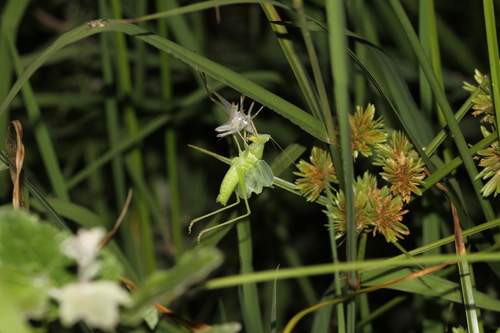
Migratory Locust

Migratory Locust

Locusta migratoria

Daily sighting probability <5% · Rare
at Porto

In 3 days ~10% in a week ~30%

12 Verified sightings at Porto
55 In all 5 parks From 2019 to 2026
November Best month
☀️ Diurnal When it's spotted

About the Migratory Locust

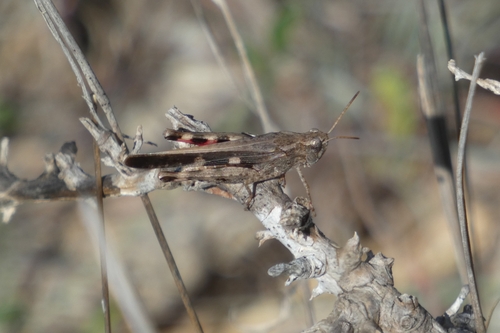
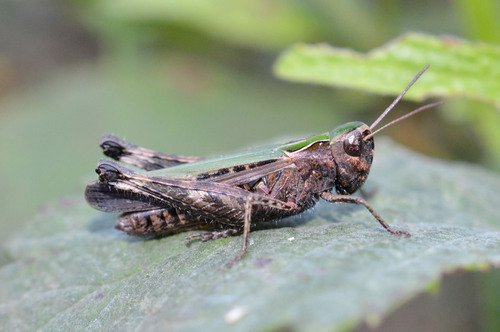
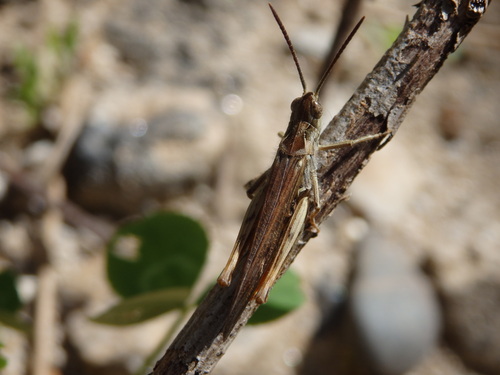
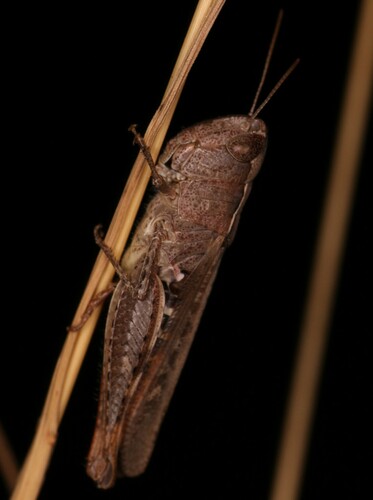
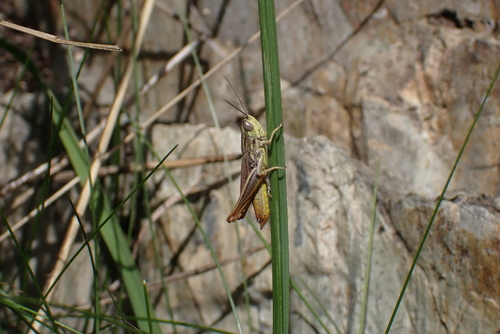
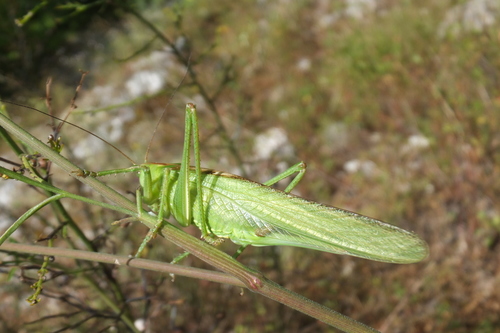
The migratory locust (Locusta migratoria) is the most widespread locust species, and the only species in the genus Locusta. It occurs throughout Africa, Europe, Asia, Australia and New Zealand. Because of the vast geographic area it occupies, which comprises many different ecological zones, numerous subspecies have been described. However, not all experts agree on the validity of some of these subspecies. While it reaches plague proportions in drier areas, it is solitary in northern Australia savannas.

Many other species of grasshopper with gregarious and possibly migratory behaviour are referred to as 'locusts' in the vernacular, including the widely distributed desert locust. At 6.5 Gbp, the migratory locust possesses one of the largest known insect genomes.

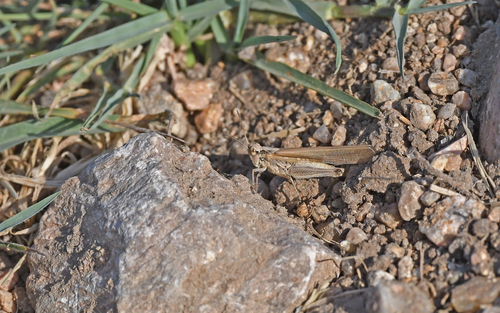
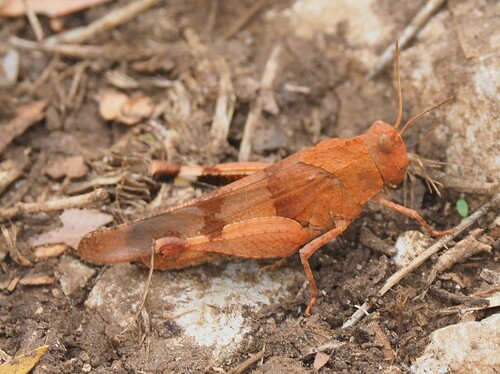
The migratory locust is polyphenic. It transitions between two main phenotypes in response to population density; the solitary phase and the gregarious phase. As the density of the population increases the locust transforms progressively from the solitary phase towards the gregarious phase with intermediate phases:

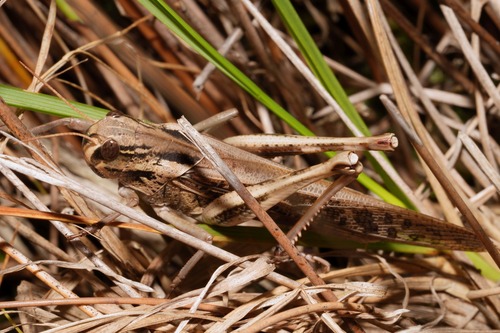
Pigmentation and size of the migratory locust vary according to its phase (gregarious or solitary... Wikipedia →
Global Distribution

Parks Where Found

# Park Country Daily sighting probability
1 Ranomafana National Park 🇲🇬 Madagascar
~20%
2 Camargue 🇫🇷 France
~10%
3 Abel Tasman National Park 🇳🇿 New Zealand
~10%
4 Pyrénées National Park 🇫🇷 France
~10%
5 Sierra de Guadarrama National Park 🇪🇸 Spain
<5%

Cities Where Found

# City Country Daily sighting probability
1 Nagoya 🇯🇵 Japan
~20%
2 Barcelona 🇪🇸 Spain
~10%
3 Osaka 🇯🇵 Japan
~10%
4 Rome 🇮🇹 Italy
~10%
5 Tokyo 🇯🇵 Japan
~10%
6 Valencia 🇪🇸 Spain
~10%
7 Sofia 🇧🇬 Bulgaria
~10%
8 Milan 🇮🇹 Italy
~10%
9 Madrid 🇪🇸 Spain
~10%
10 Porto 🇵🇹 Portugal
<5%

Before you go

What are the chances of seeing a Migratory Locust in Porto?

Rare

Under 5% of wildlife watchers report a Migratory Locust sighting in Porto on a given day, based on 12 verified sightings from GBIF citizen-science data. It is the 320th most-seen of the 498 insects we can rate there. Over three days the chance rises to about 10%, and over a week to about 30%, if each day is a fresh chance.

When is the best time to see a Migratory Locust in Porto?

February, June–July and October–November

In those months about 10% of wildlife watchers report a Migratory Locust in Porto on a given day, against under 5% in March–May, August–September and December–January, the lowest months.

What time of day is best to see a Migratory Locust?

Between 1 and 4 pm

Across all the parks we cover, that three-hour window holds the most Migratory Locust sightings with a recorded time, and about 9 in 10 of them come between 6 am and 6 pm: it is a daytime animal.

Is Porto the best place to see a Migratory Locust?

10th of 15

Of the 15 cities where we can rate Migratory Locust sightings, Porto ranks 10th at under 5%. The best odds are in Nagoya (Japan, about 20%), Barcelona (Spain, about 10%) and Osaka (Japan, about 10%).

Where does the Migratory Locust sighting chance come from?

GBIF citizen-science records

It is estimated from how often the Migratory Locust is recorded against all the insects logged in Porto (12 verified sightings), calibrated against known sighting rates. Figures are rounded to the nearest 10% because citizen-science data supports honest approximations, not decimals, and months with records from fewer than five people show "—". How it works.

← Back to Porto