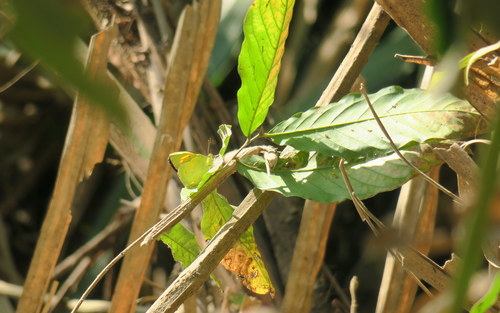
Yellow Orange Tip

Yellow Orange Tip

Ixias pyrene

Daily sighting probability ~20% · Possible
at Prayagraj

In 3 days ~40% in a week ~70%

11 Verified sightings at Prayagraj
262 In all 6 parks From 2019 to 2026
September Best month
☀️ Diurnal When it's spotted

About the Yellow Orange Tip

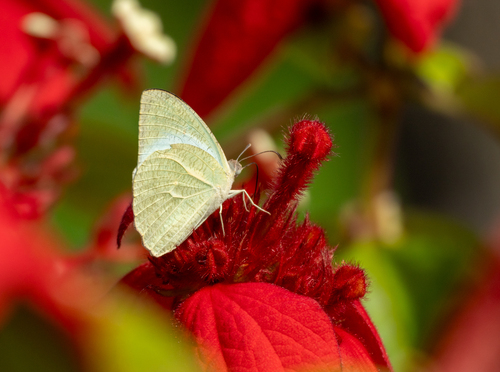
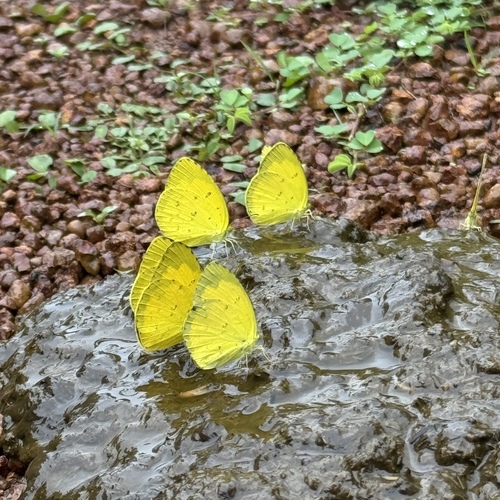
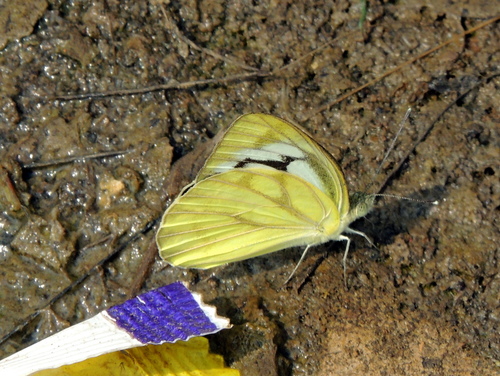
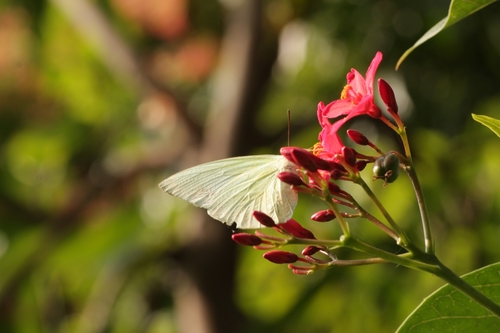
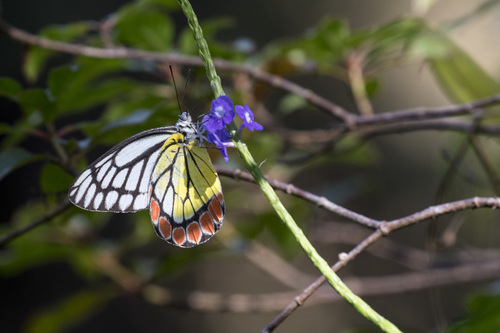
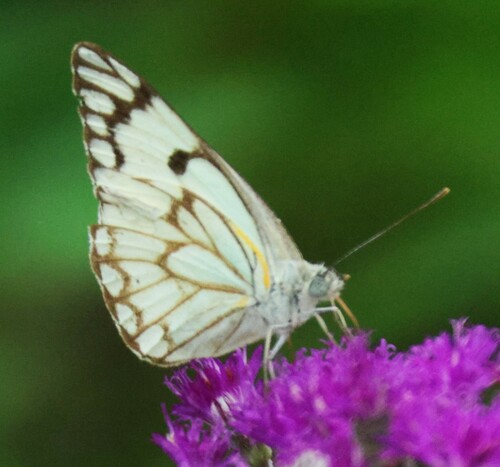
Ixias pyrene, the yellow orange tip, is a small butterfly of the family Pieridae, that is, the yellows and whites, which is found in Sri Lanka, India and southeast Asia. The species wingspan is between 50 and 55 mm. Dry-season brood: Male upperside: deep sulphur-yellow. Forewing: base and basal half of costa thickly irrorated with black scales; apical half of the wing black, with an enclosed, large, irregularly triangular, orange-coloured patch, the apex of which is more or less broadly rounded and blunt; the orange colour extends into the apex of the cell but is interrupted there by a black discocellular spot that spreads diffusely inwards and joins the black oblique bar which forms the base of the orange patch; veins that traverse this latter, black. Hindwing: uniform with a little black scaling at extreme base; termen with a dusky-black somewhat narrow border (sometimes entirely absent) which decreases in width posteriorly.

Underside: a darker yellow, sparsely irrorated (sprinkled) with fusco-ferruginous short strigae and minute spots. Forewing: base and posterior area broadly, with a whitish pale virescent (greenish) tint; the strigae and minute spots most numerous... Wikipedia →

Global Distribution

Parks Where Found

# Park Country Daily sighting probability
1 Namdapha National Park 🇮🇳 India
~50%
2 Royal Manas National Park 🇧🇹 Bhutan
~40%
3 Cuc Phuong National Park 🇻🇳 Vietnam
~40%
4 Keoladeo National Park 🇮🇳 India
~40%
5 Cat Tien National Park 🇻🇳 Vietnam
~40%
6 Kaeng Krachan National Park 🇹🇭 Thailand
~30%

Cities Where Found

# City Country Daily sighting probability
1 Agra 🇮🇳 India
~20%
2 New Delhi 🇮🇳 India
~20%
3 Mumbai 🇮🇳 India
~20%
4 Prayagraj 🇮🇳 India
~20%
5 Nashik 🇮🇳 India
~10%
6 Mysuru 🇮🇳 India
~10%
7 Chennai 🇮🇳 India
~10%
8 Hyderabad 🇮🇳 India
~10%
9 Bengaluru 🇮🇳 India
~10%
10 Bangkok 🇹🇭 Thailand
<5%

Before you go

What are the chances of seeing a Yellow Orange Tip in Prayagraj?

Possible

About 20% of wildlife watchers report a Yellow Orange Tip sighting in Prayagraj on a given day, based on 11 verified sightings from GBIF citizen-science data. It is the 61st most-seen of the 117 insects we can rate there. Over three days the chance rises to about 40%, and over a week to about 70%, if each day is a fresh chance.

When is the best time to see a Yellow Orange Tip in Prayagraj?

September

In that month about 30% of wildlife watchers report a Yellow Orange Tip in Prayagraj on a given day, against under 5% in August and October–June, the lowest months. That is one of Prayagraj's wettest months, with about 160 mm of rain against almost none in November.

What time of day is best to see a Yellow Orange Tip?

Between 9 am and noon

Across all the parks we cover, that three-hour window holds the most Yellow Orange Tip sightings with a recorded time, and about 9 in 10 of them come between 6 am and 6 pm: it is a daytime animal.

Is Prayagraj the best place to see a Yellow Orange Tip?

Among the best

Of the 11 cities where we can rate Yellow Orange Tip sightings, Prayagraj ranks 4th at about 20%, level with the leaders once rounded. The best odds are in Agra (India, about 20%), New Delhi (India, about 20%) and Mumbai (India, about 20%).

Which relatives of the Yellow Orange Tip live in Prayagraj?

Same family: Pieridae

The closest relatives of the Yellow Orange Tip that you can see in Prayagraj (family Pieridae, Whites, Yellows, and Sulphurs) are Mottled Emigrant (about 50%), Common Grass Yellow (about 40%) and Common Gull (butterfly) (about 30%), with each one's daily chance of a sighting.

Where does the Yellow Orange Tip sighting chance come from?

GBIF citizen-science records

It is estimated from how often the Yellow Orange Tip is recorded against all the insects logged in Prayagraj (11 verified sightings), calibrated against known sighting rates. Figures are rounded to the nearest 10% because citizen-science data supports honest approximations, not decimals, and months with records from fewer than five people show "—". How it works.
← Back to Prayagraj