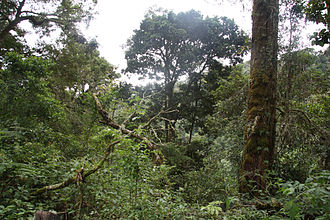
Volcán Barú National Park
🇵🇦 Panama
Chiriquí Highlands, Panama 1047 spp. recorded
Volcán Barú National Park protects Panama's highest peak (3,475 m) and the cloud forests that blanket its slopes. The park is one of the best places in Central America to see the Resplendent Quetzal, especially along the Quetzal Trail (Sendero Los Quetzales) connecting Boquete to Cerro Punta.
8.803° N 82.534° W
🦜 Nature

482 Species sighted
69,508 Verified sightings From 2019 to 2026
Jun Best month
⭐ Iconic Species


📊 Most Spotted


⭐ Iconic Species
📊 Most Spotted


⭐ Iconic Species
📊 Most Spotted
📊 Most Spotted


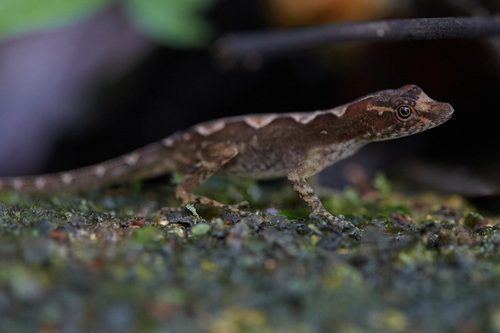


📊 Most Spotted
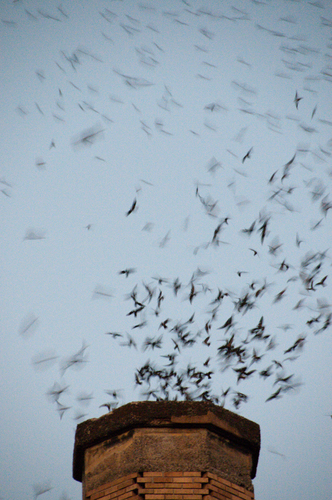


+ 669 more species with insufficient data
Recent sightings in Volcán Barú National Park
LIVEiNaturalistSighting Calendar
How many species you'd see in a day
38Jan
42Feb
44Mar
38Apr
42May
44Jun
42Jul
43Aug
37Sep
35Oct
42Nov
35Dec
Sighting Zones
Warmer areas are where all species together are recorded most often.
-
Sendero Los Quetzales (Boquete)
Daily sight. prob.vs avg White-throated Mountain-gem~80%+10%
 Mantled Howler Monkey~80%+50%
 Gray-breasted Wood-Wren~70%≈
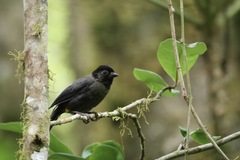
 Black-faced Solitaire~70%+10%
 Rufous-collared Sparrow~70%-10%
 Emerald Swift~60%+20%
 Mountain Thrush~60%+10%
 Black-speckled Palm Pit Viper~60%+30%
 Kempton's Anole~60%+40%
 Slaty Flowerpiercer~50%≈
 Flame-throated Warbler~50%+20%
 Hoffmann's Two-toed Sloth~50%+30%
-
Bajo Grande (Sendero Quetzales)
Daily sight. prob.vs avg -
Guadalupe · Jardín Tamandúa
-
South-east park edge
Daily sight. prob.vs avg- Emerald Swift~80%+40%
 Red-tailed Squirrel~60%+30%
- Mantled Howler Monkey~50%+30%
- Rufous-collared Sparrow~50%-20%
- Black-speckled Palm Pit Viper~50%+30%
- Gray-breasted Wood-Wren~40%-20%
- Mountain Thrush~40%-10%
- Flame-throated Warbler~40%≈
- Hoffmann's Two-toed Sloth~30%+10%
 South American Milksnake~30%+10%
 Humble Anole~30%+20%



🏕️ Experience
Essentials
Entrance
Paid
Tourism
Medium
Typical stay
1–2
daysTrails
Hard
World Heritage
No
Climate
Temp °C Rain mm
JanFebMarAprMayJunJulAugSepOctNovDec
0.0 Good
Wallace's Line Score
How good is this park for seeing wildlife? 🦜
Biodiversity
Very goodHow rich is the wildlife?
4.5
Species by taxon
🦅 Birds 609
🐒 Mammals 217
🦎 Reptiles 137
🐸 Amphibians 84
1047 Total Species
828 Global average across 316 parks
59 Threatened 71 Endemic
🔭
Sighting
GoodHow likely to see animals?
2.8
🎯
Top-12 Avg Probability
58% 📊
Coverage (226 species at ≥5% of 1047 in the inventory)
22% 🔀
Taxon variety in top 12 (12 bird)
0% 🔭
Species per 10 outings (distinct species a visitor would meet over 10 outings — effort held equal across parks)
137 🌟
Iconic-group species (≥15%) (every species from the 19 iconic groups — monkeys, cats, toucans, macaws, sloths, crocodilians… — not just the 4 highlighted above)
6 ⭐
High-prob species (>40%)
22 🏕️
Experience
GoodHow easy and pleasant is the visit?
2.9
Climate Harsh Low
Entrance Paid Low
Tourism Medium Medium
Trails Hard Low
World Heritage No —
What visitors say
We had our first sloth sighting here, too! 1 of 2 — sloth3b.jpg The first of many three-toed sloths that Michigan Public listeners saw during their trip in Costa Rica.
Our plan was to hike from the Volcán side up to Barú, camp overnight at the top to see the sunset and the sunrise, and then come down on the Boquete side the next day.
During our stay on the summit of Volcán Barú the views were constantly changing.
After a short hike, we returned to the visitors’ center and took pictures of Volcán Barú, but the clouds covered the summit.
Before you go
What animals can you see in Volcán Barú National Park?
1,047 species
Volcán Barú National Park has 1,047 recorded vertebrate species. The ones wildlife watchers report most often on a given day are Rufous-collared Sparrow (about 70%), White-throated Mountain-gem (about 70%), Gray-breasted Wood-Wren (about 60%), Clay-colored Thrush (about 60%) and Slate-throated Redstart (about 60%). Among mammals, the most-seen is Red-tailed Squirrel (about 30%); among reptiles, Emerald Swift (about 40%); among amphibians, Giant Marine Toad (about 20%).
When is the best time to visit Volcán Barú National Park for wildlife?
August–September and November–June
In those months the park's 12 most-seen species average about 60% on a given day, against about 50% in July and October.
Can you see a Resplendent Quetzal in Volcán Barú National Park?
Yes
About 40% of wildlife watchers report a Resplendent Quetzal sighting in Volcán Barú National Park on a given day, based on 783 verified sightings from GBIF citizen-science data from 2019 to 2026. The best time is February to May (about 50%).
Can you see a White-throated Mountain-gem in Volcán Barú National Park?
Yes
About 70% of wildlife watchers report a White-throated Mountain-gem sighting in Volcán Barú National Park on a given day, based on 1,443 verified sightings from GBIF citizen-science data from 2019 to 2026. The best time is June (about 80%).
Can you see a White-nosed Coati in Volcán Barú National Park?
Yes
About 30% of wildlife watchers report a White-nosed Coati sighting in Volcán Barú National Park on a given day, based on 16 verified sightings from GBIF citizen-science data from 2019 to 2026. The best time is September and November–December (about 40%).
Can you see a Black-faced Solitaire in Volcán Barú National Park?
Yes
About 50% of wildlife watchers report a Black-faced Solitaire sighting in Volcán Barú National Park on a given day, based on 1,048 verified sightings from GBIF citizen-science data from 2019 to 2026. The best time is April and June (about 70%).
Where in Volcán Barú National Park is wildlife easiest to see?
Around Sendero Los Quetzales (Boquete)
The richest sighting zone is around Sendero Los Quetzales (Boquete), followed by Bajo Grande (Sendero Quetzales) and Guadalupe · Jardín Tamandúa, ranked by how many of the park's headline animals visitors can expect to see in each. See the zones on the map.
Is Volcán Barú National Park good for wildlife watching?
3.3 out of 5
On the Wallace's Line Score, Volcán Barú National Park rates 3.3/5: 233rd of 316 parks worldwide and 36th in Central America. 38 of its species are reported by about 40% or more of wildlife watchers on a given day.