Bee Moth

Bee Moth

Aphomia sociella

Daily sighting probability ~10% · With luck
at Rotterdam [The Hague]

In 3 days ~20% in a week ~40%

11 Verified sightings at Rotterdam [The Hague]
80 In all 6 parks From 2019 to 2026
July Best month
☀️🌙 Day & Night When it's spotted

About the Bee Moth

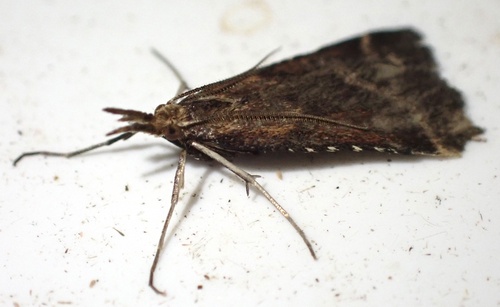
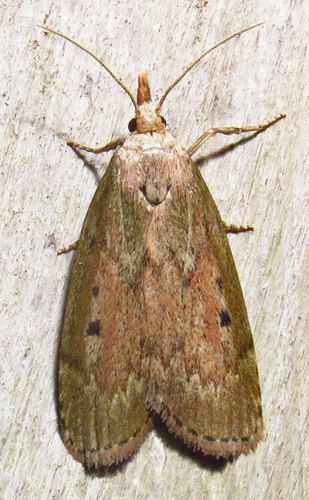
Aphomia sociella, also known as the bee moth and the bumble bee wax moth, is a small moth of the family Pyralidae (snout moths) and subfamily Galleriinae. Its body and forewings are typically reddish brown, tan, or dark green in color and females have a dark spot in the center of each forewing. The bee moth is native to Europe and are named "bee moths" because they seek out nests of bees and wasps to lay their eggs. Aphomia sociella are considered a pest because the bee moth larvae severely damage commercial bee hives. Bee moths are also studied for their unique mating ritual which includes a release of pheromones from both the male and the female along with an ultrasonic signal emitted through the male's tymbals.

The adult bee moth has a wingspan of 18-40 millimetres (0.71-1.57 inches). The body and forewings are typically reddish brown, tan, or dark green in color. This species is an example of sexual dimorphism where the male moths are generally more brightly colored and more distinctly patterned compared to the female moths. The females also contain a dark spot on the center of each of their forewings.

The bee moth is commonly found in Europe... Wikipedia →

Global Distribution

Parks Where Found

# Park Country Daily sighting probability
1 Bavarian Forest National Park 🇩🇪 Germany
~10%
2 Snowdonia National Park 🇬🇧 United Kingdom
~10%
3 Cairngorms National Park 🇬🇧 United Kingdom
~10%
4 Wadden Sea National Park 🇩🇪 Germany
~10%
5 Cévennes National Park 🇫🇷 France
<5%
6 Pyrénées National Park 🇫🇷 France
<5%

Cities Where Found

# City Country Daily sighting probability
1 Liverpool 🇬🇧 United Kingdom
~30%
2 London 🇬🇧 United Kingdom
~10%
3 Manchester 🇬🇧 United Kingdom
~10%
4 Birmingham 🇬🇧 United Kingdom
~10%
5 Helsinki 🇫🇮 Finland
~10%
6 Leeds 🇬🇧 United Kingdom
~10%
7 Copenhagen 🇩🇰 Denmark
~10%
8 Amsterdam 🇳🇱 Netherlands
~10%
9 Stockholm 🇸🇪 Sweden
~10%
10 Rotterdam [The Hague] 🇳🇱 Netherlands
~10%

Before you go

What are the chances of seeing a Bee Moth in Rotterdam [The Hague]?

With luck

About 10% of wildlife watchers report a Bee Moth sighting in Rotterdam [The Hague] on a given day, based on 11 verified sightings from GBIF citizen-science data. It is the 153rd most-seen of the 355 insects we can rate there. Over three days the chance rises to about 20%, and over a week to about 40%, if each day is a fresh chance.

When is the best time to see a Bee Moth in Rotterdam [The Hague]?

April to July

In those months about 10% of wildlife watchers report a Bee Moth in Rotterdam [The Hague] on a given day, against under 5% in August to March, the lowest months.

What time of day is best to see a Bee Moth?

Between 10 pm and 1 am

Across all the parks we cover, that three-hour window holds the most Bee Moth sightings with a recorded time, and about half of them come between 6 pm and 6 am: it is seen both by day and at night.

Is Rotterdam [The Hague] the best place to see a Bee Moth?

10th of 35

Of the 35 cities where we can rate Bee Moth sightings, Rotterdam [The Hague] ranks 10th at about 10%. The best odds are in Liverpool (United Kingdom, about 30%), London (United Kingdom, about 10%) and Manchester (United Kingdom, about 10%).

Which relatives of the Bee Moth live in Rotterdam [The Hague]?

Same family: Pyralidae

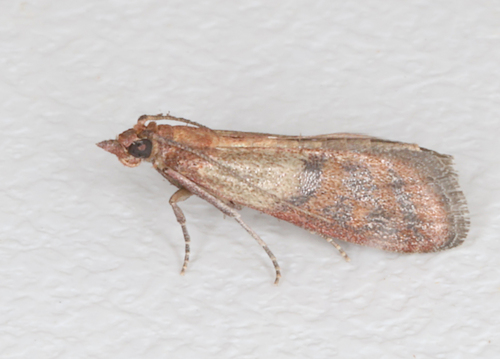
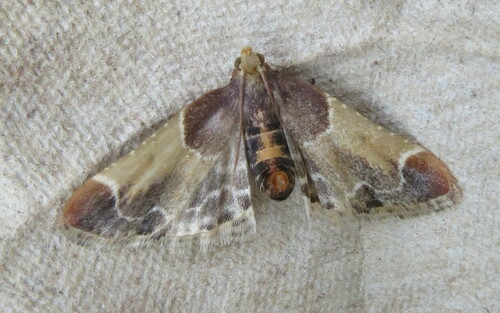
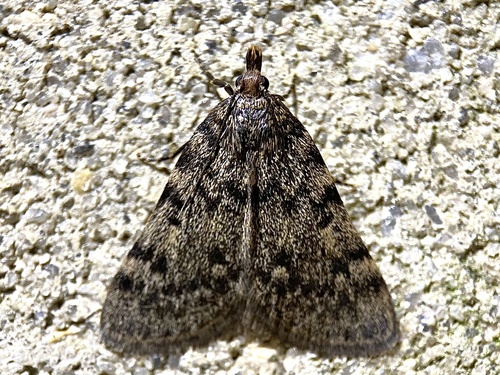
The closest relatives of the Bee Moth that you can see in Rotterdam [The Hague] (family Pyralidae, Pyralid Snout Moths) are Long-Legged Tabby (about 10%), Indian-Meal Moth (about 10%) and Stored Grain Moth (about 10%), with each one's daily chance of a sighting.

Where does the Bee Moth sighting chance come from?

GBIF citizen-science records

It is estimated from how often the Bee Moth is recorded against all the insects logged in Rotterdam [The Hague] (11 verified sightings), calibrated against known sighting rates. Figures are rounded to the nearest 10% because citizen-science data supports honest approximations, not decimals, and months with records from fewer than five people show "—". How it works.
← Back to Rotterdam [The Hague]