
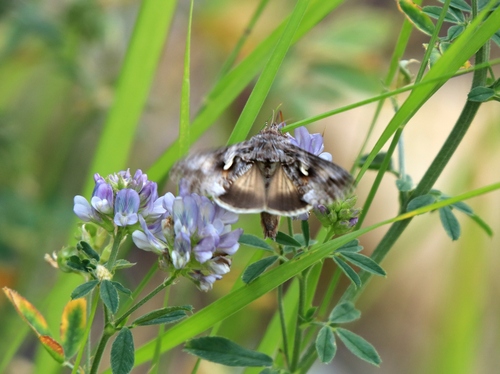
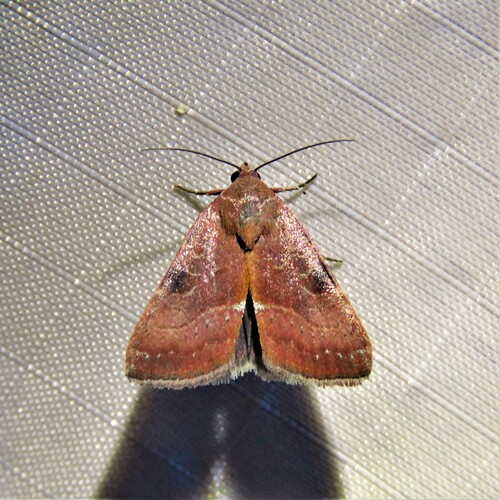
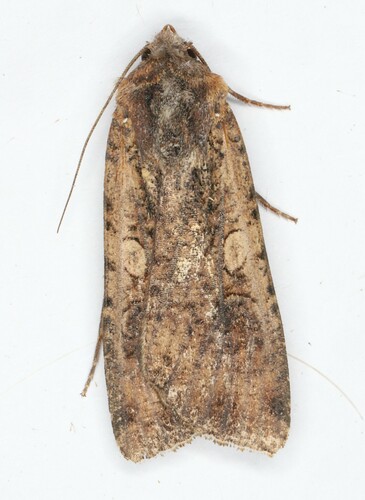
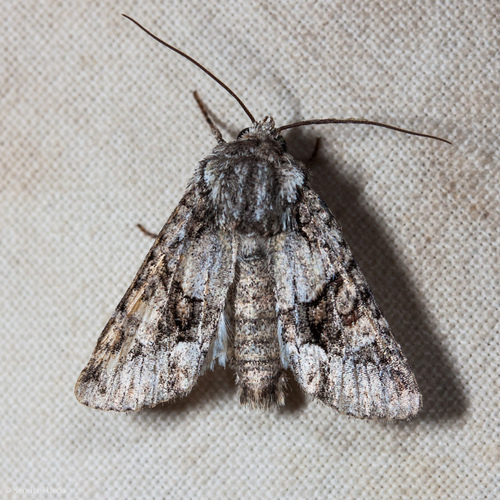
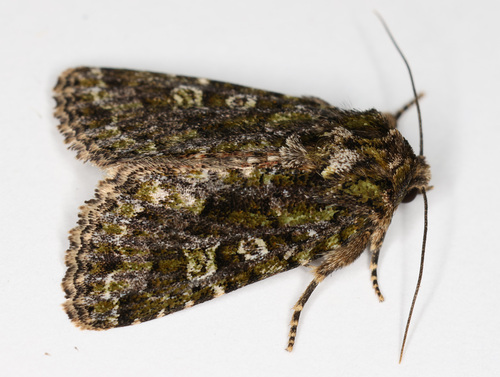
Beet Armyworm Moth

Beet Armyworm Moth

Spodoptera exigua

Daily sighting probability <5% · Rare
at Sacramento

In 3 days ~10% in a week ~20%

5 Verified sightings at Sacramento
57 In all 5 parks From 2019 to 2026
August Best month
☀️🌙 Day & Night When it's spotted

About the Beet Armyworm Moth

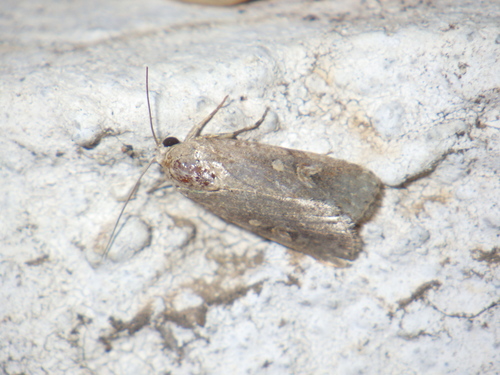
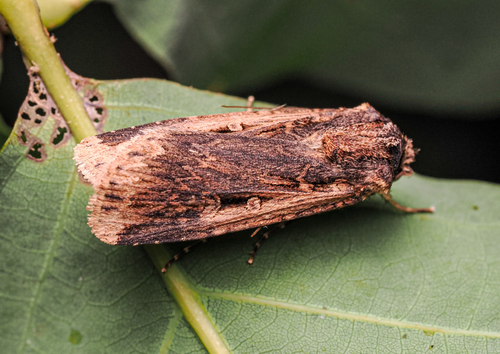
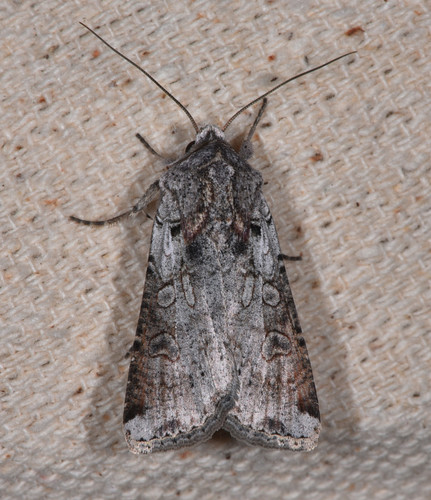
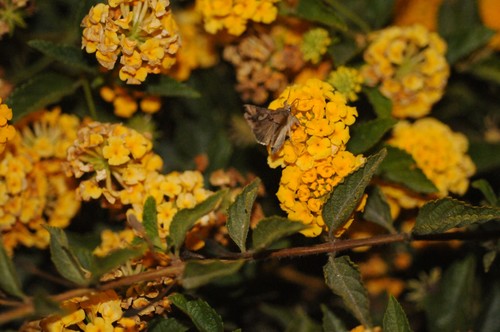
The beet armyworm or small mottled willow moth (Spodoptera exigua) is one of the best-known agricultural pest insects. It is also known as the asparagus fern caterpillar. It is native to Asia, but has been introduced worldwide and is now found almost anywhere its many host crops are grown. The voracious larvae are the main culprits. In the British Isles, where it is an introduced species and not known to breed, the adult moth is known as the small mottled willow moth.

Thought to have originated in south-east Asian countries, it was first discovered in North America about 1876, when it was found in Oregon, and it reached Florida in 1924. The adult is a drab brown or grey moth with a wingspan of 26–32 millimetres (1–1+1⁄4 in). Forewing is greyish ochreous in color, washed with dull yellow and sprinkled with black scales. Inner and outer lines are double, indistinct, filled in with pale yellowish color. A dark waved median shade visible before lower half of outer line. Cell is dark brown. Orbicular stigma is pale or bright yellow, and round, whereas reniform has a curved brown lunule in centre. The submarginal line is pale grey. There is the darker shade... Wikipedia →

Global Distribution

Parks Where Found

# Park Country Daily sighting probability
1 Death Valley National Park 🇺🇸 United States
~10%
2 Sierra Nevada National Park 🇪🇸 Spain
~10%
3 Doñana National Park 🇪🇸 Spain
~10%
4 Joshua Tree National Park 🇺🇸 United States
<5%
5 Pyrénées National Park 🇫🇷 France
<5%

Cities Where Found

# City Country Daily sighting probability
1 Porto 🇵🇹 Portugal
~10%
2 Valencia 🇪🇸 Spain
~10%
3 Madrid 🇪🇸 Spain
~10%
4 London 🇬🇧 United Kingdom
~10%
5 Liverpool 🇬🇧 United Kingdom
~10%
6 Barcelona 🇪🇸 Spain
~10%
7 Austin 🇺🇸 United States
<5%
8 Birmingham 🇬🇧 United Kingdom
<5%
9 San Diego 🇺🇸 United States
<5%
10 Lisbon 🇵🇹 Portugal
<5%

Before you go

What are the chances of seeing a Beet Armyworm Moth in Sacramento?

Rare

Under 5% of wildlife watchers report a Beet Armyworm Moth sighting in Sacramento on a given day, based on 5 verified sightings from GBIF citizen-science data. It is the 350th most-seen of the 386 insects we can rate there. Over three days the chance rises to about 10%, and over a week to about 20%, if each day is a fresh chance.

When is the best time to see a Beet Armyworm Moth in Sacramento?

August

In that month about 10% of wildlife watchers report a Beet Armyworm Moth in Sacramento on a given day, against under 5% in September to July, the lowest months. That is one of Sacramento's driest months, with almost no rain against 120 mm in December.

What time of day is best to see a Beet Armyworm Moth?

Between 8 and 11 pm

Across all the parks we cover, that three-hour window holds the most Beet Armyworm Moth sightings with a recorded time, and about 6 in 10 of them come between 6 pm and 6 am: it is seen both by day and at night.

Is Sacramento the best place to see a Beet Armyworm Moth?

11th of 15

Of the 15 cities where we can rate Beet Armyworm Moth sightings, Sacramento ranks 11th at under 5%. The best odds are in Porto (Portugal, about 10%), Valencia (Spain, about 10%) and Madrid (Spain, about 10%).

Which relatives of the Beet Armyworm Moth live in Sacramento?

Same family: Noctuidae

The closest relatives of the Beet Armyworm Moth that you can see in Sacramento (family Noctuidae, Cutworm Moths and Allies) are Large Yellow Underwing (about 10%), Armyworm Moth (about 10%) and Subterranean Dart (about 10%), with each one's daily chance of a sighting.

Where does the Beet Armyworm Moth sighting chance come from?

GBIF citizen-science records

It is estimated from how often the Beet Armyworm Moth is recorded against all the insects logged in Sacramento (5 verified sightings), calibrated against known sighting rates. Figures are rounded to the nearest 10% because citizen-science data supports honest approximations, not decimals, and months with records from fewer than five people show "—". How it works.

← Back to Sacramento