Shaded Broad-Bar

Shaded Broad-Bar

Scotopteryx chenopodiata

Daily sighting probability <5% · Rare
at Saint Petersburg

In 3 days ~10% in a week ~30%

51 Verified sightings at Saint Petersburg
179 In all 9 parks From 2019 to 2026
July Best month
☀️🌙 Day & Night When it's spotted

About the Shaded Broad-Bar

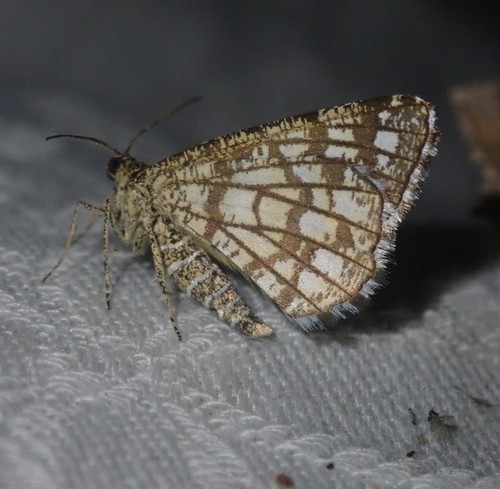
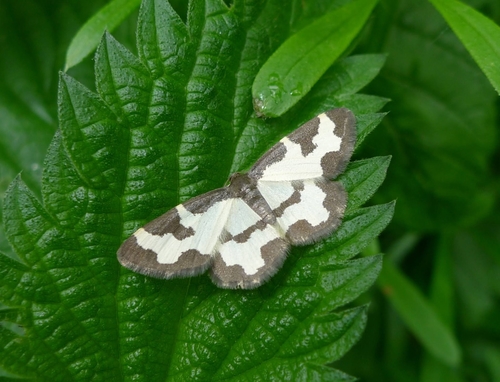
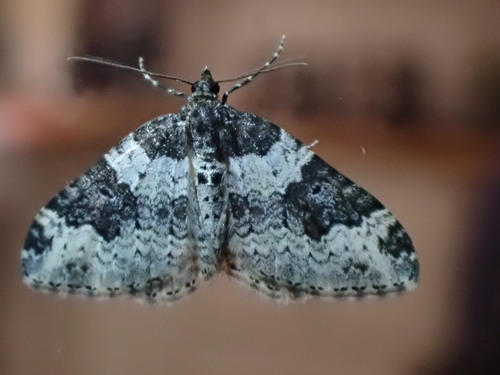
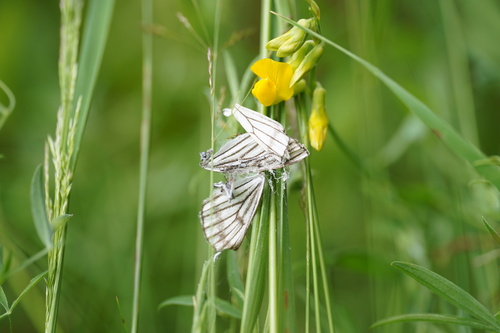
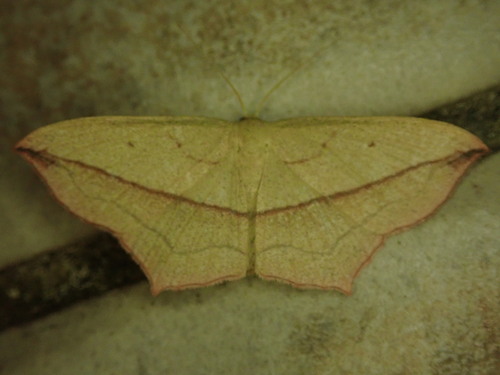
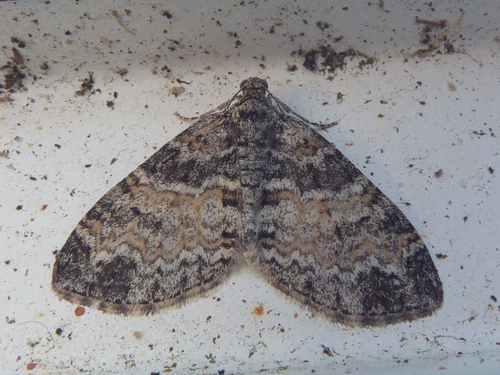
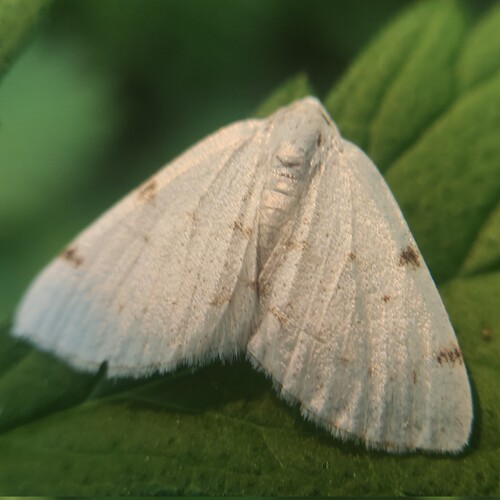
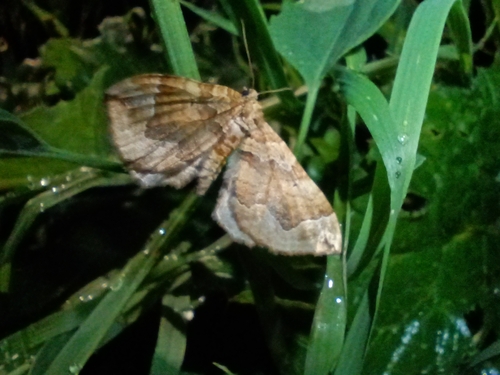
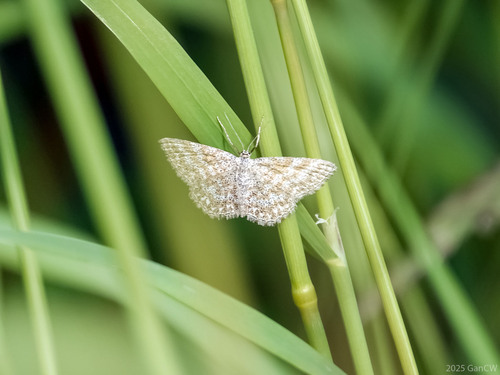
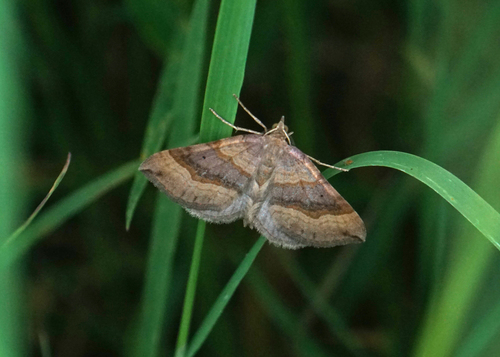
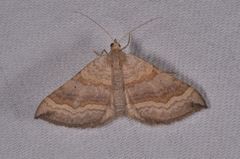
Scotopteryx chenopodiata, the shaded broad-bar, is a moth of the family Geometridae. It was first described by Carl Linnaeus in his 1758 10th edition of Systema Naturae. The wingspan is 25–30 mm. The length of the forewings is 16–19 mm. The colouration is highly variable. It ranges from yellow brown, light brown, red brown and grey brown to grey. The forewings have several, mostly parallel, undulate crosslines. There is a prominent broad dark brown band in the median field comprising two distinct shades, the middle being greyer, the edges more ferruginous. In addition, the females are usually brighter yellowish than the males, but both sexes vary in tint. There is also a small apical streak. The hindwings are pale with faint crosslines.

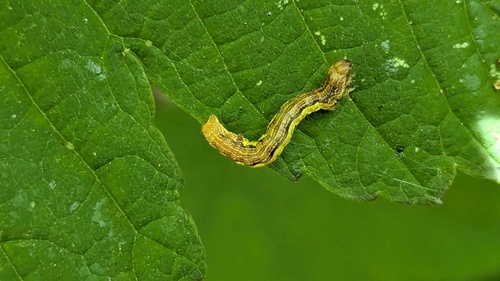
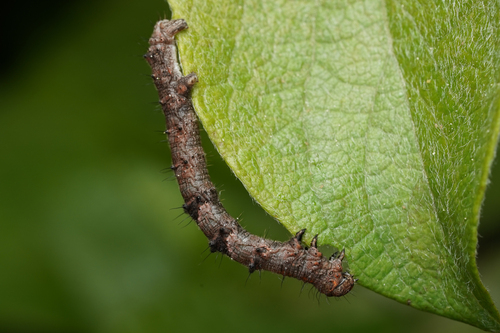
The caterpillar is yellowish grey to slate grey. The dorsal line is dark and interrupted, the side stripes are light and continuous. The reddish-brown-glossy pupa has a dotted surface. The cremaster is wide, with two long hook-shaped thorns and two fine lateral bristles rolled up at the top

ab. monodii Th.-Mieg is a dark form with both wings smoky above and beneath, median band very dark. Perhaps forms a local race... Wikipedia →
Global Distribution

Parks Where Found

# Park Country Daily sighting probability
1 Aigüestortes National Park 🇪🇸 Spain
~20%
2 Vanoise National Park 🇫🇷 France
~20%
3 Mercantour National Park 🇫🇷 France
~10%
4 Ecrins National Park 🇫🇷 France
~10%
5 Hohe Tauern National Park 🇦🇹 Austria
~10%
6 Cairngorms National Park 🇬🇧 United Kingdom
~10%
7 Pyrénées National Park 🇫🇷 France
~10%
8 Snowdonia National Park 🇬🇧 United Kingdom
~10%
9 Wadden Sea National Park 🇩🇪 Germany
<5%

Cities Where Found

# City Country Daily sighting probability
1 Birmingham 🇬🇧 United Kingdom
~10%
2 Manchester 🇬🇧 United Kingdom
~10%
3 Novosibirsk 🇷🇺 Russia
~10%
4 Liverpool 🇬🇧 United Kingdom
~10%
5 Helsinki 🇫🇮 Finland
<5%
6 Leeds 🇬🇧 United Kingdom
<5%
7 Saint Petersburg 🇷🇺 Russia
<5%
8 Nizhny Novgorod 🇷🇺 Russia
<5%
9 Copenhagen 🇩🇰 Denmark
<5%
10 Stockholm 🇸🇪 Sweden
<5%

Before you go

What are the chances of seeing a Shaded Broad-Bar in Saint Petersburg?

Rare

Under 5% of wildlife watchers report a Shaded Broad-Bar sighting in Saint Petersburg on a given day, based on 51 verified sightings from GBIF citizen-science data. It is the 63rd most-seen of the 448 insects we can rate there. Over three days the chance rises to about 10%, and over a week to about 30%, if each day is a fresh chance.

When is the best time to see a Shaded Broad-Bar in Saint Petersburg?

July and August

In those months about 10% of wildlife watchers report a Shaded Broad-Bar in Saint Petersburg on a given day, against under 5% in September to June, the lowest months. Those are among Saint Petersburg's wettest months, with about 100 mm of rain a month against 40 mm in February.

What time of day is best to see a Shaded Broad-Bar?

Between 10 pm and 1 am

Across all the parks we cover, that three-hour window holds the most Shaded Broad-Bar sightings with a recorded time, and about 6 in 10 of them come between 6 am and 6 pm: it is seen both by day and at night.

Is Saint Petersburg the best place to see a Shaded Broad-Bar?

7th of 15

Of the 15 cities where we can rate Shaded Broad-Bar sightings, Saint Petersburg ranks 7th at under 5%. The best odds are in Birmingham (United Kingdom, about 10%), Manchester (United Kingdom, about 10%) and Novosibirsk (Russia, about 10%).

Where does the Shaded Broad-Bar sighting chance come from?

GBIF citizen-science records

It is estimated from how often the Shaded Broad-Bar is recorded against all the insects logged in Saint Petersburg (51 verified sightings), calibrated against known sighting rates. Figures are rounded to the nearest 10% because citizen-science data supports honest approximations, not decimals, and months with records from fewer than five people show "—". How it works.

← Back to Saint Petersburg