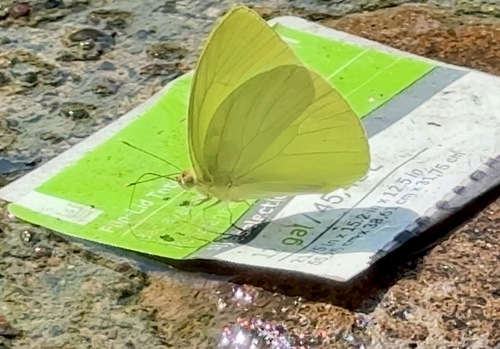
Lyside Sulphur

Lyside Sulphur

Kricogonia lyside

Daily sighting probability ~10% · With luck
at San Antonio

In 3 days ~30% in a week ~60%

308 Verified sightings at San Antonio
280 In all 6 parks From 2019 to 2026
April Best month
☀️ Diurnal When it's spotted

About the Lyside Sulphur

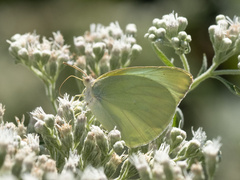
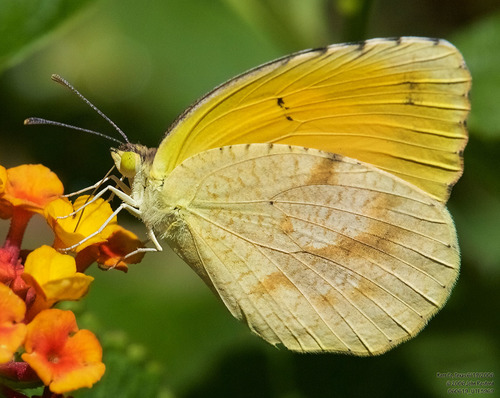
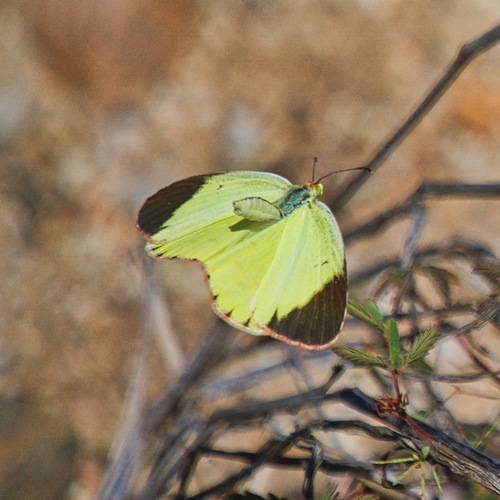
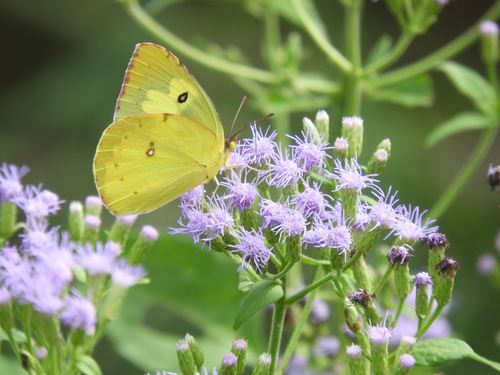
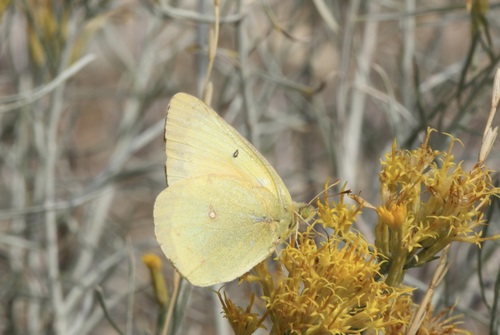
Kricogonia lyside, the lyside sulphur or guayacan sulphur, is a North American, Caribbean, and South American butterfly in the family Pieridae. In seasons with heavy monsoons, this butterfly is seen in massive migrations which are frequent in Texas but more rare in the southwest. It is also an occasional resident in southern Florida.

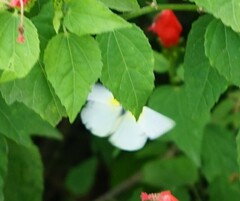
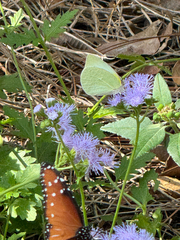
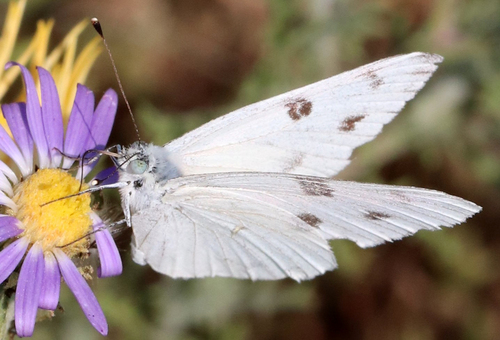
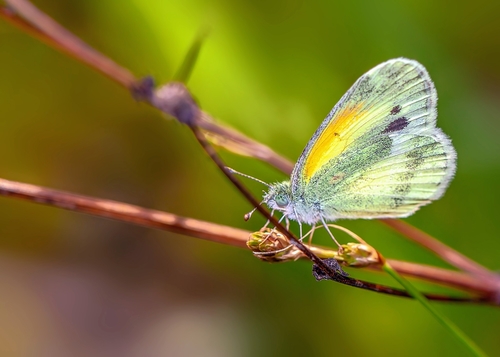
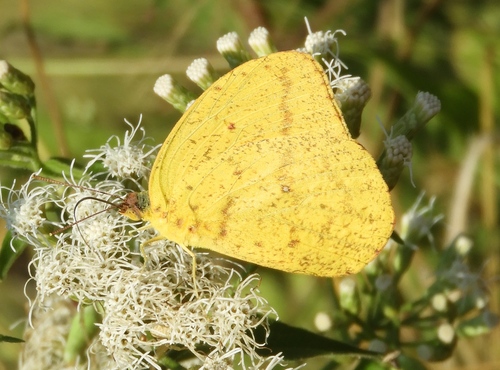
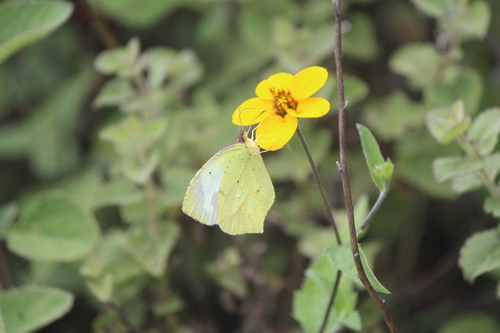
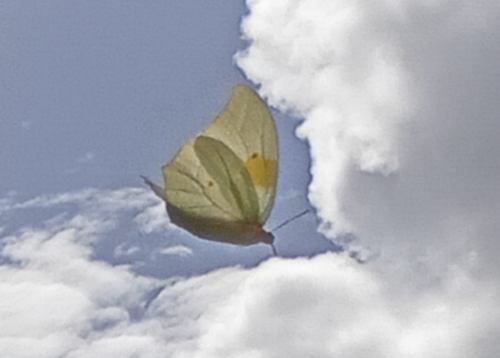
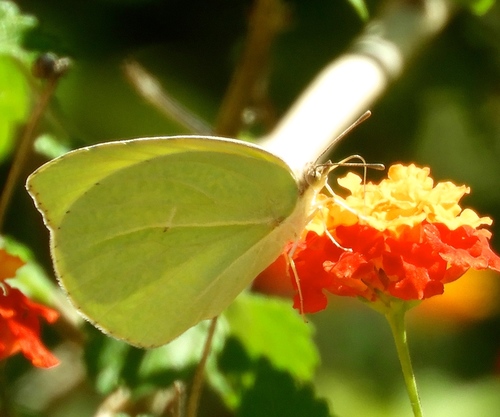
The lyside sulphur is variable. The upperside of the wings is pale yellow, usually with a black bar on the leading edge of the hindwing and a bright yellow patch near the base of the forewing. Some individuals also have black borders along the costa and apex of the forewing. The underside of the wings varies from a greenish color to bright yellow to almost white. Greener individuals have a whitish vein in the center of the hindwing and a bright yellow forewing basal patch. It has a wingspan of 3.8 to 6 cm (1.5 to 2.4 in).

Similar species in the lyside sulphur's range include Queen Alexandra's sulphur (Colias alexandra), the cloudless sulphur (Phoebis sennae), and the statira sulphur (Aphrissa statira). Queen Alexandra's sulphur has more yellow on the underside of the forewing and has a whitish spot in the... Wikipedia →

Global Distribution

Parks Where Found

# Park Country Daily sighting probability
1 Jaragua National Park 🇩🇴 Dominican Republic
~30%
2 Big Bend National Park 🇺🇸 United States
~30%
3 Cumbres de Monterrey National Park 🇲🇽 Mexico
~10%
4 Calakmul Biosphere Reserve 🇲🇽 Mexico
~10%
5 Saguaro National Park 🇺🇸 United States
~10%
6 Everglades National Park 🇺🇸 United States
<5%

Cities Where Found

# City Country Daily sighting probability
1 Monterrey 🇲🇽 México
~10%
2 San Antonio 🇺🇸 United States
~10%
3 Torreón 🇲🇽 México
~10%
4 Austin 🇺🇸 United States
~10%

Before you go

What are the chances of seeing a Lyside Sulphur in San Antonio?

With luck

About 10% of wildlife watchers report a Lyside Sulphur sighting in San Antonio on a given day, based on 308 verified sightings from GBIF citizen-science data. It is the 33rd most-seen of the 697 insects we can rate there. Over three days the chance rises to about 30%, and over a week to about 60%, if each day is a fresh chance.

When is the best time to see a Lyside Sulphur in San Antonio?

April–June, August–September and December

In those months about 20% of wildlife watchers report a Lyside Sulphur in San Antonio on a given day, against under 5% in February and March, the lowest months.

What time of day is best to see a Lyside Sulphur?

Between 1 and 4 pm

Across all the parks we cover, that three-hour window holds the most Lyside Sulphur sightings with a recorded time, and about 9 in 10 of them come between 6 am and 6 pm: it is a daytime animal.

Is San Antonio the best place to see a Lyside Sulphur?

Among the best

Of the 4 cities where we can rate Lyside Sulphur sightings, San Antonio ranks 2nd at about 10%, level with the leaders once rounded. The best odds are in Monterrey (México, about 10%).

Which relatives of the Lyside Sulphur live in San Antonio?

Same family: Pieridae

The closest relatives of the Lyside Sulphur that you can see in San Antonio (family Pieridae, Whites, Yellows, and Sulphurs) are Checkered White (about 20%), Sleepy Orange (about 20%) and Little Yellow (about 20%), with each one's daily chance of a sighting.

Where does the Lyside Sulphur sighting chance come from?

GBIF citizen-science records

It is estimated from how often the Lyside Sulphur is recorded against all the insects logged in San Antonio (308 verified sightings), calibrated against known sighting rates. Figures are rounded to the nearest 10% because citizen-science data supports honest approximations, not decimals, and months with records from fewer than five people show "—". How it works.
← Back to San Antonio