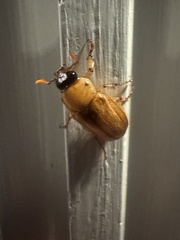
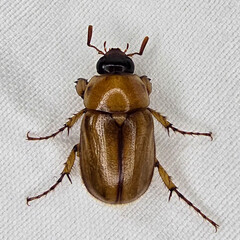
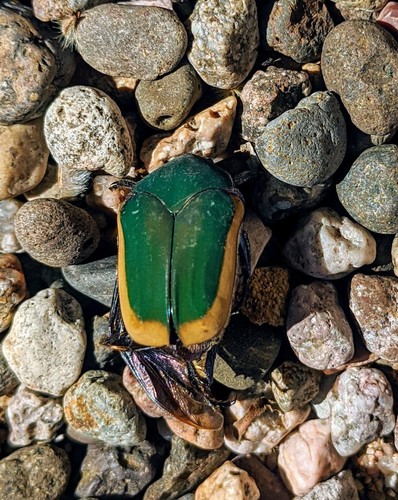
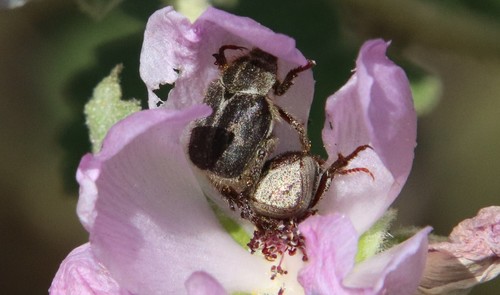


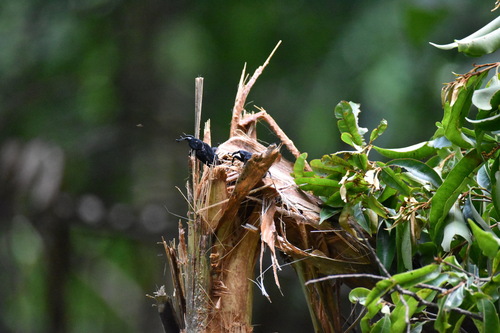
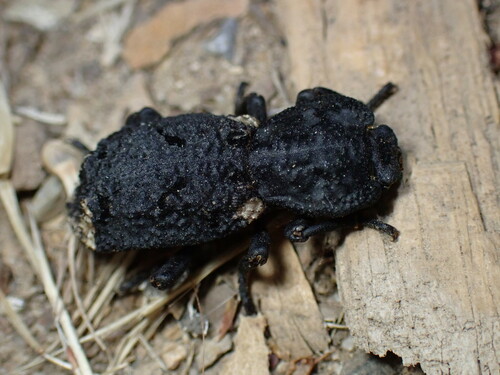
Southern Masked Chafer

Southern Masked Chafer

Cyclocephala lurida

Daily sighting probability <5% · Rare
at San Diego

In 3 days ~10% in a week ~20%

56 Verified sightings at San Diego
14 In 1 park From 2019 to 2026
June Best month
🌙 Nocturnal When it's spotted

About the Southern Masked Chafer

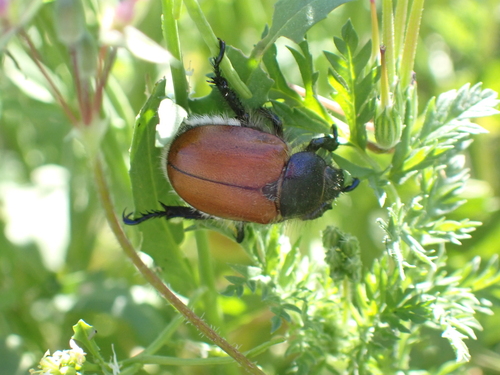
Cyclocephala lurida, the southern masked chafer, is a species of beetle in the family Scarabaeidae which is native to the southeastern United States. It is a brown beetle with a black head, with an adult length of 10 to 14 mm (0.4 to 0.6 in). The adult beetles cause no harm, but the eggs are laid underground and the developing larvae feed on grass roots and can kill turf under dry conditions.

Female southern masked chafer beetles emerge from the soil soon after sunset in June and July, remaining on the surface of the ground or climbing up grasses. At much the same time, males emerge and make zig-zag flights low over the ground. The females emit a pheromone, a volatile substance that acts as an attractant to males. When a male has homed in on a female, mating takes place after which the female burrows back into the soil. Mated females lay their eggs underground. The growing larvae feed on grass roots until late spring the following year when they pupate, the adults emerging about a fortnight later. There is a single generation each year, the adults being active for a few weeks.

By 11pm during the breeding season, unmated females and all males move underground, and it... Wikipedia →

Global Distribution

Parks Where Found

# Park Country Daily sighting probability
1 Shenandoah National Park 🇺🇸 United States
~10%

More parks will be added in future updates.

Cities Where Found

# City Country Daily sighting probability
1 Sacramento 🇺🇸 United States
~10%
2 Baltimore 🇺🇸 United States
~10%
3 Chicago 🇺🇸 United States
~10%
4 Mesa 🇺🇸 United States
~10%
5 Washington 🇺🇸 United States
~10%
6 Detroit 🇺🇸 United States
~10%
7 Austin 🇺🇸 United States
~10%
8 Houston 🇺🇸 United States
<5%
9 Los Angeles 🇺🇸 United States
<5%
10 Miami 🇺🇸 United States
<5%

Before you go

What are the chances of seeing a Southern Masked Chafer in San Diego?

Rare

Under 5% of wildlife watchers report a Southern Masked Chafer sighting in San Diego on a given day, based on 56 verified sightings from GBIF citizen-science data. It is the 154th most-seen of the 693 insects we can rate there. Over three days the chance rises to about 10%, and over a week to about 20%, if each day is a fresh chance.

When is the best time to see a Southern Masked Chafer in San Diego?

June and July

In those months about 10% of wildlife watchers report a Southern Masked Chafer in San Diego on a given day, against under 5% in August to May, the lowest months. Those are among San Diego's driest months, with about 10 mm of rain a month against 55 mm in February.

What time of day is best to see a Southern Masked Chafer?

Between 8 and 11 pm

Across all the parks we cover, that three-hour window holds the most Southern Masked Chafer sightings with a recorded time, and nearly all of them come between 6 pm and 6 am: it is mostly seen at night.

Is San Diego the best place to see a Southern Masked Chafer?

15th of 21

Of the 21 cities where we can rate Southern Masked Chafer sightings, San Diego ranks 15th at under 5%. The best odds are in Sacramento (United States, about 10%), Baltimore (United States, about 10%) and Chicago (United States, about 10%).

Which relatives of the Southern Masked Chafer live in San Diego?

Same family: Scarabaeidae

The closest relatives of the Southern Masked Chafer that you can see in San Diego (family Scarabaeidae, Scarabs) are Figeater Beetle (about 20%) and Ten-Lined June Beetle (about 10%), with each one's daily chance of a sighting.

Where does the Southern Masked Chafer sighting chance come from?

GBIF citizen-science records

It is estimated from how often the Southern Masked Chafer is recorded against all the insects logged in San Diego (56 verified sightings), calibrated against known sighting rates. Figures are rounded to the nearest 10% because citizen-science data supports honest approximations, not decimals, and months with records from fewer than five people show "—". How it works.

← Back to San Diego