

Spotless Lady Beetle

Spotless Lady Beetle

Cycloneda sanguinea

Daily sighting probability ~10% · With luck
at San Diego

In 3 days ~40% in a week ~60%

781 Verified sightings at San Diego
375 In all 11 parks From 2019 to 2026
June Best month
☀️ Diurnal When it's spotted

About the Spotless Lady Beetle

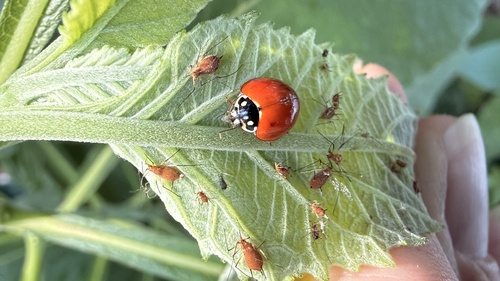
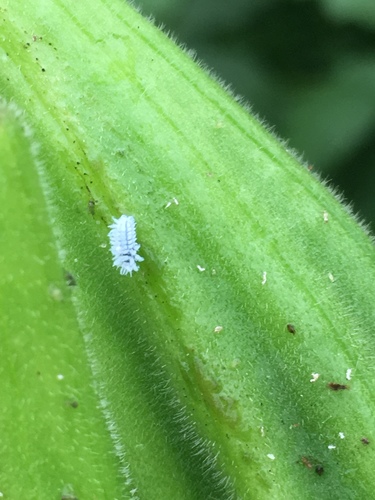
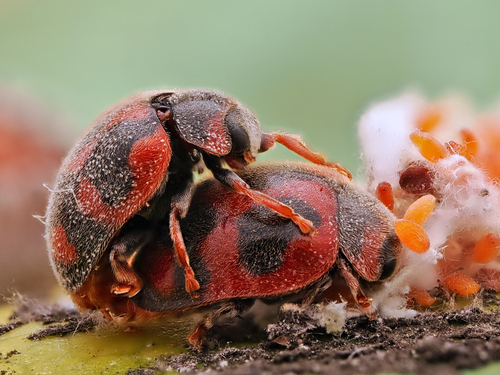
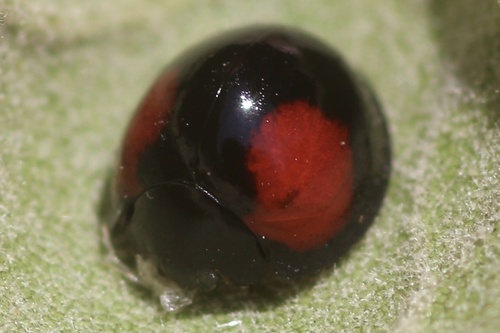
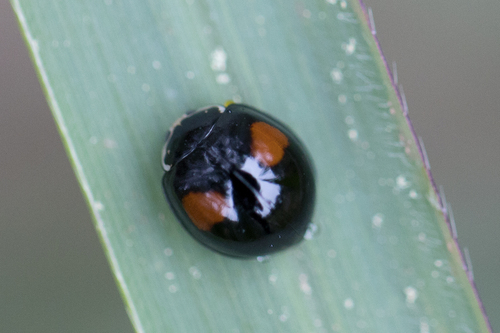
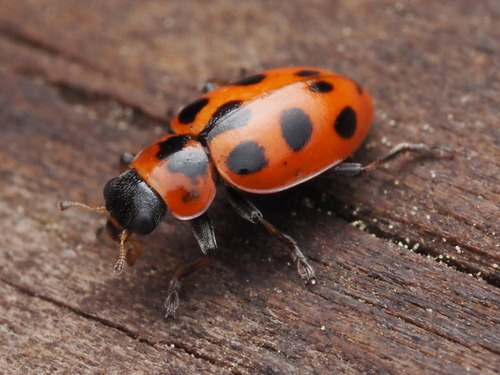
Cycloneda sanguinea, also known as the spotless lady beetle, is a widespread species of ladybird beetle in the Americas. Cycloneda sanguinea is the most widespread ladybird beetle in Latin America, typically found in plant-dense landscapes ranging from the southern United States to Argentina, and eastward to the Cayman Islands. There are several species of ladybeetle that look similar to the spotless ladybeetle. On the Galápagos Islands, it lives in sympatry with its sister species, Cycloneda galapagensis.

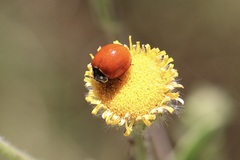
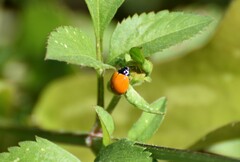
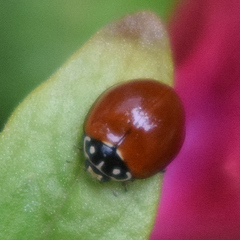
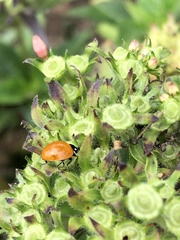
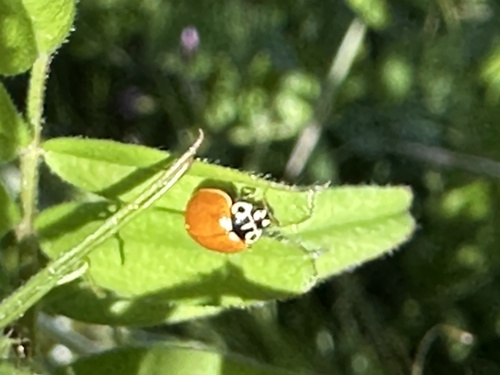
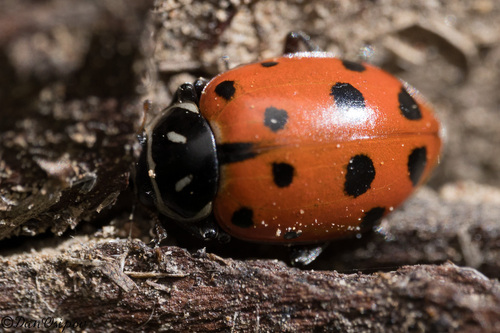
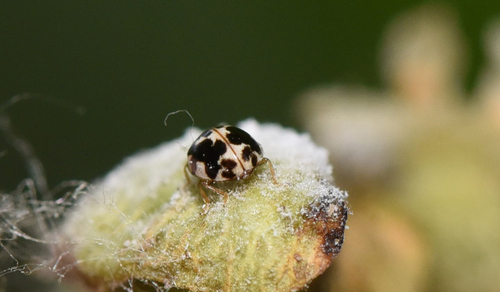
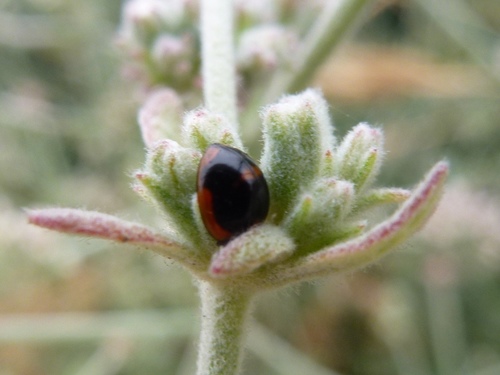
Cycloneda sanguinea is a large ladybird beetle with red, unspotted elytra (wing covers) ranging from 4-6.5 mm long. The color ranges from orange to deep red. The white and black marks on the head and pronotum are very distinctive, and are gender-specific. Females and males both have white spots on the black part, but the female has black in the center, continuing down into the face, while the male has a white cleft above the head and a white face. These ladybugs are often found feeding on aphids on milkweeds, but also occur on a number of other plants.

Their eggs are typically orange or yellow, and around 1 mm in diameter. The larvae are larger... Wikipedia →

Global Distribution

Parks Where Found

# Park Country Daily sighting probability
1 Galápagos Islands 🇪🇨 Ecuador
~20%
2 Biotopo Cerro Cahuí 🇬🇹 Guatemala
~10%
3 Channel Islands National Park 🇺🇸 United States
~10%
4 Everglades National Park 🇺🇸 United States
~10%
5 El Vizcaíno Biosphere Reserve 🇲🇽 Mexico
~10%
6 Cumbres de Monterrey National Park 🇲🇽 Mexico
~10%
7 Grand Canyon National Park 🇺🇸 United States
~10%
8 Big Bend National Park 🇺🇸 United States
~10%
9 La Amistad International Park (Panama) 🇵🇦 Panama
~10%
10 Merritt Island National Wildlife Refuge 🇺🇸 United States
~10%
11 Tijuca National Park 🇧🇷 Brazil
~10%

Cities Where Found

# City Country Daily sighting probability
1 Goiânia 🇧🇷 Brazil
~40%
2 Lima 🇵🇪 Peru
~30%
3 Santa Cruz de la Sierra 🇧🇴 Bolivia
~30%
4 Tijuana 🇲🇽 México
~30%
5 Cochabamba 🇧🇴 Bolivia
~20%
6 Valencia 🇻🇪 Venezuela
~20%
7 Rosario 🇦🇷 Argentina
~20%
8 Montevideo 🇺🇾 Uruguay
~20%
9 Buenos Aires 🇦🇷 Argentina
~20%
10 Caracas 🇻🇪 Venezuela
~20%

Before you go

What are the chances of seeing a Spotless Lady Beetle in San Diego?

With luck

About 10% of wildlife watchers report a Spotless Lady Beetle sighting in San Diego on a given day, based on 781 verified sightings from GBIF citizen-science data. It is the 16th most-seen of the 693 insects we can rate there. Over three days the chance rises to about 40%, and over a week to about 60%, if each day is a fresh chance.

When is the best time to see a Spotless Lady Beetle in San Diego?

April–July and September

In those months about 20% of wildlife watchers report a Spotless Lady Beetle in San Diego on a given day, against about 10% in August and October–March, the lowest months. Those are among San Diego's driest months, with about 10 mm of rain a month against 55 mm in February.

What time of day is best to see a Spotless Lady Beetle?

Between 8 and 11 am

Across all the parks we cover, that three-hour window holds the most Spotless Lady Beetle sightings with a recorded time, and about 9 in 10 of them come between 6 am and 6 pm: it is a daytime animal.

Is San Diego the best place to see a Spotless Lady Beetle?

15th of 46

Of the 46 cities where we can rate Spotless Lady Beetle sightings, San Diego ranks 15th at about 10%. The best odds are in Goiânia (Brazil, about 40%), Lima (Peru, about 30%) and Santa Cruz de la Sierra (Bolivia, about 30%).

Where does the Spotless Lady Beetle sighting chance come from?

GBIF citizen-science records

It is estimated from how often the Spotless Lady Beetle is recorded against all the insects logged in San Diego (781 verified sightings), calibrated against known sighting rates. Figures are rounded to the nearest 10% because citizen-science data supports honest approximations, not decimals, and months with records from fewer than five people show "—". How it works.

← Back to San Diego