Mexican Yellow

Mexican Yellow

Eurema mexicana

Daily sighting probability ~10% · With luck
at San Luis Potosí

In 3 days ~30% in a week ~50%

12 Verified sightings at San Luis Potosí
193 In all 5 parks From 2019 to 2026
July Best month
☀️ Diurnal When it's spotted

About the Mexican Yellow

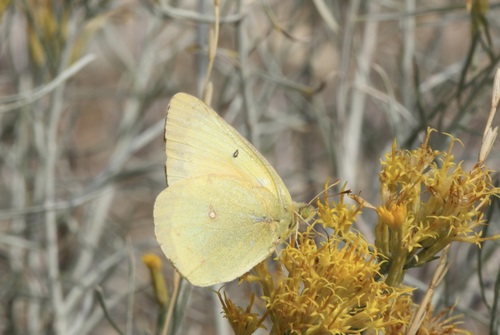
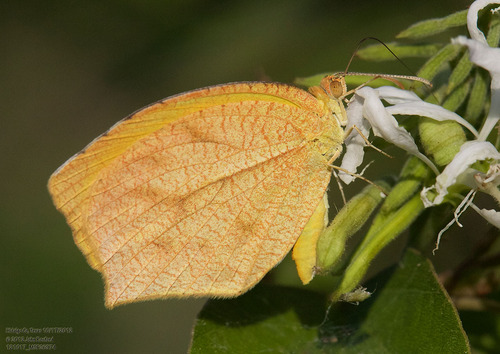
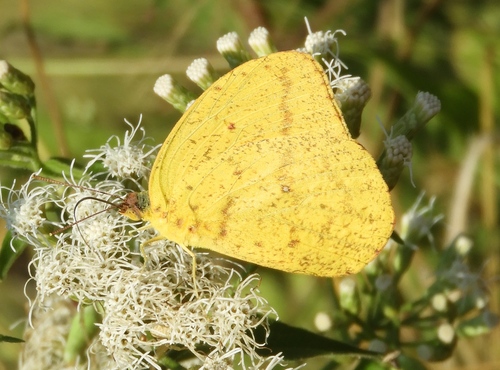
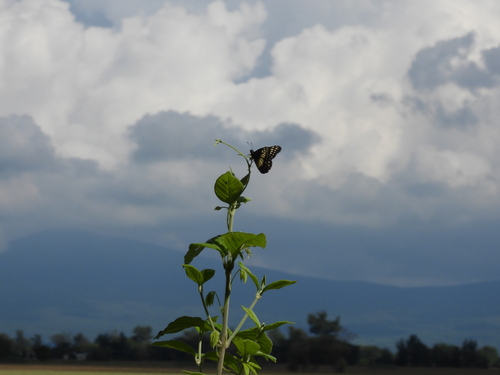
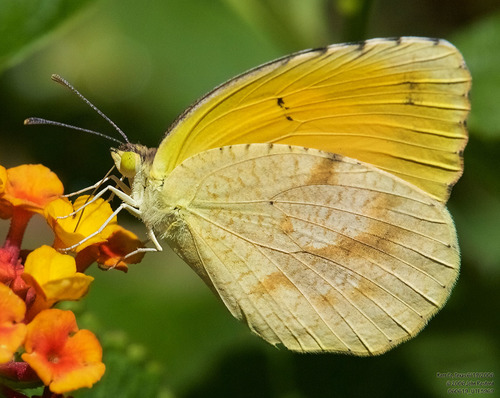
Eurema mexicana, the Mexican yellow, sometimes called the wolf-face sulphur, is a North and South American butterfly in the family Pieridae. It occurs mainly in Mexico but occasionally is found in central and southwestern United States and rarely in Canada.

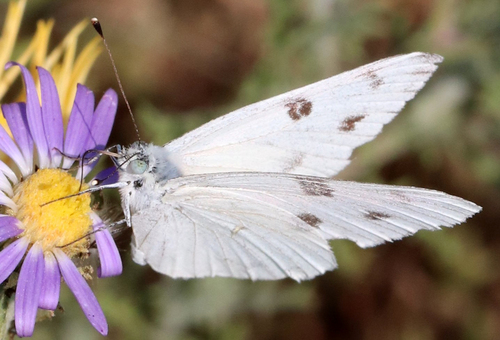
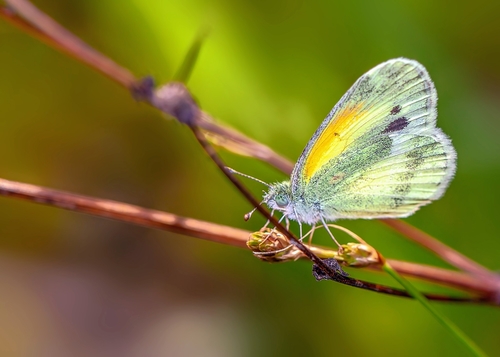
The upperside of the wings is pale yellow with a black forewing submarginal border outlining a "dog" or "wolf-face" pattern. The hindwing has a small outer margin black border. The male has a bright yellow patch on the leading edge of the hindwing. The underside of the wings is pale yellow in summer individuals and pale yellow with reddish markings or all reddish pink in winter individuals. The hindwing is sharply pointed. The wingspan measures 1+1⁄4 to 2+1⁄4 inches (32–57 mm).

Similar species in the Mexican yellow's range include Boisduval's yellow (Eurema boisduvaliana) and the Salome yellow (Eurema salome). Boisduval's yellow is smaller and brighter yellow, the male has a weaker "dog face" pattern, the female has reduced black on the upper side, and the hindwing is less sharply pointed.

The Salome yellow is brighter yellow, has more limited black on the upperside, and the underside... Wikipedia →
Global Distribution

Parks Where Found

# Park Country Daily sighting probability
1 Big Bend National Park 🇺🇸 United States
~20%
2 Saguaro National Park 🇺🇸 United States
~10%
3 Bahía de Loreto National Park 🇲🇽 Mexico
~10%
4 Cumbres de Monterrey National Park 🇲🇽 Mexico
~10%
5 Joshua Tree National Park 🇺🇸 United States
<5%

Cities Where Found

# City Country Daily sighting probability
1 San Luis Potosí 🇲🇽 México
~10%
2 Monterrey 🇲🇽 México
<5%
3 Mexico City 🇲🇽 México
<5%
4 San Antonio 🇺🇸 United States
<5%
5 Phoenix 🇺🇸 United States
<5%
6 Dallas 🇺🇸 United States
<5%

Before you go

What are the chances of seeing a Mexican Yellow in San Luis Potosí?

With luck

About 10% of wildlife watchers report a Mexican Yellow sighting in San Luis Potosí on a given day, based on 12 verified sightings from GBIF citizen-science data. It is the 38th most-seen of the 91 insects we can rate there. Over three days the chance rises to about 30%, and over a week to about 50%, if each day is a fresh chance.

When is the best time to see a Mexican Yellow in San Luis Potosí?

July

In that month about 20% of wildlife watchers report a Mexican Yellow in San Luis Potosí on a given day, against under 5% in February–March, May–June and November–December, the lowest months. That is one of San Luis Potosí's wettest months, with about 110 mm of rain against 5 mm in April.

What time of day is best to see a Mexican Yellow?

Between noon and 3 pm

Across all the parks we cover, that three-hour window holds the most Mexican Yellow sightings with a recorded time, and nearly all of them come between 6 am and 6 pm: it is a daytime animal.

Is San Luis Potosí the best place to see a Mexican Yellow?

Yes

Of the 6 cities where we can rate Mexican Yellow sightings, San Luis Potosí has the highest daily chance: about 10%. Next come Monterrey (México, under 5%) and Mexico City (México, under 5%).

Which relatives of the Mexican Yellow live in San Luis Potosí?

Same family: Pieridae

The closest relatives of the Mexican Yellow that you can see in San Luis Potosí (family Pieridae, Whites, Yellows, and Sulphurs) are Southern Dogface (about 10%), Checkered White (about 10%) and Cloudless Sulphur (about 10%), with each one's daily chance of a sighting.

Where does the Mexican Yellow sighting chance come from?

GBIF citizen-science records

It is estimated from how often the Mexican Yellow is recorded against all the insects logged in San Luis Potosí (12 verified sightings), calibrated against known sighting rates. Figures are rounded to the nearest 10% because citizen-science data supports honest approximations, not decimals, and months with records from fewer than five people show "—". How it works.

← Back to San Luis Potosí