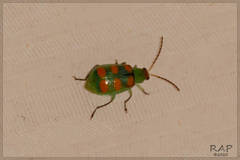
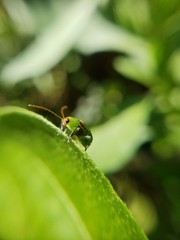
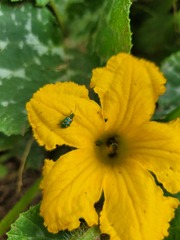
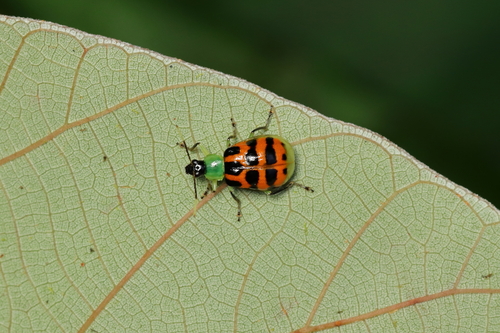
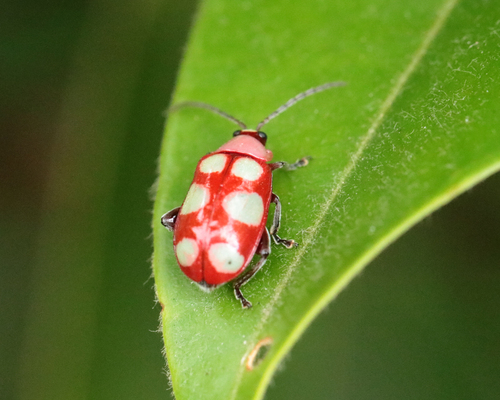
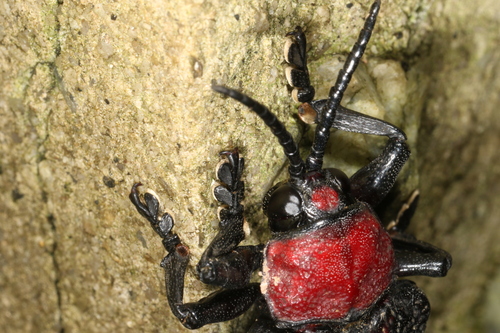
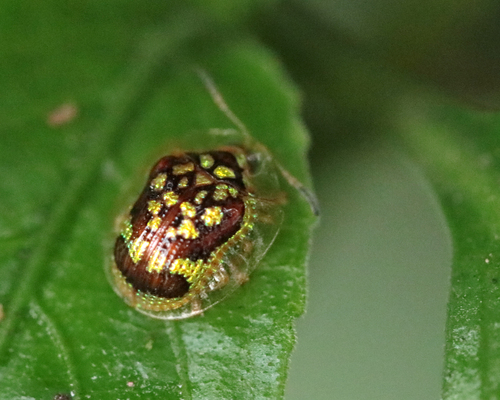
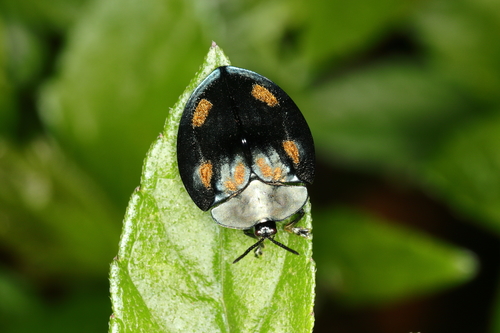
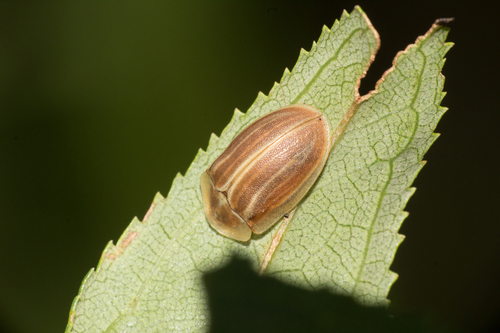
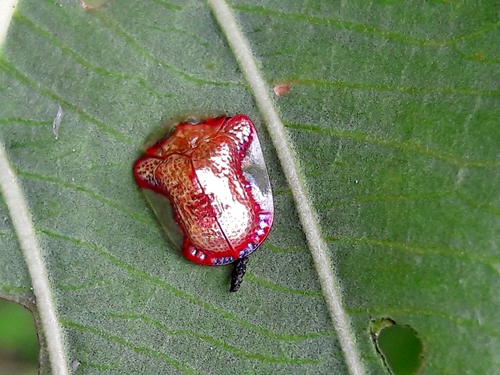
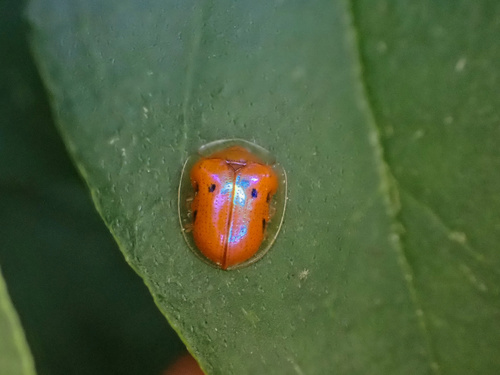
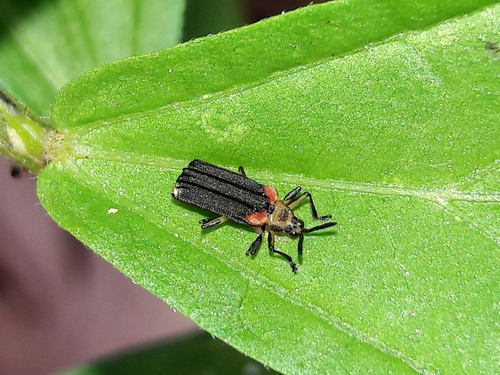
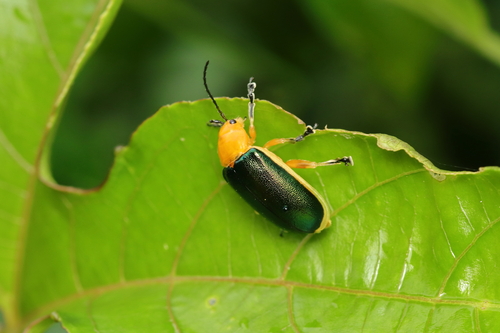
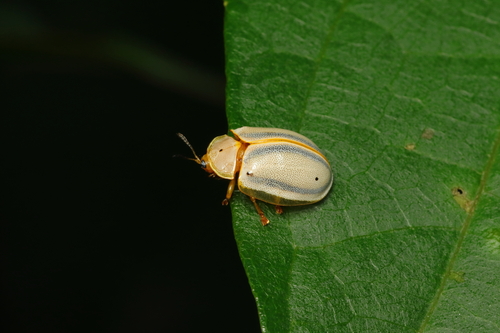
Diabrotica speciosa

Diabrotica speciosa

Diabrotica speciosa

Daily sighting probability ~10% · With luck
at São Paulo

In 3 days ~20% in a week ~40%

69 Verified sightings at São Paulo
18 In all 2 parks From 2019 to 2026
February Best month
☀️ Diurnal When it's spotted

About the Diabrotica speciosa

Diabrotica speciosa, also known as the cucurbit beetle and in Spanish as vaquita de San Antonio (this common name is also given to many ladybugs) is an insect pest native to South America. Its larvae feed on the roots of crops. The cucurbit beetle is also known to transmit several viruses such as comoviruses and different mosaic viruses. This is native to South America and is now distributed in Central America and other global areas.

Common names include the Cucurbit Beetle and San Antonio beetle. Their native land is South America in countries such as Argentina, Bolivia, Brazil, Colombia, Ecuador, French Guiana, Paraguay, Peru, Uruguay and Venezuela. Their current distribution is in Central America including countries such as Costa Rica, Mexico, and Panama. There are no known location or year of first introduction of D. speciosa to new habitats.

D. speciosa can move locally by adult flight, and by movement of eggs, larvae or pupae in soil contaminating vehicles or farm machinery. For long-distance spread, adults could be present on host plants for planting, but these are not of the kind normally moved in international trade, and the active adults will not necessarily... Wikipedia →
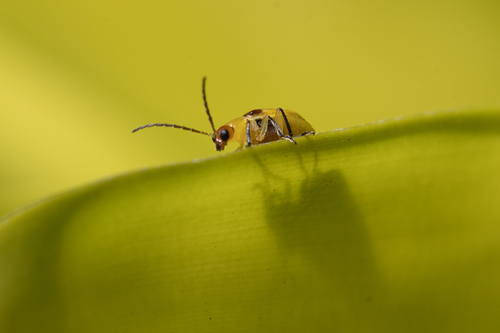
Global Distribution

Parks Where Found

# Park Country Daily sighting probability
1 Iguazú National Park 🇦🇷 Argentina
~10%
2 Iguaçu National Park 🇧🇷 Brazil
~10%

Cities Where Found

# City Country Daily sighting probability
1 Goiânia 🇧🇷 Brazil
~30%
2 Curitiba 🇧🇷 Brazil
~30%
3 Santa Cruz de la Sierra 🇧🇴 Bolivia
~20%
4 Cordoba 🇦🇷 Argentina
~10%
5 Cochabamba 🇧🇴 Bolivia
~10%
6 Porto Alegre 🇧🇷 Brazil
~10%
7 Brasilia 🇧🇷 Brazil
~10%
8 Rosario 🇦🇷 Argentina
~10%
9 Buenos Aires 🇦🇷 Argentina
~10%
10 Montevideo 🇺🇾 Uruguay
~10%

Before you go

What are the chances of seeing a Diabrotica speciosa in São Paulo?

With luck

About 10% of wildlife watchers report a Diabrotica speciosa sighting in São Paulo on a given day, based on 69 verified sightings from GBIF citizen-science data. It is the 94th most-seen of the 832 insects we can rate there. Over three days the chance rises to about 20%, and over a week to about 40%, if each day is a fresh chance.

When is the best time to see a Diabrotica speciosa in São Paulo?

October to July

In those months about 10% of wildlife watchers report a Diabrotica speciosa in São Paulo on a given day, against under 5% in August and September, the lowest months.

What time of day is best to see a Diabrotica speciosa?

Between noon and 3 pm

Across all the parks we cover, that three-hour window holds the most Diabrotica speciosa sightings with a recorded time, and about 8 in 10 of them come between 6 am and 6 pm: it is a daytime animal.

Is São Paulo the best place to see a Diabrotica speciosa?

11th of 12

Of the 12 cities where we can rate Diabrotica speciosa sightings, São Paulo ranks 11th at about 10%. The best odds are in Goiânia (Brazil, about 30%), Curitiba (Brazil, about 30%) and Santa Cruz de la Sierra (Bolivia, about 20%).

Where does the Diabrotica speciosa sighting chance come from?

GBIF citizen-science records

It is estimated from how often the Diabrotica speciosa is recorded against all the insects logged in São Paulo (69 verified sightings), calibrated against known sighting rates. Figures are rounded to the nearest 10% because citizen-science data supports honest approximations, not decimals, and months with records from fewer than five people show "—". How it works.

← Back to São Paulo