








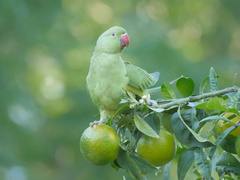


All 5 in 3 days here: ~90%
City
Savar
🇧🇩 Bangladesh
Asia, Bangladesh 194 spp. recorded
Savar is a city in central Bangladesh, located in the Dhaka District in the division of Dhaka. It is the closest separate city to the centre of Dhaka. It is also a part of the Greater Dhaka conurbation which forms the Dhaka megacity. Wikipedia
23.949° N 90.174° E
🦜 Nature

194 Species sighted
3,602 Verified sightings From 2019 to 2026
Jan Best month
⭐ Iconic Species
📊 Most Spotted
📊 Most Spotted
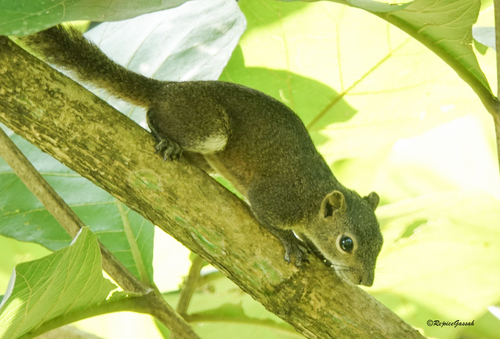
LC
 Irrawaddy Squirrel
Callosciurus pygerythrus

LC
 Asian Jackal
Canis aureus

NT
 Indian Flying Fox
Pteropus medius

LC
 Large Indian Civet
Viverra zibetha
⭐ Iconic Species
📊 Most Spotted
⭐ Iconic Species
📊 Most Spotted

VU
 Indian Flap-shelled Turtle
Lissemys punctata

LC
 Indian Wolf Snake
Lycodon aulicus

LC
Split Keelback
Atretium schistosum

VU
 Indian Roofed Turtle
Pangshura tecta
📊 Most Spotted

LC
 Alpine Cricket Frog
Fejervarya limnocharis

LC
 Common Tree Frog
Polypedates leucomystax

LC
Indus Valley Bullfrog
Hoplobatrachus tigerinus

Indian Five-Fingered Frog
Euphlyctis hexadactylus
📊 Most Spotted
⭐ Iconic Species
🌙 Most active after dark
Challenges you can complete here
Recent sightings in Savar
LIVEiNaturalistWhere to look
Warmer areas are where all species together are recorded most often.
-
Jahangirnagar University (Dhaka)
Daily sight. prob.vs avg Bengal Monitor~90%+30%
 Irrawaddy Squirrel~70%+30%
 Little Cormorant~70%≈
 Black-hooded Oriole~70%-10%
 Pearl-necked Dove~70%-10%
 Bronze-winged Jacana~70%≈
 Indian Flap-shelled Turtle~50%+30%
 Alpine Cricket Frog~50%+30%
Sighting Calendar
How many species you'd see in a day
38Jan
37Feb
33Mar
31Apr
28May
30Jun
27Jul
30Aug
37Sep
0.8Oct
31Nov
28Dec
🏙️ City
Essentials
Green cover
High
Protected land
—
Protected sea
—
Protected areas
—
Wildlife spots
1
spotsZoos & centres
0
placesClimate
Humid subtropical
World Heritage
No
Climate
Temp °C Rain mm
JanFebMarAprMayJunJulAugSepOctNovDec
0.0 World-class
Wallace's Line Score
How good is this city for seeing wildlife? 🦜
Biodiversity
Very goodHow rich is the wildlife?
3.9
Species by taxon
🦅 Birds 526
🐒 Mammals 101
🦎 Reptiles 117
🐸 Amphibians 19
763 Total Species
679 Global average across 380 cities
67 Threatened 0 Endemic
🔭
Sighting
ExcellentHow likely to see animals?
5.0
🎯
Top-12 Avg Probability
77% 📊
Coverage (125 species at ≥5% of 763 in the inventory)
16% 🔀
Taxon variety in top 12 (12 bird)
0% 🌟
Iconic-group species (≥15%) (every species from the 19 iconic groups — monkeys, cats, toucans, macaws, sloths, crocodilians… — not just the 4 highlighted above)
4 ⭐
High-prob species (>40%)
38 🏕️
Experience
Very goodHow easy and pleasant is the visit?
3.5
Climate Mixed Medium
Green cover High High
Protected land & sea — Low
Protected areas 0 Low
Wildlife spots 1 Low
Zoos & centres 0 Low
What visitors say
Before you go
What animals can you see in Savar?
194 species
Savar's urban area has 194 recorded vertebrate species. The ones wildlife watchers report most often on a given day are Black-hooded Oriole (about 80%), Pearl-necked Dove (about 80%), Oriental Magpie-Robin (about 80%), Black Drongo (about 80%) and Indian Pond Heron (about 80%). Among reptiles, the most-seen is Bengal Monitor (about 60%).
When is the best time to see wildlife in Savar?
January–March and September
In those months the city's 12 most-seen species average about 80% on a given day, against about 60% in July. Those are among Savar's driest months, with about 85 mm of rain a month against 380 mm in July.
Can you see a Lineated Barbet in Savar?
Yes
About 80% of wildlife watchers report a Lineated Barbet sighting in Savar on a given day, based on 79 verified sightings from GBIF citizen-science data from 2019 to 2026. The best time is January (about 90%).
Can you see a Black-hooded Oriole in Savar?
Yes
About 80% of wildlife watchers report a Black-hooded Oriole sighting in Savar on a given day, based on 88 verified sightings from GBIF citizen-science data from 2019 to 2026. The best time is January–March and May (about 90%).
Can you see a Bengal Monitor in Savar?
Yes
About 60% of wildlife watchers report a Bengal Monitor sighting in Savar on a given day, based on 6 verified sightings from GBIF citizen-science data from 2019 to 2026. The best time is January and October (about 60%).
Is Savar good for wildlife watching?
4.7 out of 5
On the Wallace's Line Score, which rates each city against other cities, Savar gets 4.7/5: 47th of 380 cities worldwide and 21st in Asia. 39 of its species are reported by about 40% or more of wildlife watchers on a given day.
Nearest Cities


Nearest Parks


Nearest Zoos & Centres


Sources: urban area GHSL Urban Centre Database R2024A, European Commission JRC (CC BY 4.0) · protected land WDPA, UNEP-WCMC & IUCN (via GHSL) · climate NASA POWER · wildlife GBIF.org citizen-science data